
The Durability Project: Care, Use & The Truth About Silverware Marks
The questions we get asked most about our ceramics aren’t about glaze colors or which bowl to choose. They’re practical, everyday questions:
“Are your pieces dishwasher safe?”
“Can I microwave them?”
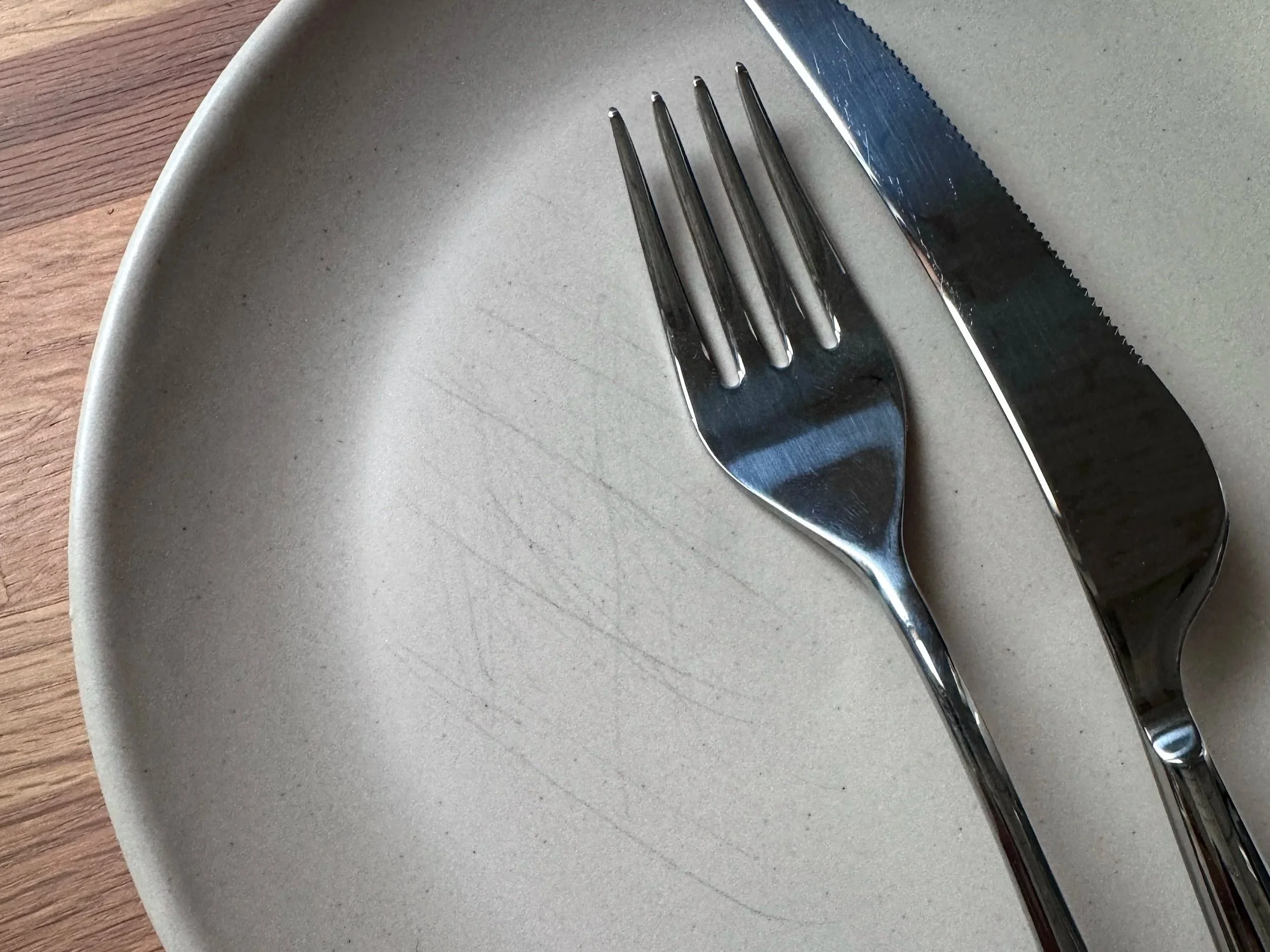
“I noticed some grey marks on my plates—what’s going on?”
These are exactly the right questions to ask before investing in a handmade ceramic collection. So this week in The Durability Project, we’re answering all of them—with a little materials science thrown in for good measure.
First: Everything You Need to Know About Dishwashers
Let’s start with the easy part. All Myrth ceramics are fully dishwasher safe—home and commercial. Top rack, bottom rack, doesn’t matter. We’ve run our pieces through thousands of cycles in both home kitchens and restaurant dishwashers and they come out looking exactly as they went in.
No hazing. No clouding. No dulling of the glaze.
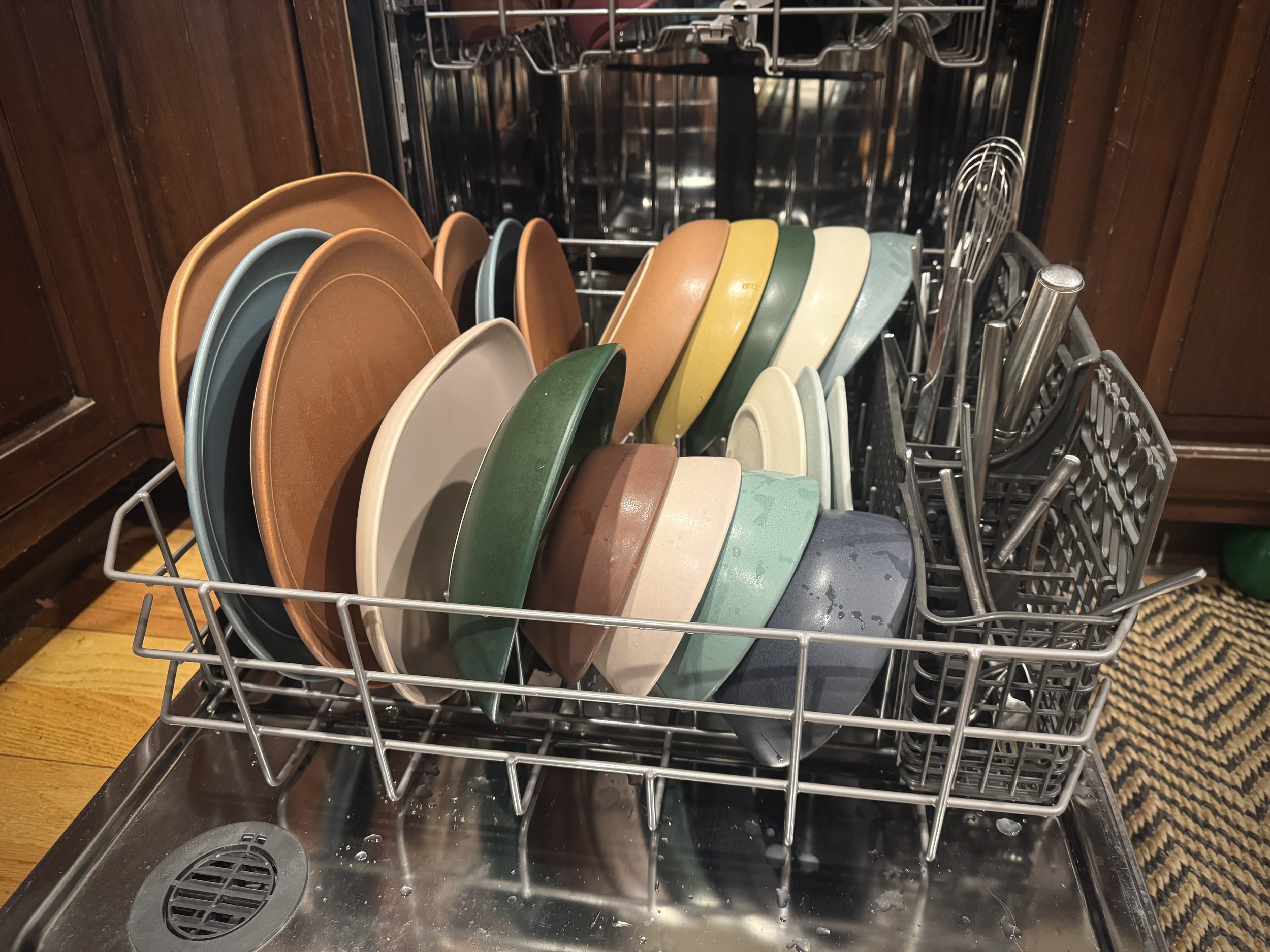
Our home dishwasher fully loaded with Myrth.
This is something we’re genuinely proud of because it’s not guaranteed with handmade ceramics. Many studio glazes break down under repeated commercial washing cycles—ours don’t, because we specifically engineered our glaze recipes for durability. The same properties that make our work restaurant-grade make it equally at home in your kitchen.
Will everything fit in a home dishwasher?
Yes! We run every single item in our collection through our home dishwasher daily—plates, bowls, cups, platters, serving pieces, all of it. No special loading tricks, no pieces left out because they’re too big or awkwardly shaped. If you’re wondering whether that large serving platter or the Feast Bowl will fit, it will. [Photo: our full collection loaded in a standard home dishwasher]
Our care recommendation: Run items through a standard warm dishwasher cycle. If you prefer hand-washing, a sponge and warm soapy water works perfectly.
A note on the oven: Our pieces are oven safe when brought up to temperature gradually with the oven—place your piece in a cold oven and allow it to heat up alongside it. Avoid placing a cold piece directly into a preheated oven, as sudden thermal shock isn’t good for any ceramic. We don’t recommend use over an open flame.
The Grey Mark Mystery: What’s Actually Happening
Here’s where things get interesting.
If you’ve noticed faint grey lines or streaks appearing on your plates after regular use, you haven’t scratched them. What you’re seeing is **metal transfer**—a thin deposit of metal from your silverware onto the glaze surface.
Here’s the science: porcelain (like Myrth) is actually *harder* than most stainless steel flatware. When soft metal meets a harder surface repeatedly, the metal loses—and leaves a trace behind. Think of it like a pencil leaving a mark on paper. The pencil (soft metal) deposits material on the paper (hard ceramic). The paper isn’t scratched; it has graphite on it.
The same principle applies here. Your plates aren’t damaged. There’s just a thin layer of metal sitting on top of the glaze.
Why Some Silverware Marks More Than Others
This is where it gets even more interesting, and where the quality of your flatware matters as much as the quality of your ceramics.
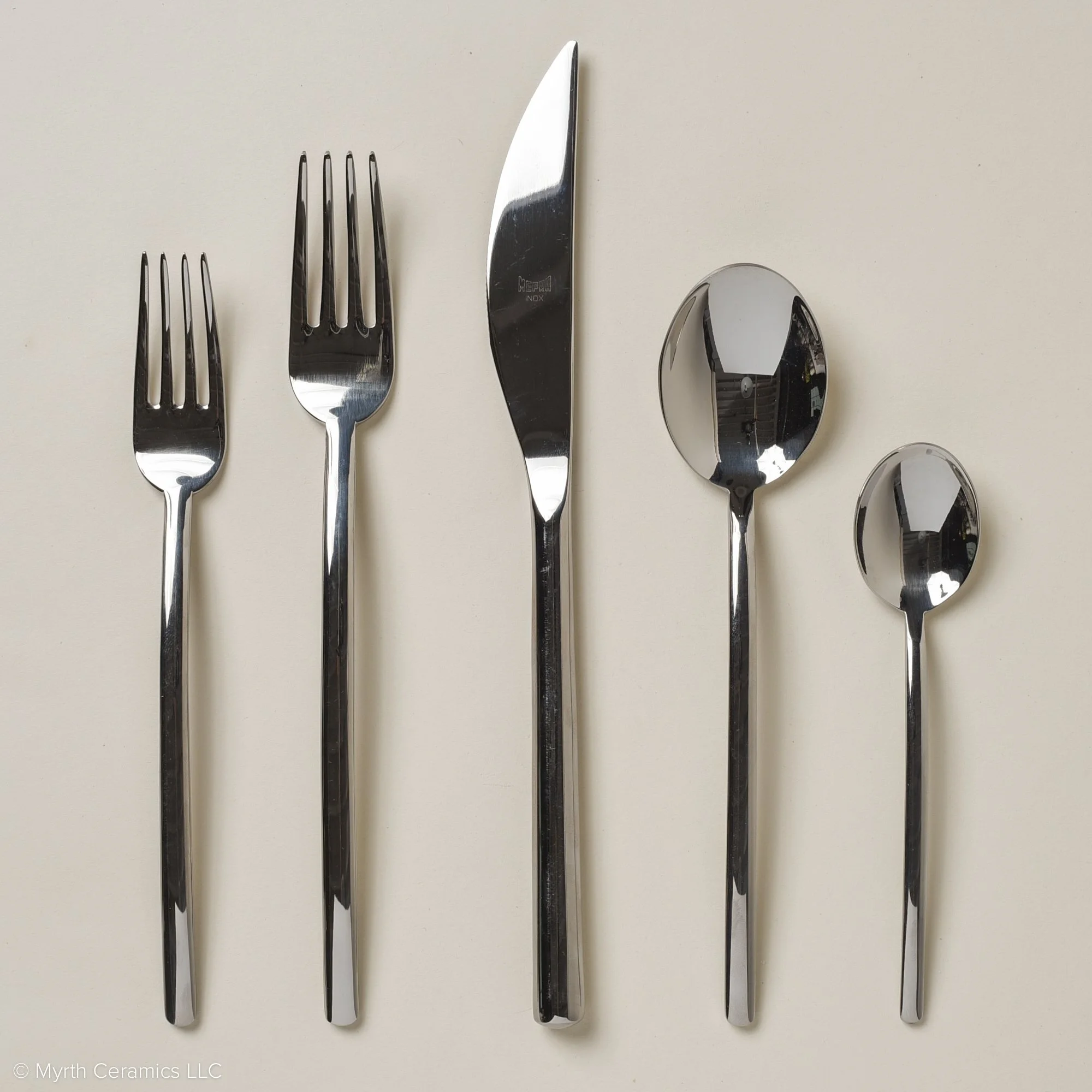
Our favorite 18/10 flatware is from Mepra
Stainless steel flatware is an alloy—a blend of iron, chromium, and nickel. The most common blends you’ll see are labeled **18/10, 18/8, or 18/0**. That first number (18) refers to the chromium percentage. The second number refers to nickel. Iron and trace elements make up the rest.
The nickel content is the key variable. Higher nickel = harder metal = less transfer onto your ceramics.
18/10 stainless steel (18% chromium, 10% nickel) is the gold standard. It’s harder, more corrosion resistant, and leaves dramatically fewer marks—and when it does mark, those marks wipe away easily with just soap and water. This is what we use in our home and our exact set is shown in the photo here.
18/8 and 18/0 have less nickel, meaning softer metal, meaning more transfer. The marks are harder to remove and require more effort.
Budget flatware (think IKEA and similar) often doesn’t publish its composition at all—which is usually not a great sign. In testing, low-grade flatware left the most persistent marks and cleaned up the least well.
Our recommendation: If you’re investing in quality ceramics, pair them with quality forged silverware. Look for 18/10 stainless steel. It’s better for your plates, better for your food (more corrosion resistant), and it lasts longer anyway.
How to Remove Silverware Marks
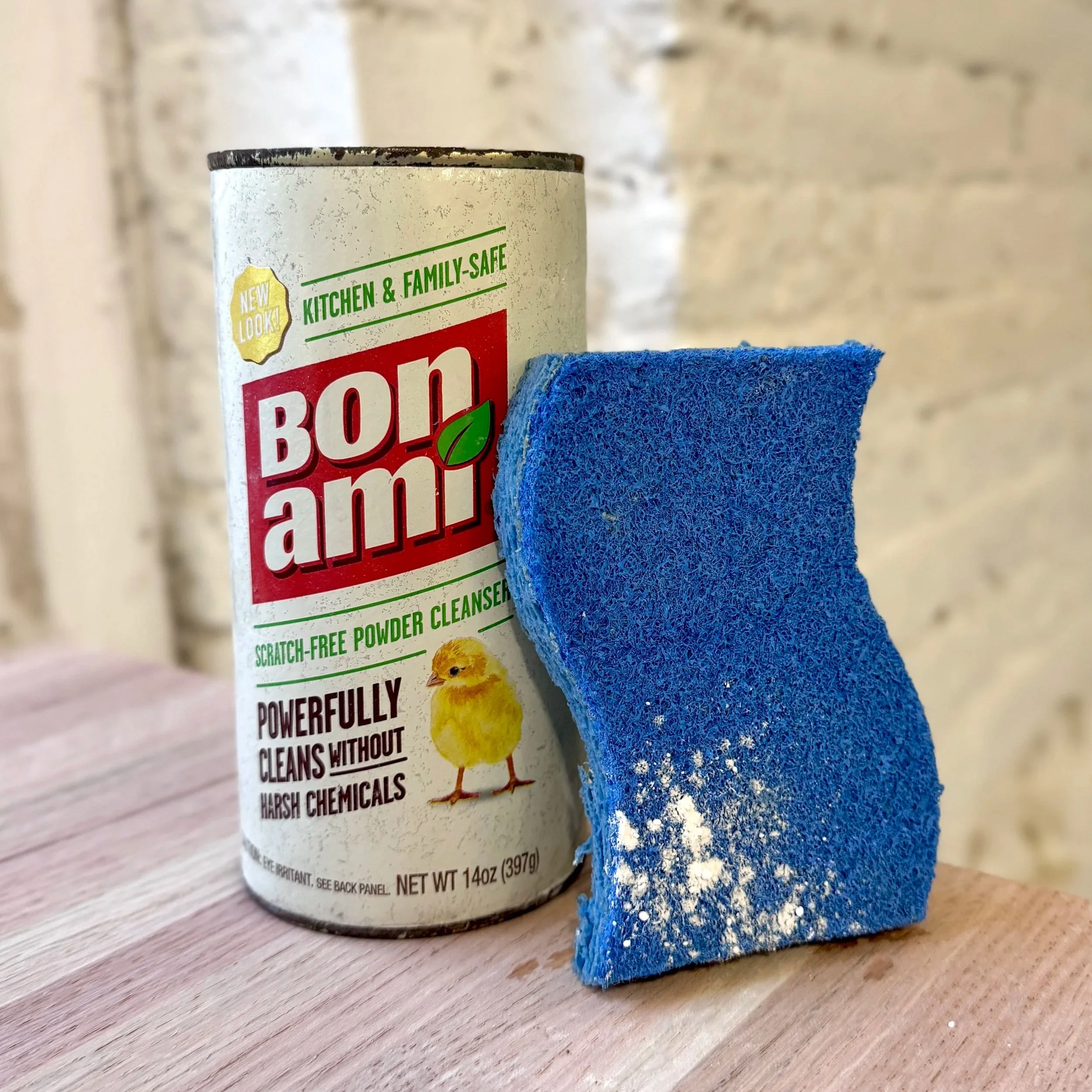
Good news: the marks almost always come off. Here’s what works:
Bon Ami + damp sponge or Scotch-Brite pad:
Our go-to recommendation. Bon Ami is a gentle powdered cleanser that buffs away metal deposits without harming the glaze. It’s also safe enough to use with bare hands, which is why we love it. A little on a damp sponge, a light circular buff, rinse clean. Works beautifully and won’t damage your pieces.
Bar Keepers Friend:
Also effective but not our go-to because you’ll need to use gloves to use this product safely. Similar approach—using gloves, apply to a damp surface, gentle scrub, rinse.
Just soap and water (if you have 18/10 silverware):
If you’re using high-quality 18/10 flatware, marks often wipe away with nothing more than a soapy sponge. This is the easiest scenario and one more reason to invest in good silverware.
How often? As needed. Some customers rarely deal with marks at all (usually because they have good silverware). Others buff their plates every few months. It’s a quick, easy process either way.
What About Chipping?
Our pieces don’t chip under normal use. This comes back to our clay formulation and firing process—the same properties that give us the clean break rather than the dangerous shatter also give us resistance to chipping at the rim and edges.
We’ve had customers use the same Myrth pieces for years with daily dishwasher cycles and no chips. That’s the point. These aren’t pieces you replace every few years. They’re built to last.
Stacking and Storage
Plates and bowls stack without issue—no need for felt pads or special storage. The hardness of our glaze means pieces don’t scratch each other in normal stacking.
For platters, we’d avoid stacking too many high given their larger surface area and weight, but a reasonable stack is fine.
The Bigger Picture
Everything we’ve covered in this series—the dishwasher durability, the metal transfer science, the clean break instead of the dangerous shatter—comes back to the same thing: we designed these pieces to be used, not displayed.
Restaurant-grade durability means your morning coffee mug goes through the dishwasher 365 times a year and still looks new. It means your dinner plates survive years of daily use without hazing or chipping. It means when something eventually does break (because everything eventually does), it breaks safely and cleanly.
This is what we mean when we say restaurant-grade. Not just marketing language. Engineering decisions made from the ground up.
-----
Have a care question we didn’t answer here? Email us at hello@myrth.us or visit myrth.us/care-use for our full care guide.
This is Part 2 of The Durability Project. [Read Part 1: Why Clean Breaks Matter in Restaurant Kitchens →]
-----
Myrth handcrafts elegant, durable porcelain tableware in East Providence, Rhode Island. Founded by product designers Abigail and Eric Smallwood, we’ve been helping customers care for their collections since 2015.