
The Durability Project: What Makes Dinnerware Safe and Chip-Resistant
We get a version of the same question almost every week: Is your dinnerware safe? Will it chip? What's actually in the glaze?
Fair questions. Most brands don't say much about what goes into their products, usually because the answer is complicated, and complicated doesn't sell. A lifestyle photo does.
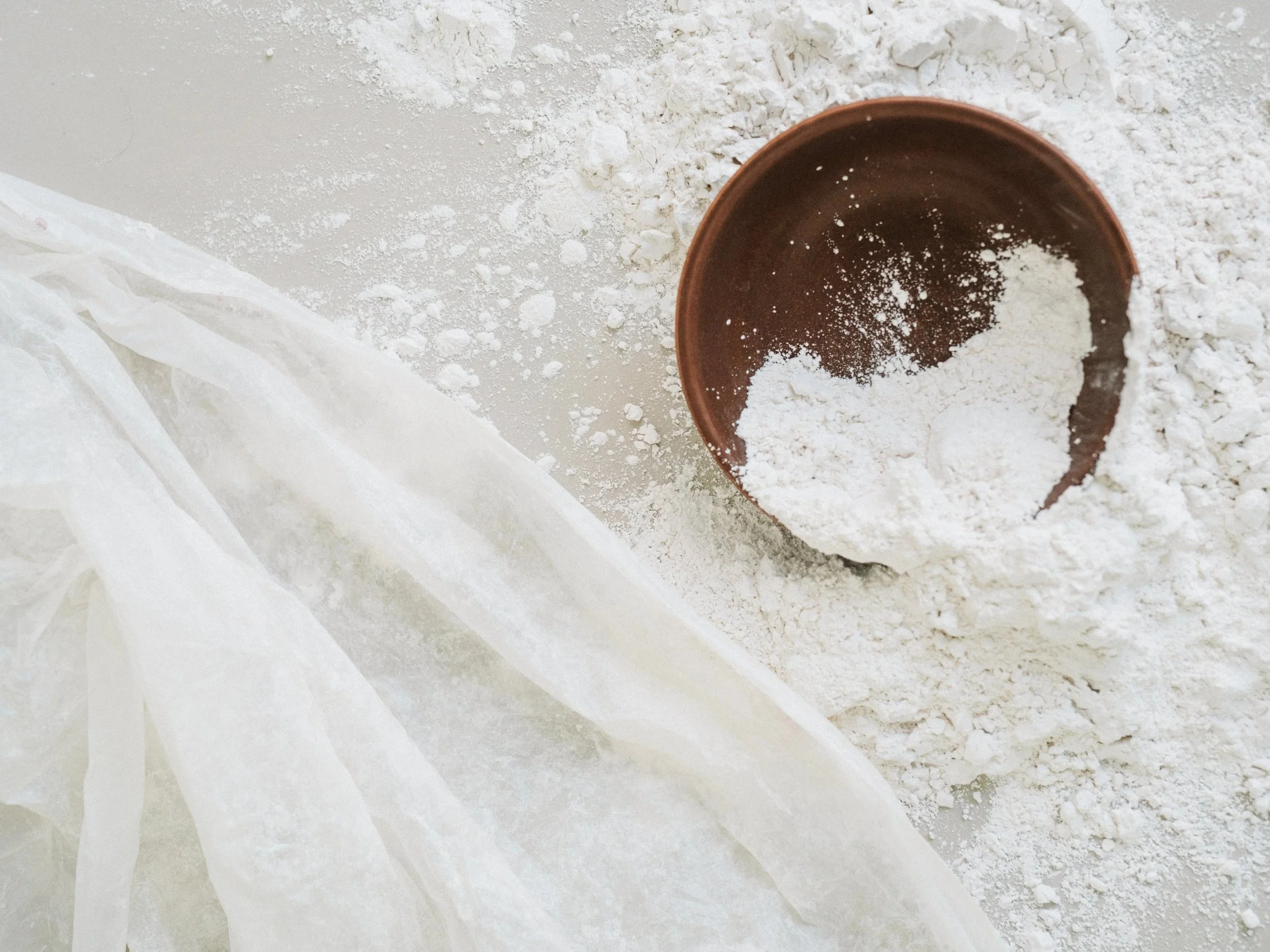
We can answer with specifics. We formulate our own clay and glazes from scratch in our Providence, Rhode Island studio, which means we know exactly what is in them and exactly how they behave.
Here's what to know before buying dinnerware you plan to eat off every day.
What "Chip-Resistant" Actually Means
Let's start with the term you'll see on every dinnerware listing from Walmart to Williams Sonoma: chip-resistant. It's one of the most searched qualities people look for in dinnerware, and for good reason. Nobody wants to replace their plates every year.
But "chip-resistant" isn't a regulated standard. Any manufacturer can use it. A $30 set from a big-box store and a handcrafted porcelain plate from a small studio can both claim to be chip-resistant and mean very different things by it.
What actually determines whether dinnerware chips comes down to three factors:
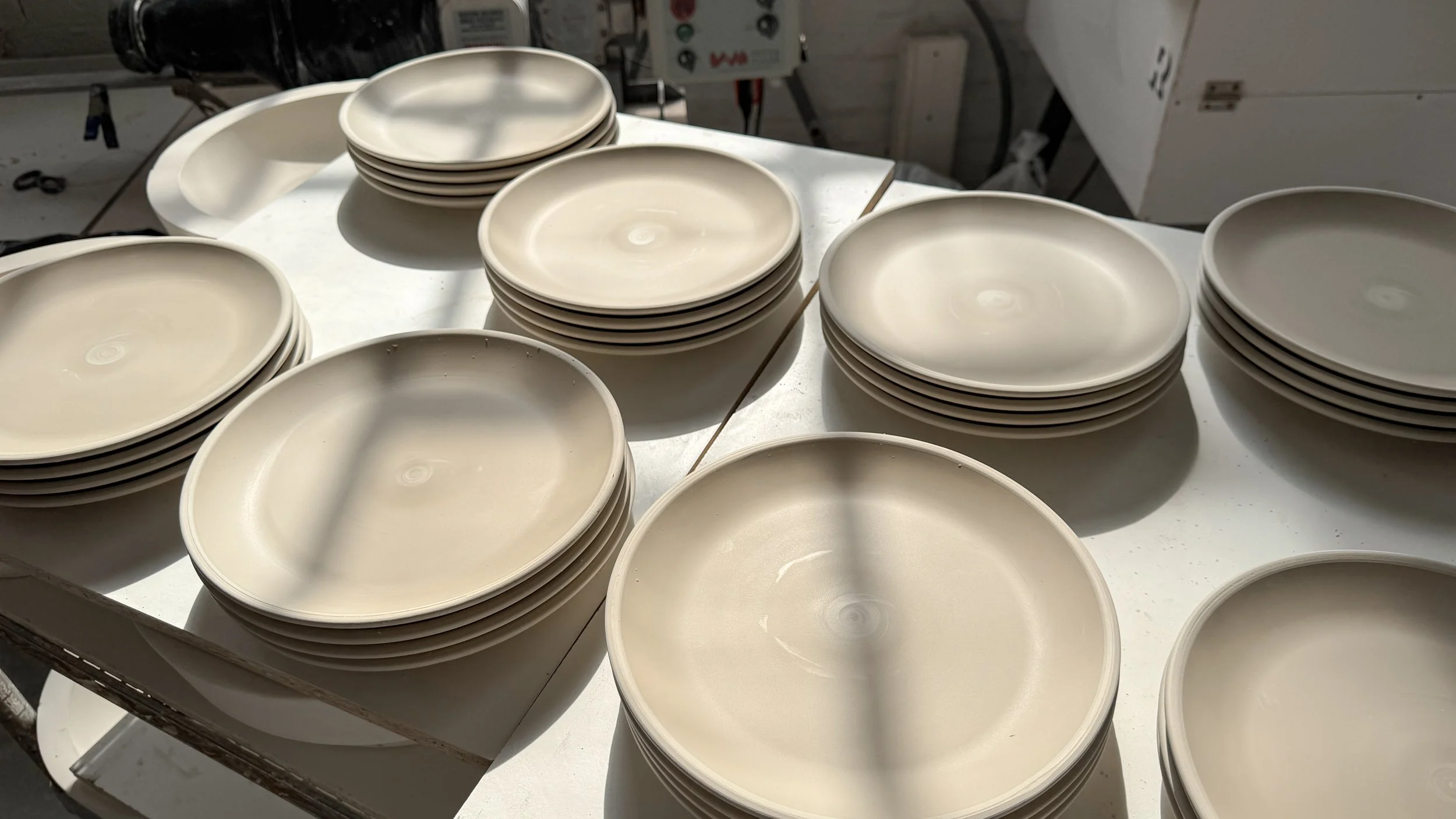
The clay body. Different clays have different structural properties. Porcelain, when properly formulated and fired, is the densest and strongest ceramic material available for tableware. But not all porcelain is created equal. Mass-produced porcelain is often formulated for speed and cost efficiency, not maximum durability. At Myrth, we developed our own proprietary porcelain clay body specifically for resistance to chipping and cracking, and we have been refining it ever since.
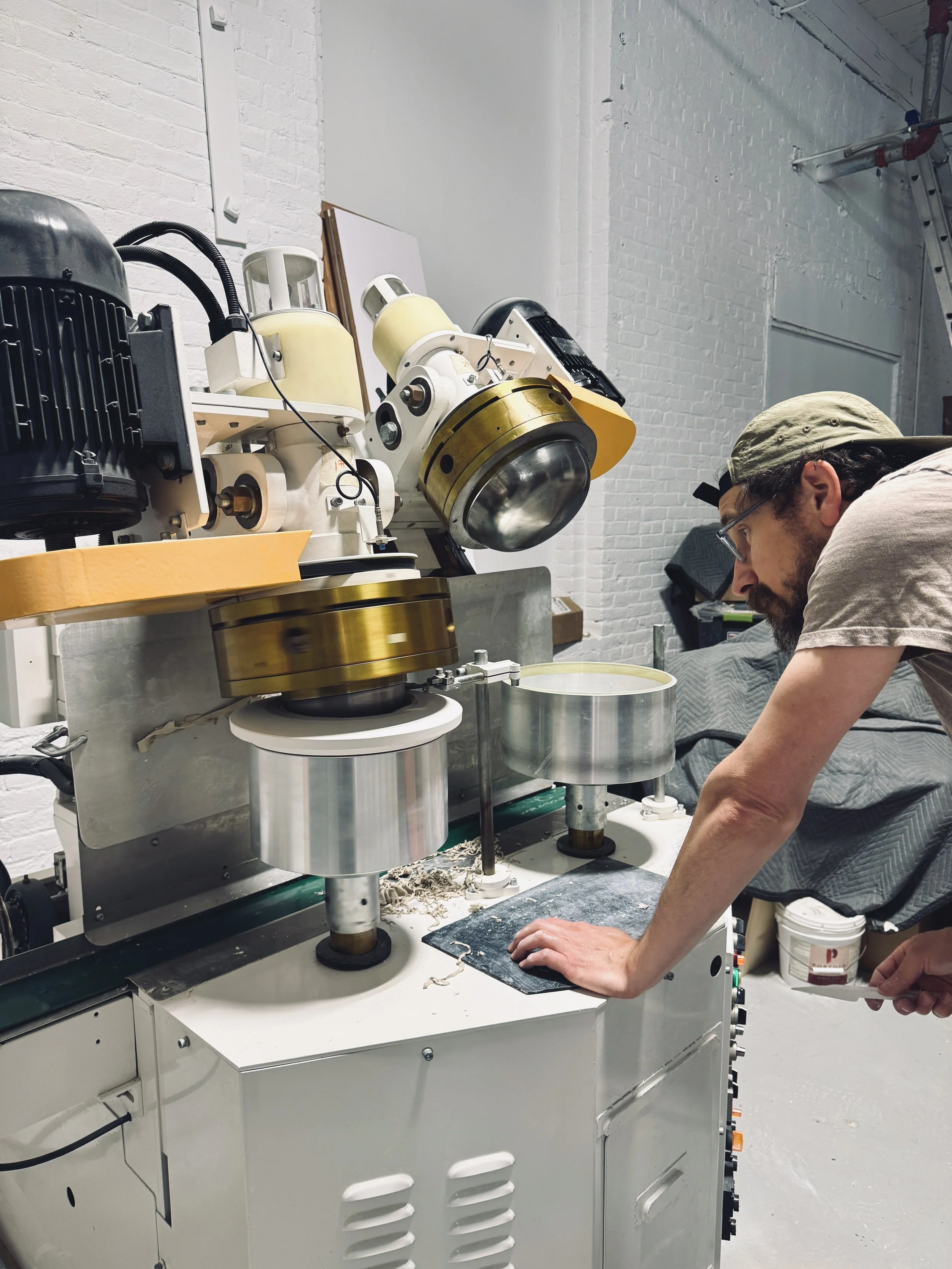
The forming method. How a piece is shaped affects its structural integrity. Our roller jigger process applies high compression to the clay, which aligns particles in a way that increases density and strength. Think of it like the difference between loosely packed snow and a tightly compressed snowball. Same material, very different durability.
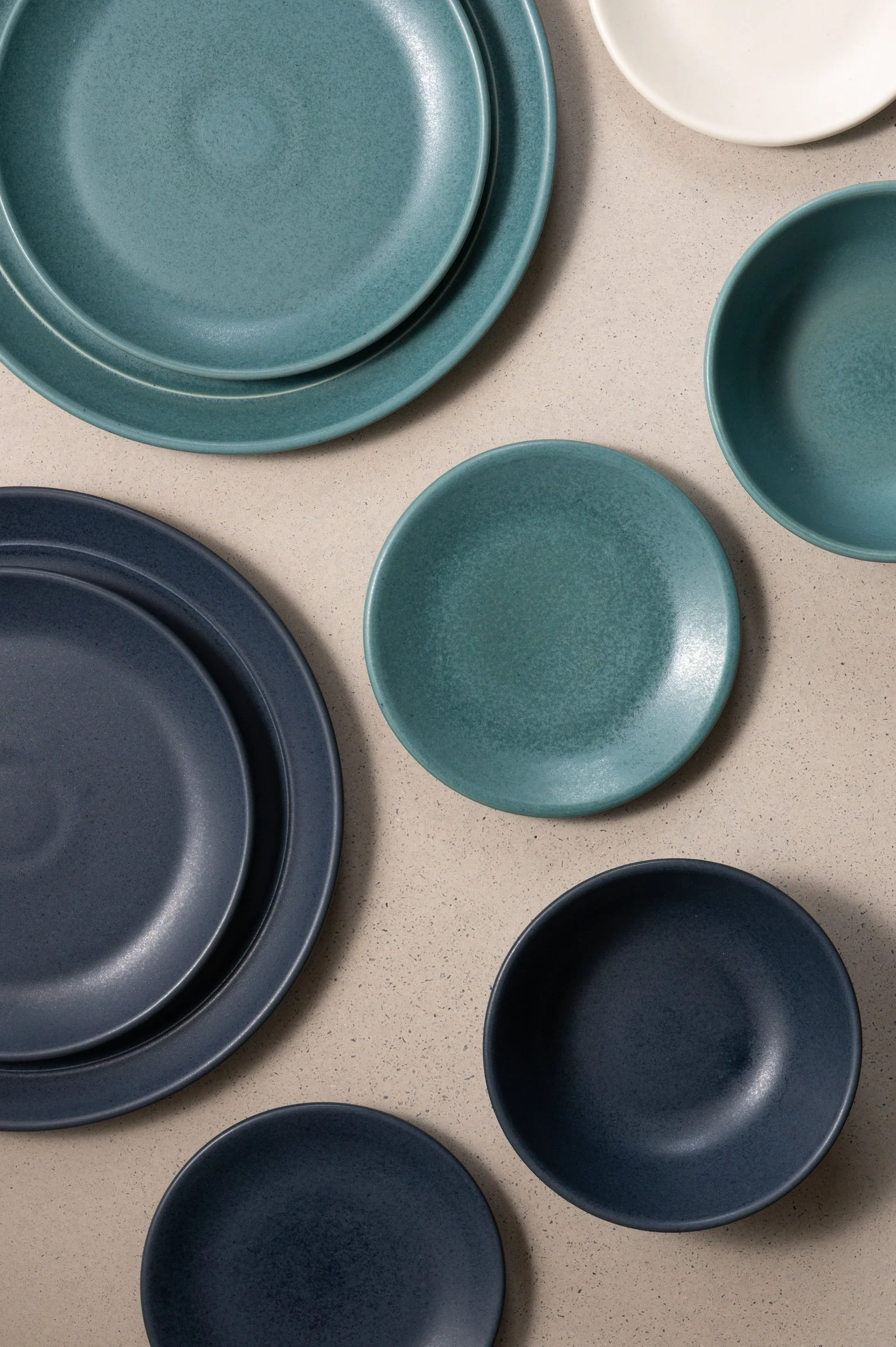
The fit between clay and glaze. This is the one nobody talks about. If the glaze and the clay body expand and contract at different rates when heated and cooled (which happens every time you put a plate in the dishwasher or microwave), stress builds up at the interface. Over time, that stress causes crazing (tiny cracks in the glaze surface), and eventually, chipping. We formulate our clay and glazes together as a system, matching their thermal expansion rates so they move in sync. That's why our glazes don't craze, and why our pieces resist chipping after years of daily use.
In service and at home. Restaurant clients run the same Myrth plates through thousands of commercial dishwasher cycles without a chip. At home, we've been eating off our own work for over a decade. No chips, no crazing, no clouding.
What Happens When Porcelain Does Break
No dinnerware is unbreakable. Drop anything from counter height onto a tile floor and physics wins. But how something breaks matters enormously, especially in a kitchen.
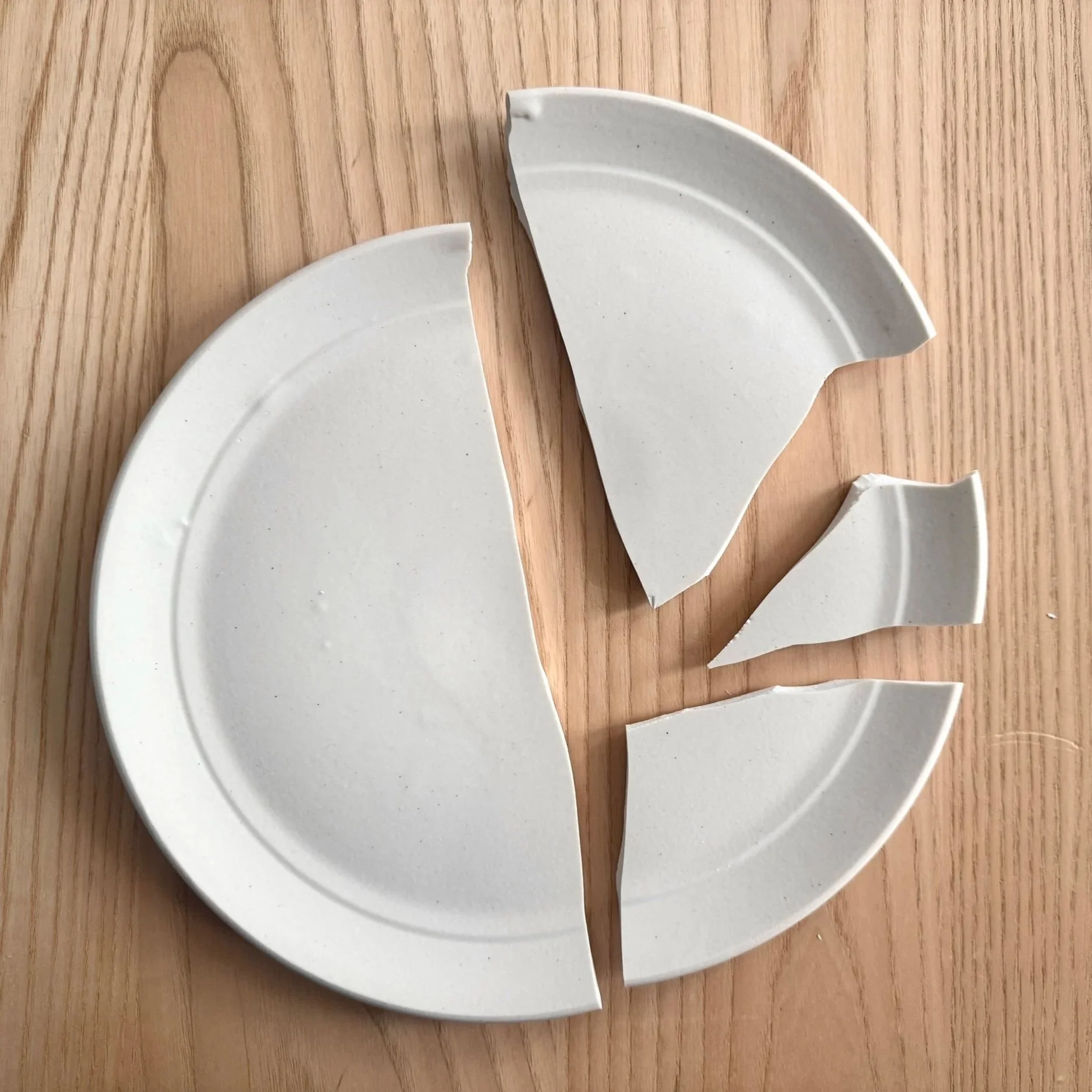
Cheap dinnerware shatters into dozens of tiny, sharp fragments. In a restaurant, that means shutting down a station and sweeping multiple times. At home, it means worrying about shards near bare feet and in the dish pit.
Our porcelain breaks differently. When it does fail, it typically fractures into a few large pieces with relatively clean edges. You can pick them up quickly and safely. This isn't accidental. It's a result of how our clay body is engineered. Low thermal expansion and proper particle alignment through our forming process create structural integrity that holds even in failure.
We're documenting this in more detail in our ongoing Durability Project series, including testimonials from the restaurant chefs who use our work in daily service.
Lead-Free and Non-Toxic: What's in Your Glaze?
This is the question that's been gaining traction in recent years, and rightfully so. People want to know: is the glaze on my dinner plate safe?
Here's the short answer for Myrth: Our glazes do not contain lead or cadmium. Period. We don't use them in our formulations, and we don't want to, both for your safety and ours. We handle these materials every day in the studio, so we have a personal stake in keeping our recipes clean.
Here's the longer, more nuanced answer for the industry:
Lead and cadmium have historically been used in ceramic glazes because they produce bright, vivid colors and lower the temperature needed for firing. They're still legal in the United States for use on dinnerware, provided the finished product meets FDA leaching limits. That means trace amounts of lead can be present in your plates and still be sold as "food safe" under current regulations.
Many mass-produced ceramics, particularly those imported from countries with less stringent manufacturing oversight, rely on lead-based glazes to keep production costs down. The FDA does test for leaching, but testing protocols have limitations, and long-term cumulative exposure is harder to measure.
If this concerns you, here's what to look for:
Ask the maker directly. Any reputable ceramics company should be able to tell you whether their glazes contain lead or cadmium. If they can't or won't answer, that's your answer.
"Food safe" doesn't mean "lead-free." Food safe is a compliance standard based on leaching limits, not an ingredient declaration. A plate can contain lead in its glaze and still legally be labeled food safe if it passes leaching tests. Lead-free means the ingredient was never used.
Look for domestic production. This isn't about where something is made on principle. It's about traceability. When dinnerware is made in a studio you can visit (or at least verify), the supply chain is transparent. We make everything in our Rhode Island studio, and we publish our materials philosophy on our materials page.
"Non-toxic" is not a regulated term for ceramics. Unlike "organic" in food, there's no certification body for non-toxic dinnerware. Be wary of brands that use this term without specifics. The meaningful claims are "lead-free" and "cadmium-free," which are specific, verifiable statements about ingredients.
Dishwasher Safe: Why Some Handmade Plates Survive and Others Don't
There's a persistent myth that handmade ceramics are delicate, that you need to hand-wash them, treat them gently, keep them away from the dishwasher. That's true for some pottery. It's not true for properly made porcelain like ours.
The difference comes down to vitrification, meaning how fully the clay body has fused during firing. Fully vitrified porcelain has essentially zero porosity. Water can't penetrate the surface, which means dishwasher detergent, hot water, and thermal cycling have nothing to work on. Ceramics that stop short of full vitrification, including most earthenware and much stoneware, stay porous. They absorb water, they stain, and over enough cycles they crack.
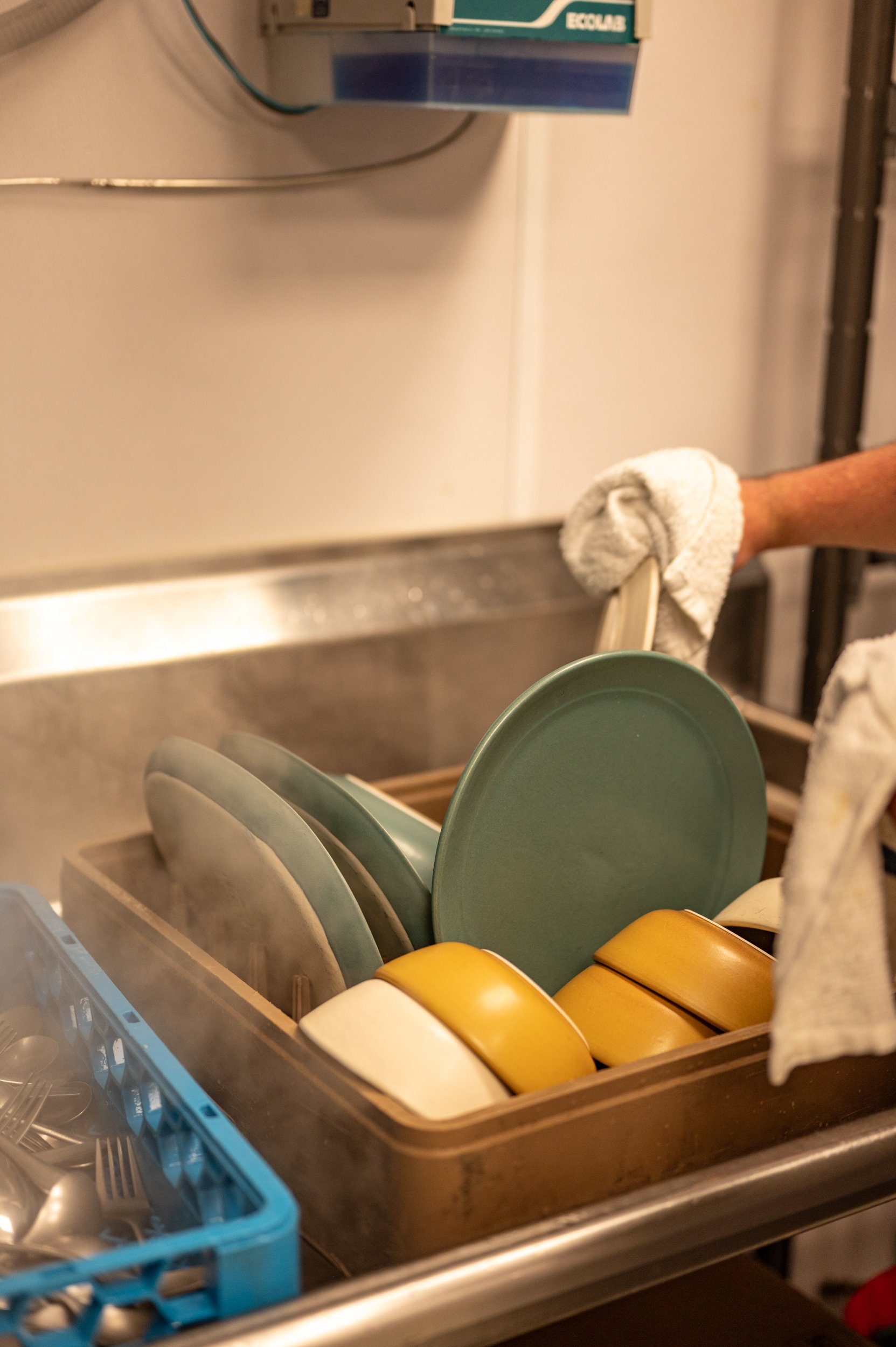
Myrth in the steamy dish pit at PostBoy restaurant.
Vitrification is the question worth asking a maker, because it has a real answer. A body is either fully vitrified or it isn't, and you can feel the difference yourself: turn a plate over and run a thumb across the unglazed foot ring. Vitrified porcelain reads as smooth and dense, closer to stone than to chalk. A porous body feels dry and slightly powdery, and it will darken if you set it in a puddle of water. Every piece of Myrth porcelain is fully vitrified.
Our glazes are formulated to withstand commercial dishwashers, which run hotter, faster, and with stronger detergent than any home machine. A restaurant kitchen puts our work through 20 cycles a day. Your dishwasher isn't going to faze it.
We're also microwave safe, for the same reason. Fully vitrified porcelain doesn't absorb microwave energy the way porous ceramics do, so our pieces heat evenly without developing hot spots or cracking.
What "Restaurant-Grade" Should Mean
You'll see "restaurant-grade" and "commercial quality" used loosely in dinnerware marketing. Here's what it means to us.
It means our porcelain is in daily use in professional restaurant kitchens. Places like Tonino in Boston, Oleana in Cambridge, Uchi locations in Denver and Washington, D.C., and PostBoy in New Buffalo, Michigan.
Chefs choose our tableware because it holds up to constant stacking, commercial dishwashers running through service, thermal shock from the walk-in to a hot plating station, and the inevitable drops.
That same durability translates directly to your home. If our plates can handle a Friday night rush at a Boston restaurant, they can handle your Tuesday night pasta.
How to Choose Durable Dinnerware: A Quick Guide
If you're shopping for dinnerware that will actually last, whether for your home or a restaurant, here's what we'd recommend looking for:
Material: Porcelain is the strongest ceramic option for tableware. Stoneware and earthenware can be beautiful but are generally less dense and more prone to chipping. Bone china is strong but thin and typically not suited for commercial use.
Vitrification: Ask whether the body is fully vitrified. It's a yes or no question with a real answer, and it determines whether a piece absorbs water, stains, and eventually cracks. If a maker hedges, the answer is no.
Glaze integrity: Look for glazes that won't craze (develop tiny surface cracks) over time. Crazing is a sign that the glaze and clay body aren't thermally matched, and it gets worse with every dishwasher cycle.
Domestic production with transparent sourcing: If the maker can tell you exactly where and how their pieces are made, that's a good sign. If they can't, the supply chain may include materials or processes you'd want to know about.
Real-world testimonials: Does the brand have restaurant clients? Professional kitchens test durability harder than any home ever will. If chefs trust it, you can too.
The Bottom Line
You shouldn't have to wonder whether the plates you eat off every day are safe, or whether they'll hold up through next year. Dinnerware is one of those things that should just work: quietly, reliably, beautifully, for a very long time.
We built Myrth around that idea. Every piece is handcrafted in our Rhode Island studio from a proprietary porcelain clay body, glazed with lead-free and cadmium-free formulations we developed ourselves, and tested in some of the best restaurant kitchens in the country. Chip-resistant, dishwasher safe, microwave safe, and designed to last decades.
If you have questions about our materials, our process, or how our porcelain would work in your kitchen, at home or in a professional one, we're happy to talk. We've been making ceramics since 2008, and we have answers.
Shop our full collection → Learn more about our materials → Read The Durability Project →
This post is part of our ongoing effort to be transparent about what goes into our work. For more on our clay, glazes, and production process, visit our Materials page. For behind-the-scenes durability testing, follow The Durability Project.