
Handcrafted in Rhode Island: How Every Piece of Myrth Porcelain Is Made
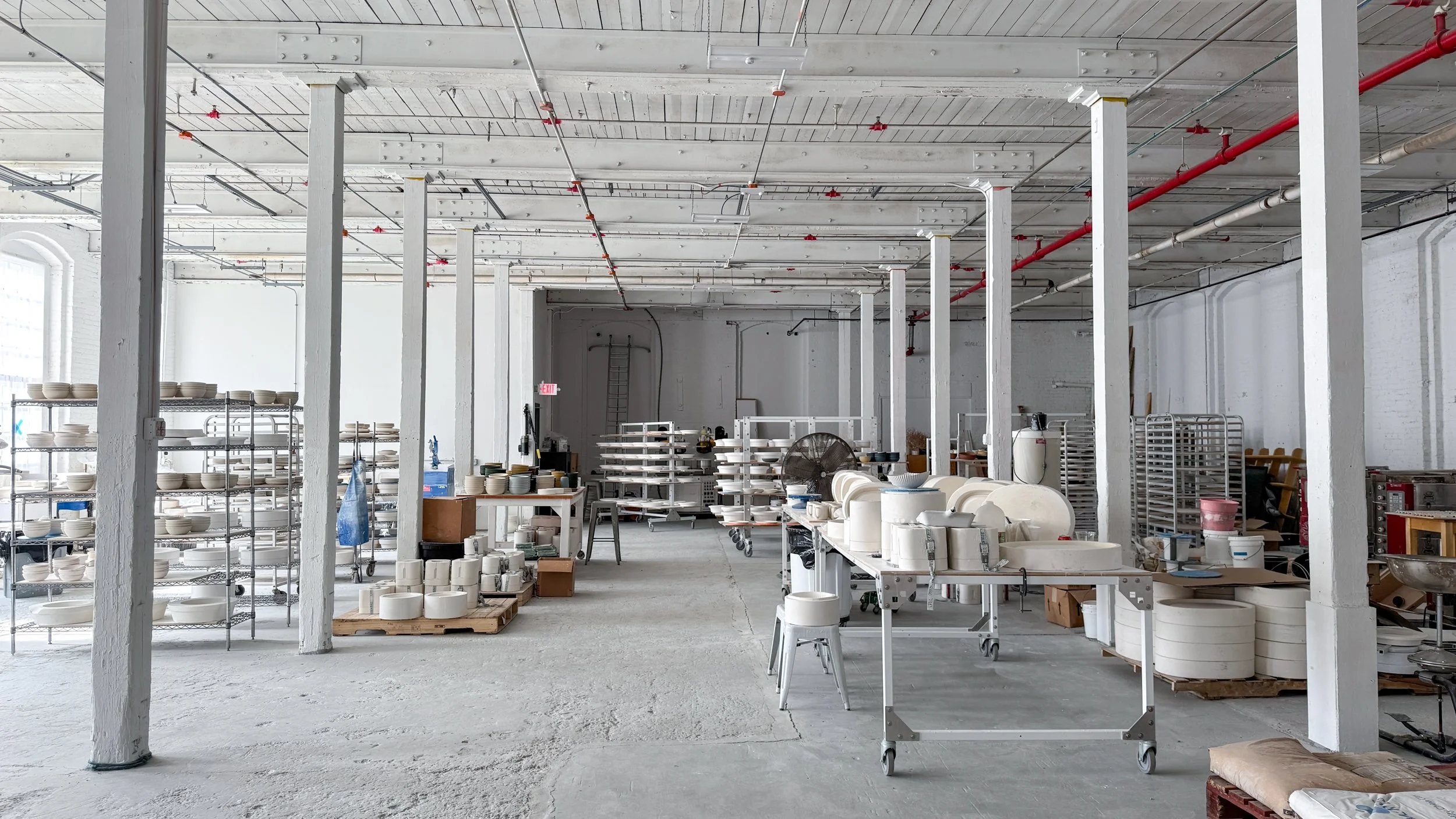
Everything we make starts and finishes in our East Providence, Rhode Island studio. There's no overseas production, no contract manufacturing, no warehouse full of someone else's work with our name on it. Every plate, bowl, cup, and vase is made by our hands — from raw porcelain clay to finished, glazed piece — right here in Rhode Island.
We get asked about this a lot, actually. People are surprised to learn that American-made porcelain dinnerware still exists, let alone from a two-person studio. The reality is that most ceramic tableware sold in the U.S. today is manufactured overseas. That's not a judgment — it's just the landscape. We chose a different path, and it shapes everything about how our work looks, feels, and performs.
Why Rhode Island, Why Here
We founded Myrth in 2015 after spending a decade in product design — footwear, consumer electronics, sports equipment. When we decided to make the leap into ceramics, we brought that design-engineering mindset with us. We weren't interested in setting up a traditional pottery studio. We wanted to build a manufacturing operation that happened to make beautiful things by hand.
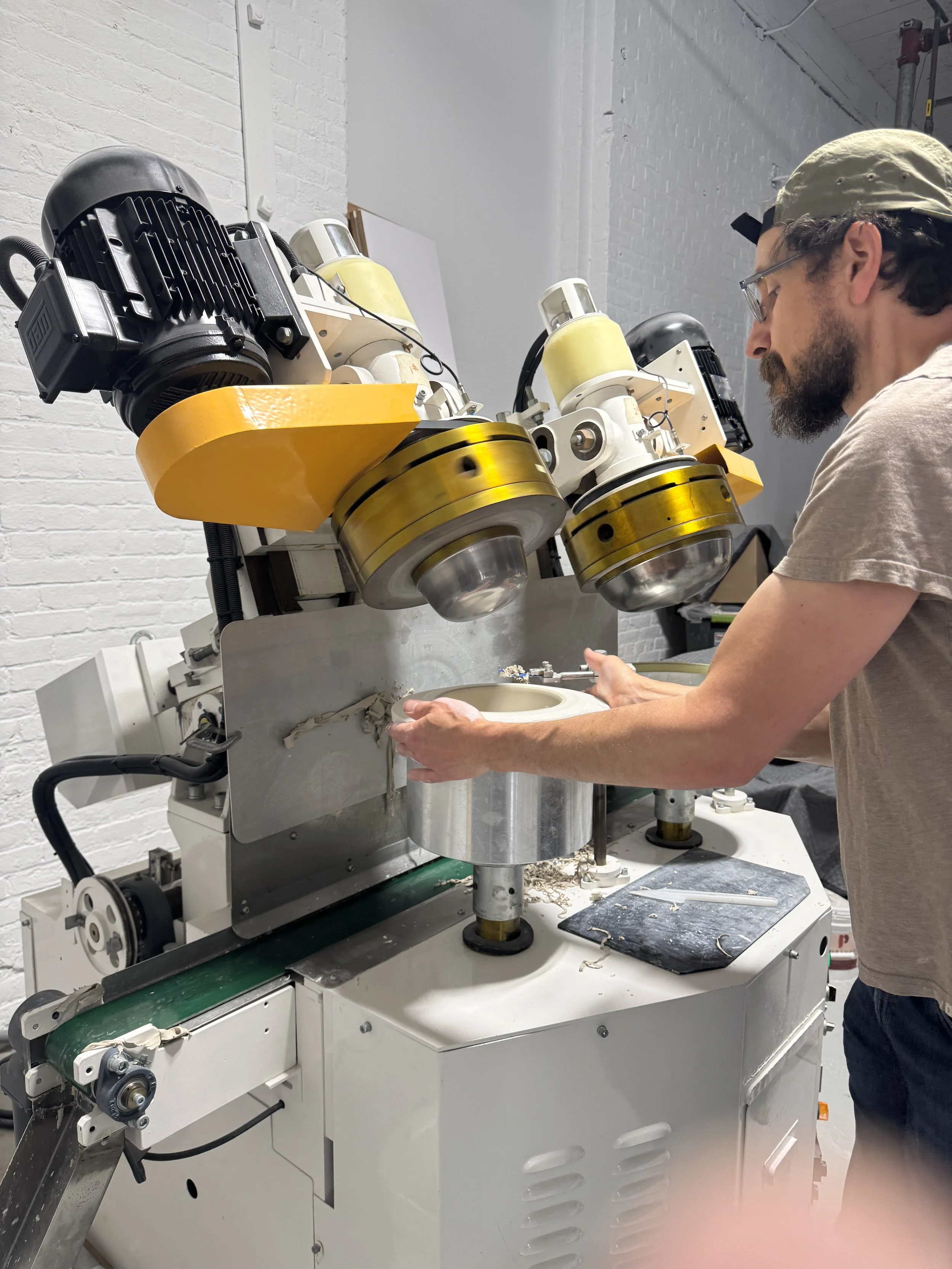
East Providence gave us the space and the community to scale the studio we originally started in Boston. Our studio is a proper production facility: a roller jigger for consistent forming, a spray booth for our glazes, kilns running multiple firings per week, and a showroom where visitors can see the whole process. Rhode Island has a deep tradition of making things — jewelry, textiles, silverware — and we're proud to be part of that legacy.
What "Handcrafted" Actually Means
We use the word handcrafted deliberately. Every piece of Myrth porcelain passes through our hands dozens of times before it reaches yours. Here's what the process actually looks like:
We start with our proprietary porcelain clay body — a formulation we developed specifically for durability. It's not an off-the-shelf clay. We designed it for low thermal expansion and high resilience, which means our pieces resist chipping and cracking under daily use and break cleanly (not into dangerous shards) if they ever do break.
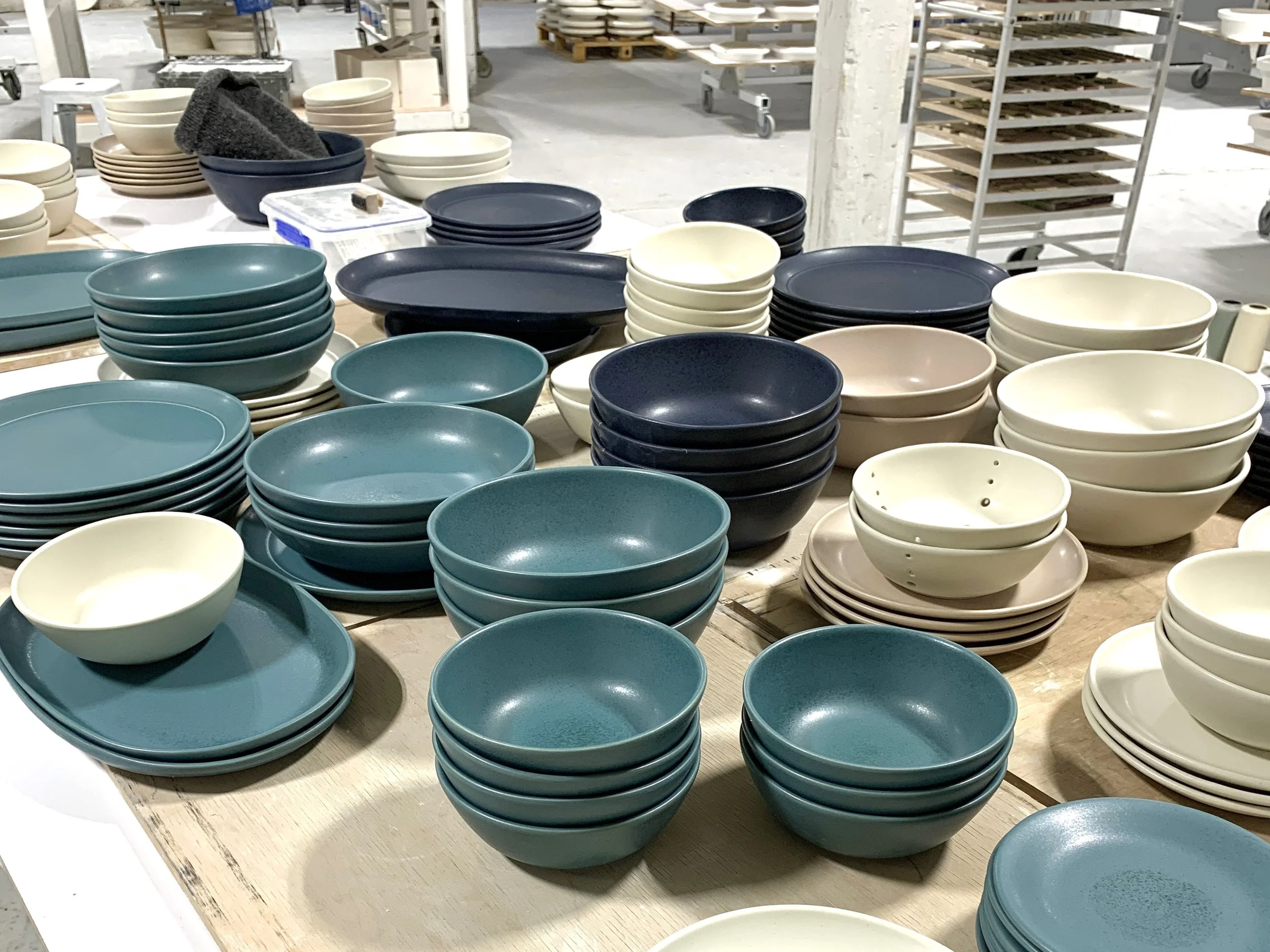
Each piece is formed on our roller jigger, then hand-finished while still leather-hard. Rims are smoothed, feet are trimmed, surfaces are refined. After a bisque firing, we apply our glazes by hand in our spray booth — every color in our palette is a formulation we developed in-house, using food-safe materials with no lead or cadmium. A final glaze firing locks everything in: the color, the surface, the durability.
From start to finish, a single piece takes about two weeks to complete. That's not because we're slow — it's because porcelain demands patience. Drying times, firing schedules, and cooling cycles can't be rushed without compromising quality.
The Difference You Can Feel
People who've held a piece of Myrth porcelain in person often comment on the weight and feel before anything else. There's a density and warmth to properly made porcelain that mass-produced dinnerware simply doesn't have. Our glazes have depth — they're not flat spray-painted surfaces. You can see subtle variation in each piece because a human being applied that glaze, in this studio, on this particular day, plus our glazes are design with textural nuance to capture light elegantly.
That's not a flaw. That's the whole point.
Our restaurant clients — places like Tonino in Boston, Oleana in Cambridge, Uchi in Denver and Austin — choose Myrth not just because the work is beautiful, but because it holds up. Night after night, through commercial dishwashers and the controlled chaos of professional kitchens, our porcelain performs. That same durability translates directly to your home table. These are pieces you'll use every single day for years without seeing a chip, a crack, or a clouded glaze.
Come See for Yourself
Our Rhode Island showroom is open by appointment. You can see the full production process, handle every piece in our collection, and talk to us about custom glazes, restaurant programs, or building your own set. We love showing people how things are made — it's one of the best parts of doing everything under one roof.
Book a visit or browse the full collection.
This is part of our ongoing series about how Myrth porcelain is made. Read more: The Durability Project: Why Clean Breaks Matter in Restaurant Kitchens