
The Durability Project: Why Clean Breaks Matter in Restaurant Kitchens
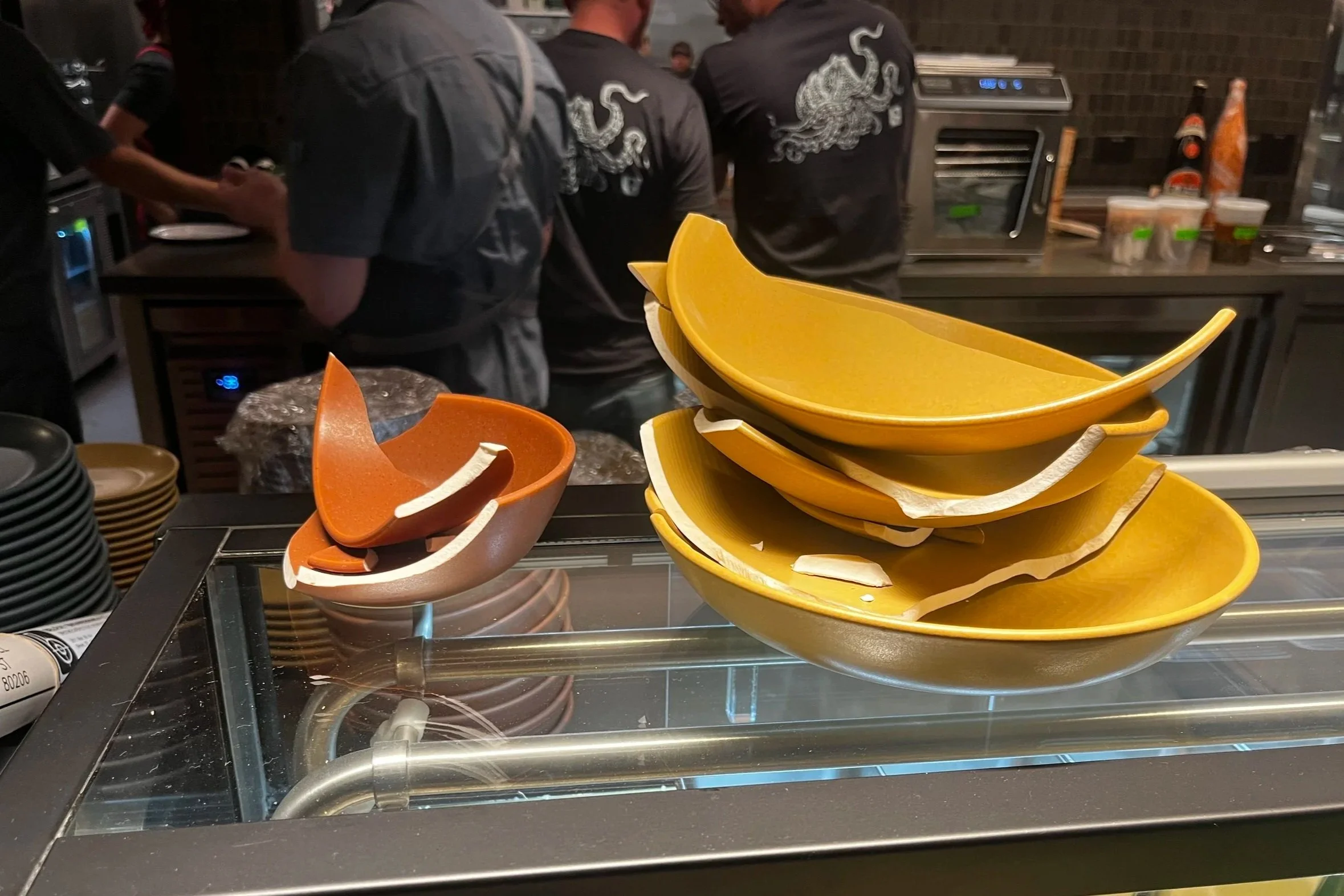
We've been making porcelain tableware for 10 years now (2 of which in our East Providence studio), and somewhere around year three, we started hearing the same story from restaurant clients. Not about beauty or glaze color or the way light catches a rim—though we love talking about those things too. No, chefs kept telling us about the break.
"Your plates don't shatter," Chef Luke from Tonino in Boston told us during a recent order conversation. He'd been through countless sets from restaurant supply stores over the years, replacing pieces constantly. "Yours rarely break, but when they do, they break into a few clean pieces. We can grab them and keep moving. No stopping service, no safety hazard, no shards everywhere."
It was a detail we'd designed into our clay body from the beginning, but hearing it confirmed by the people using our work every single day? That's when we realized we'd never really shown anyone what restaurant-grade actually means.
So we're starting an experiment. We're calling it The Durability Project.
What We're Testing (And Why It Matters)
For the next several months, we're documenting exactly what our porcelain goes through—both in our own kitchen and in the restaurants that depend on it. Not the catastrophic breaks (though we'll talk about those too), but the daily, relentless wear that separates dinnerware that lasts from dinnerware that doesn't.
Here's what we're tracking in our home:
Everyday use. Plates knocking together as we stack them. Bowls clattering in the sink. The kind of casual contact that happens a hundred times a week in any active kitchen. After years of this, we've never seen a chip. Not one.
Dishwasher cycles. We've put our pieces through thousands of washes—literally thousands—and our glazes still look the same as the day they came out of the kiln. No clouding, no hazing, no dullness. Mass-market porcelain often develops that chalky film after a few months of machine washing. Ours doesn't.
Silverware marking. It's inevitable: forks and knives leave grey metal deposits on stronger ceramic surfaces. But there's a difference between marking and marring. On Myrth, those marks buff right off with a little Bon Ami and a scotch-brite pad. The glaze surface stays pristine because it's properly vitrified—fully sealed at the molecular level.
These aren't dramatic tests. They're just life. And that's exactly the point.
The Science of the Clean Break
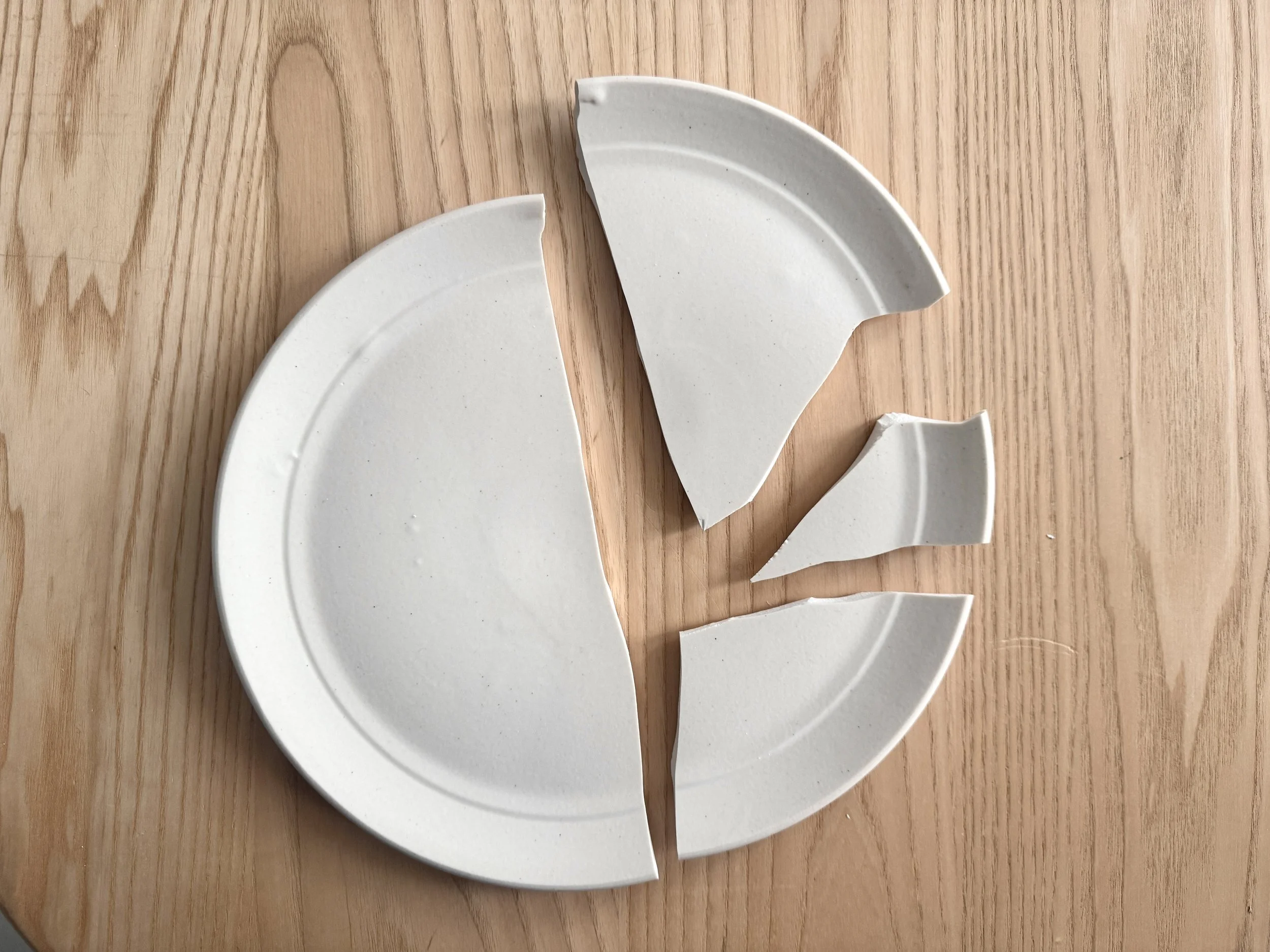
When porcelain does break—and yes, drop anything from six feet and it's going to break—the how matters enormously.
Cheap dinnerware shatters into dozens of tiny, sharp fragments. In a restaurant, that means shutting down a station, sweeping multiple times, worrying about glass-like shards in the dish pit or near by feet. It's a safety issue and an operational nightmare.
Myrth breaks differently. Usually into a few large pieces with clean edges. You can pick them up quickly and get back to work.
This comes down to our proprietary clay body, which we designed specifically for low thermal expansion. When clay particles are properly aligned—something the high compression of our roller jigger process helps achieve—and when the clay itself is engineered to fracture rather than shatter catastrophically, you get structural integrity that holds even in failure.
We're still researching the exact mechanisms (we're potters and product designers, not materials scientists), but the real-world results are clear. Chef Luke just placed another order with us for Tasting Bowls. He wouldn't be doing that if our work didn't hold up.
What's Next
Over the coming weeks, we'll be sharing more from The Durability Project: testimonials from restaurant partners, close-up looks at our testing process, and the technical details of what makes restaurant-grade porcelain different from what you'll find at big box stores.
Whether you're a chef evaluating tableware for your restaurant or someone building a collection for your own table, you deserve to know what you're investing in. Durability isn't exciting until you need it—and then it's everything.
If you're a restaurant owner or chef and want to see how Myrth performs in your kitchen, we'd love to send you samples. Inquire Here to start a conversation.
And if you're a home cook with questions about how our pieces hold up to daily life, ask away. We've been using our own work for over a decade—we have answers.
This is Week 1 of The Durability Project. Follow along on Instagram @myrthceramics for behind-the-scenes updates, and subscribe to our email list below for the next installment.
This is part of our ongoing series about how Myrth porcelain is made. Read more: Handcrafted in Rhode Island: How Every Piece of Myrth Porcelain Is Made