
Understanding Our Glazes
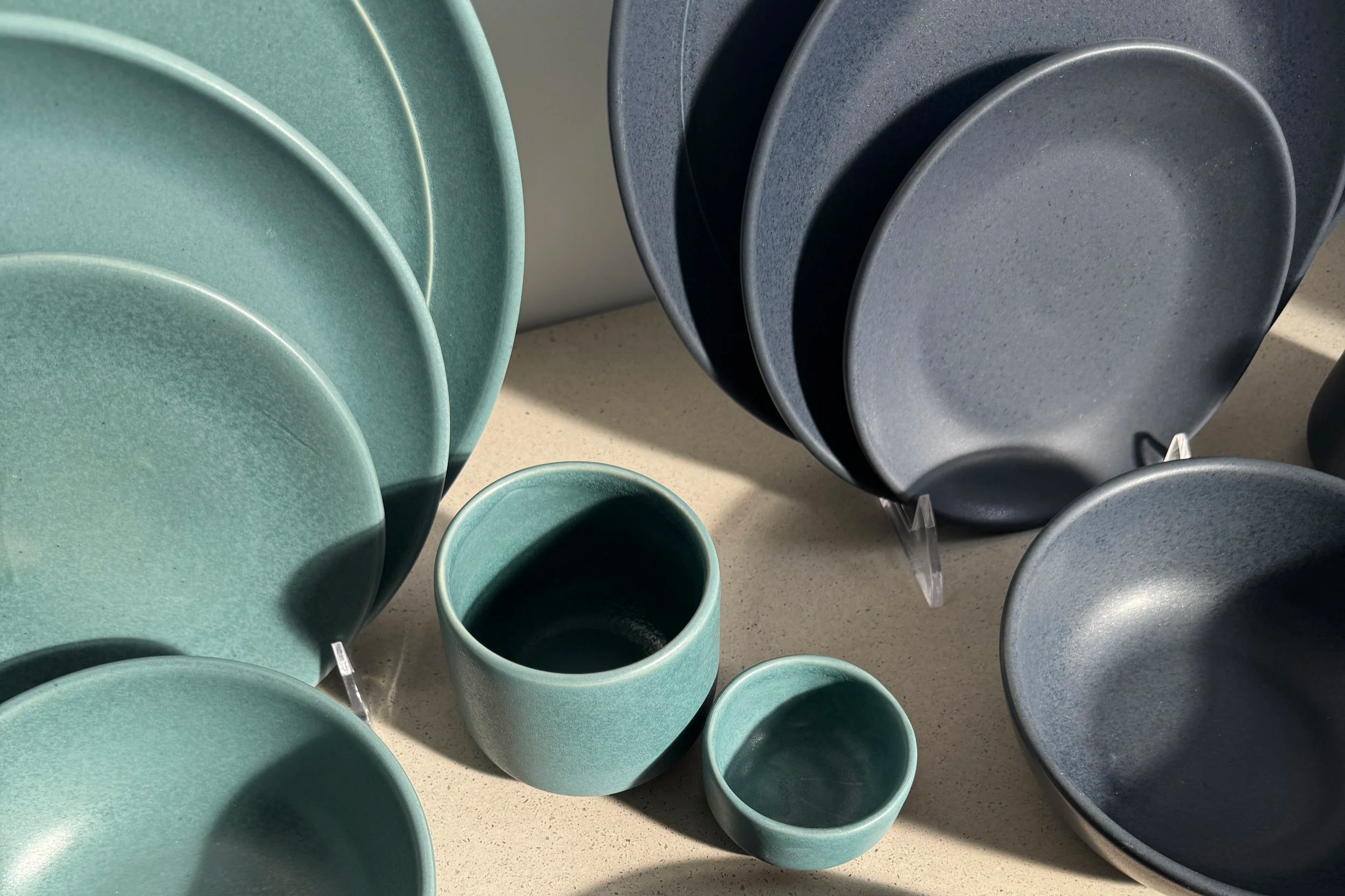
People pick up a plate in our studio and turn it in the light. Almost always the same thing follows: I didn't realize. The texture. The depth. The way the color moves depending on the angle.
A photograph gives you color and form, accurately and consistently, which is what it is for. Depth, movement, and hand feel live somewhere else. They live in the hand. This post is the closest we can get to putting a piece in yours.
What Lives in the Hand
Texture. Our glazes are not smooth the way mass-produced ceramics are smooth. There is a fine mineral quality to the surface, a slight variation you can see at close range and feel with your fingertips. It comes from the raw materials we use and from the way they behave in the kiln.
Depth. Several of our glazes break, which means the color shifts where the glaze pools in recesses and thins at edges and rims. In Rosewood, that shows up as a thin copper line along the detail line of our Dinner Plate, where the brown thins out. In Verdigris, the color deepens toward the center and lightens at the edge. In Nightfall, the dappled gloss sits over a satin base and reads differently depending on what is lighting the room.
Movement. Glaze is glass. It answers light differently at every angle, which is why a piece in your hand keeps changing and a piece on a screen holds still.
Touch. The surface has a soft, almost buttery feel, nothing like the slick smoothness of mass-produced ceramics. It comes from the same fine mineral texture that creates the visual depth. People run their fingers across it without meaning to, or turn a plate over to feel the glaze on the back. It is the reason people pick up a piece and don't want to put it down.
A Closer Look at Each Glaze
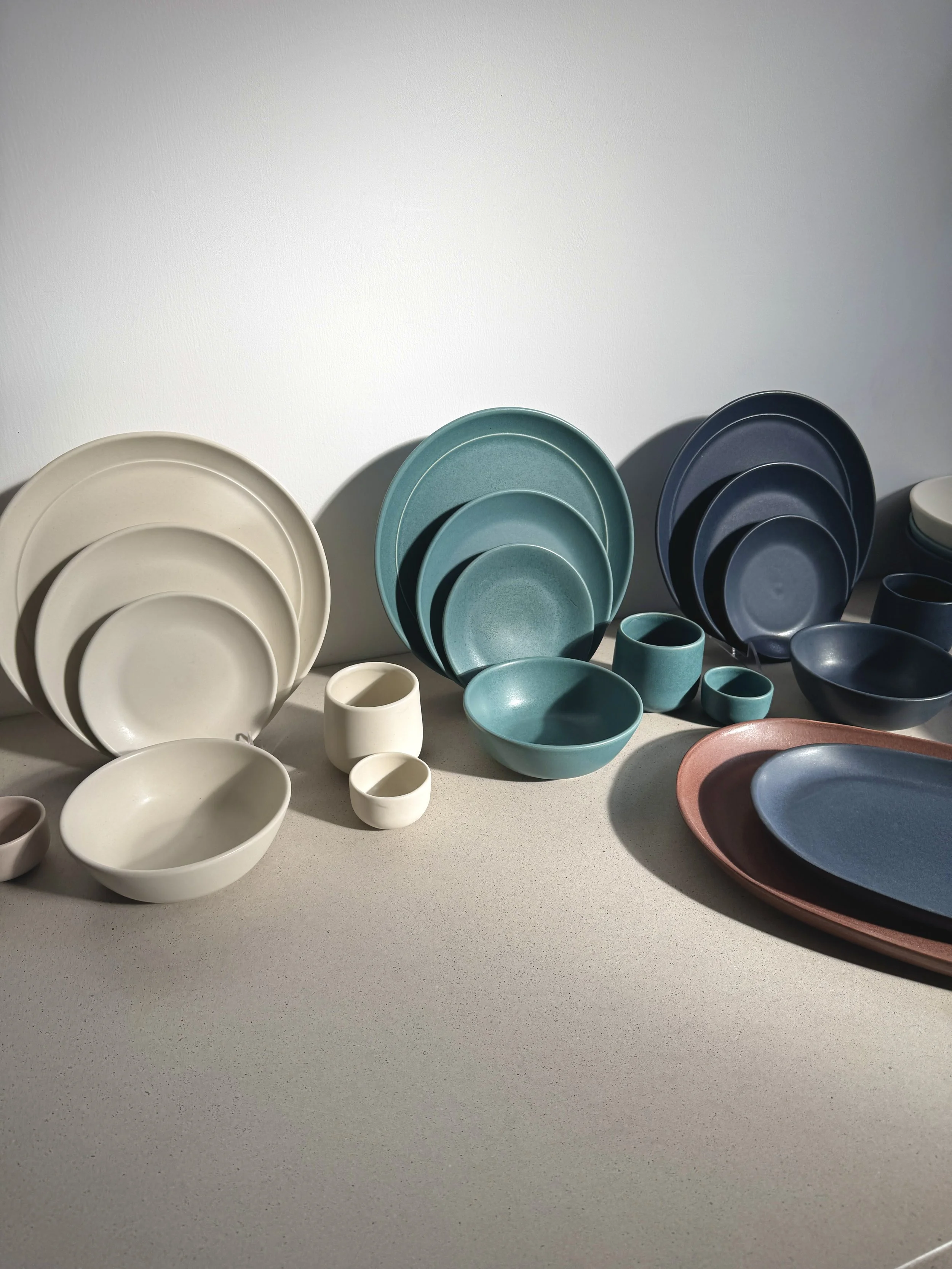
These are our six Core Colors, which stay in the palette. Studio Editions are seasonal glazes that run alongside them for a window and then retire.
Rosewood
Warm cocoa brown with red undertones and a textured soft [gloss / satin matte] finish.
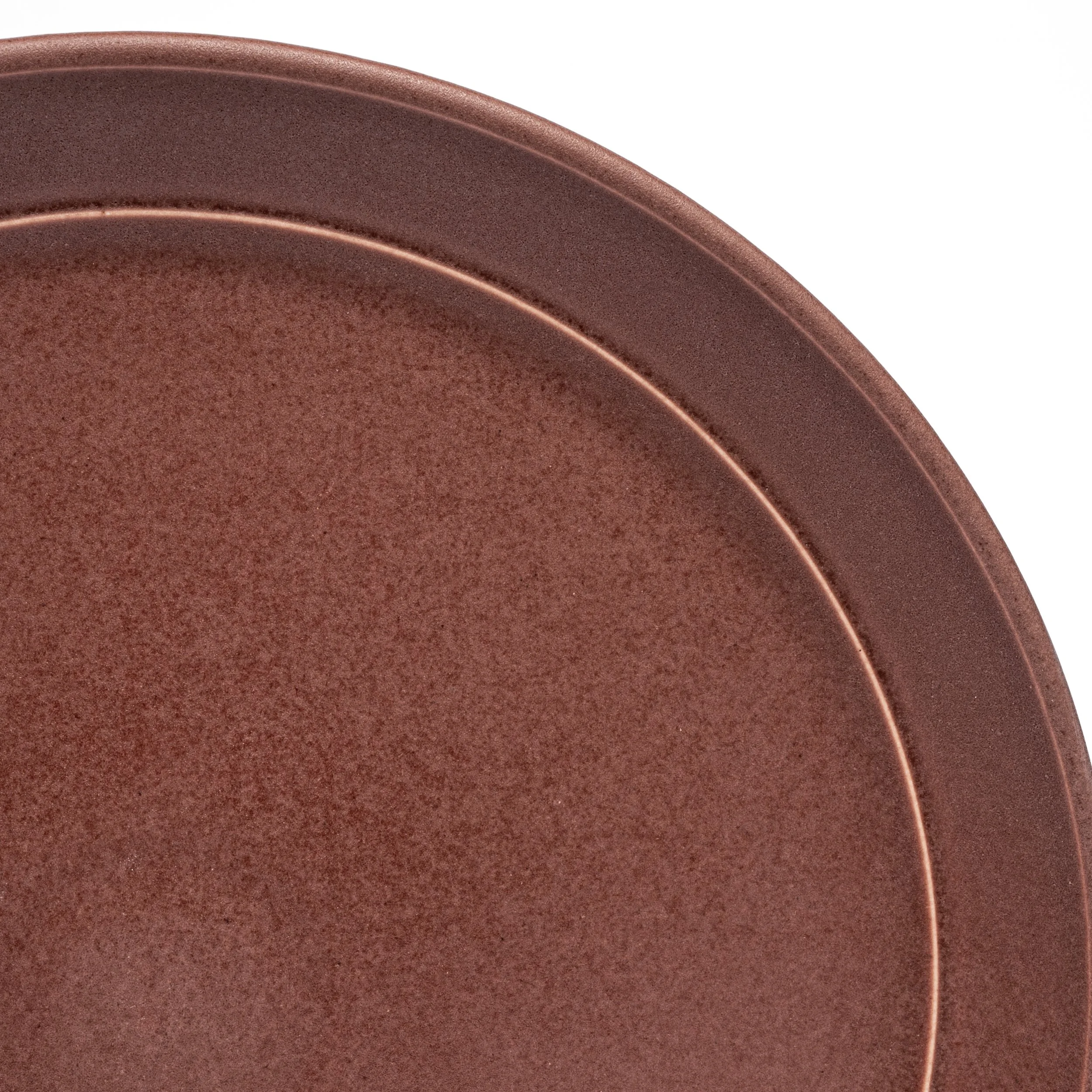
Up close, Rosewood has a fine mineral scatter across its surface, tiny variations in the brown that give it a depth reading almost velvety in low light and warmly luminous in natural light. The defining detail is on the Dinner Plate: where the glaze thins at the raised detail line, it breaks to a thin copper-rose line running the full circumference of every piece. Warm and grounded, and it works with both natural wood tones and richer, more saturated interiors.
Canyon
Warm terracotta with soft umber speckle and a satin matte finish.
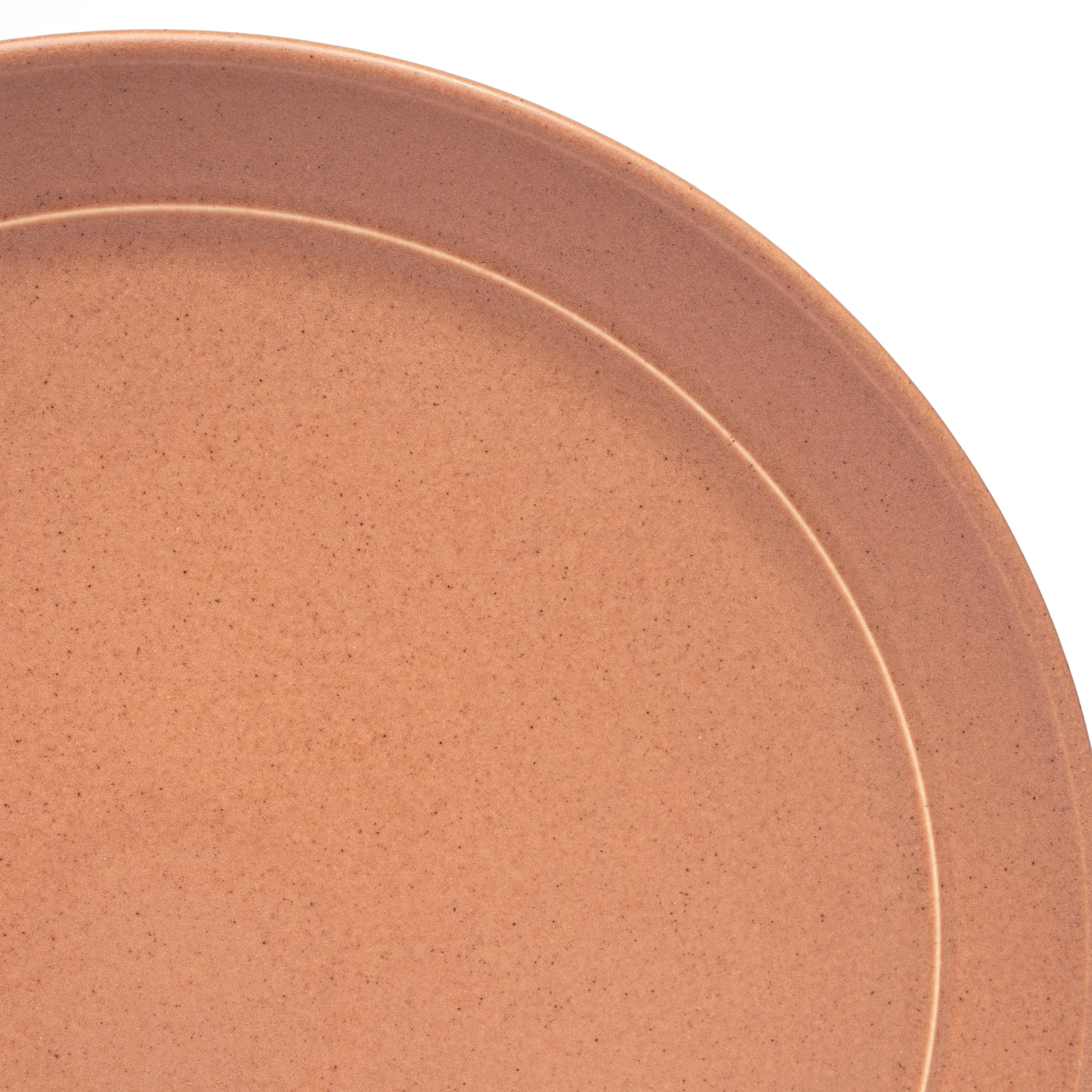
Canyon's surface has a fine speckled quality, small sandy flecks of deeper umber distributed across a warm terracotta base. The satin matte finish absorbs light rather than reflecting it, which gives it a soft, tactile quality. In natural light it reads earthy; under warmer artificial light it picks up more of the red. Of our warm glazes, Canyon has the most visual movement at close range, and the speckle pattern is different on every piece, which is what makes a mixed table of Canyon pieces feel alive rather than repetitive.
Dove
Soft warm grey with hints of lavender and a satin matte finish.
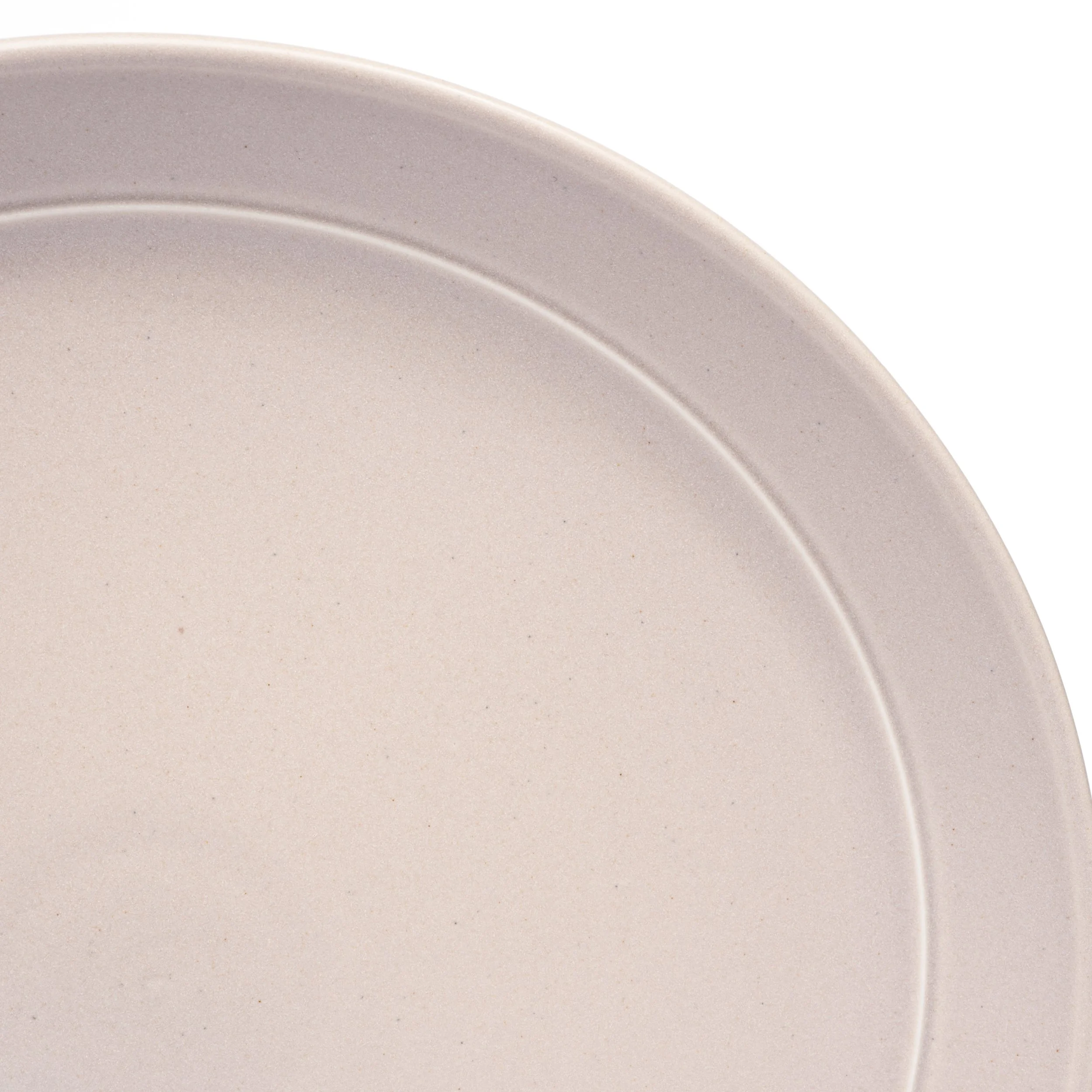
Dove is our most understated glaze up close, which is exactly what makes it useful. The satin matte finish is softly textured, and the warmth in the grey, that pale lavender undertone, is subtle enough to read as neutral in most light while adding something you can't quite name to a table. It is the glaze that works with everything: warm glazes, cool glazes, natural linens, bold textiles. At close range you start to notice it isn't quite grey and isn't quite beige, but something in between that shifts with the light.
Moonlight
Simple, sophisticated off-white with a satin matte finish.
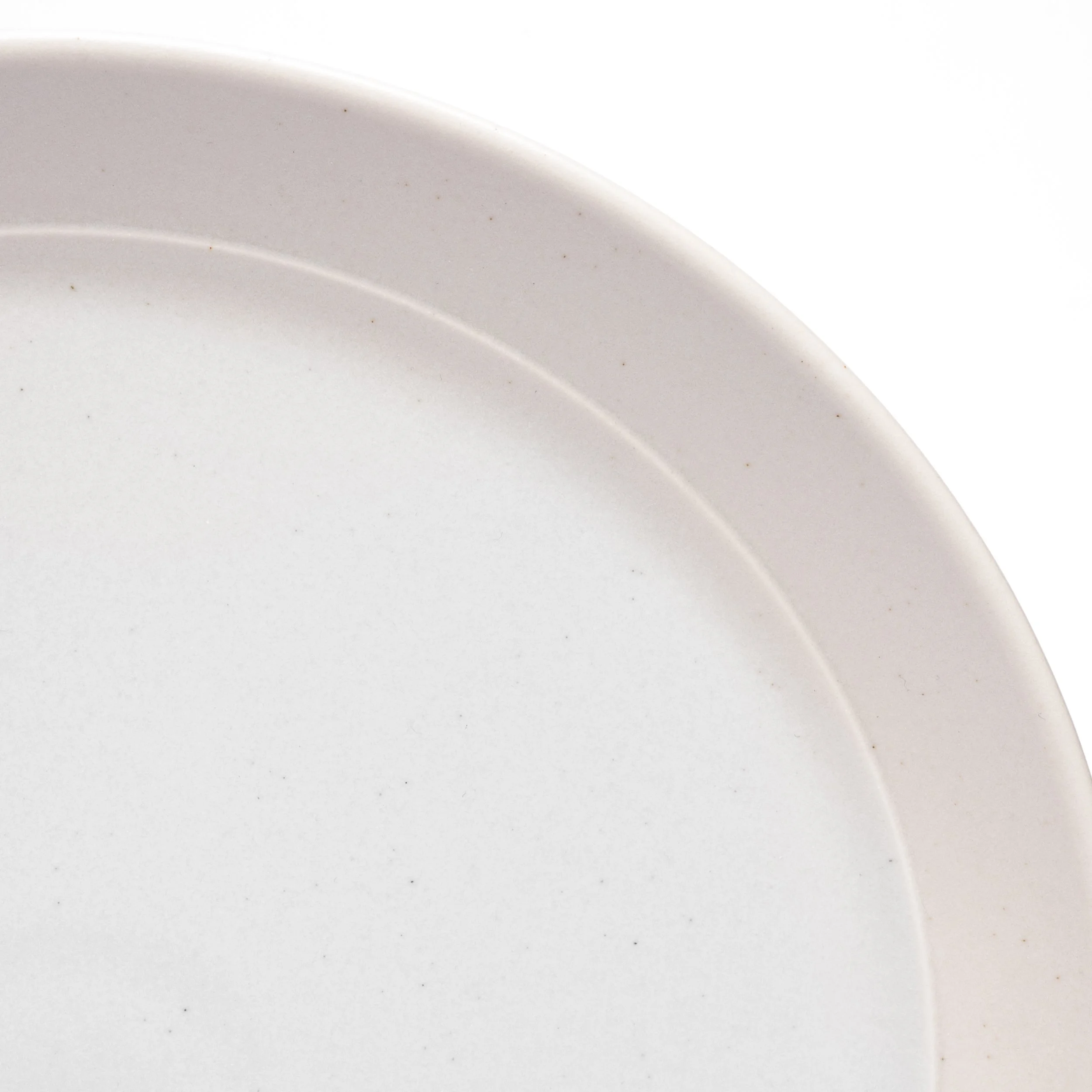
Moonlight is the clearest example of how finish changes everything. As an off-white it could be flat and plain. The satin matte finish gives it a softness a glossy white never has, absorbing light gently rather than bouncing it back. Up close the surface has a slight warmth that separates it from clinical white. It is the glaze that disappears into a table setting in the best possible way, present without competing, letting food and the other pieces take the foreground.
Verdigris
Greenish copper blue with a dappled gloss patina texture.
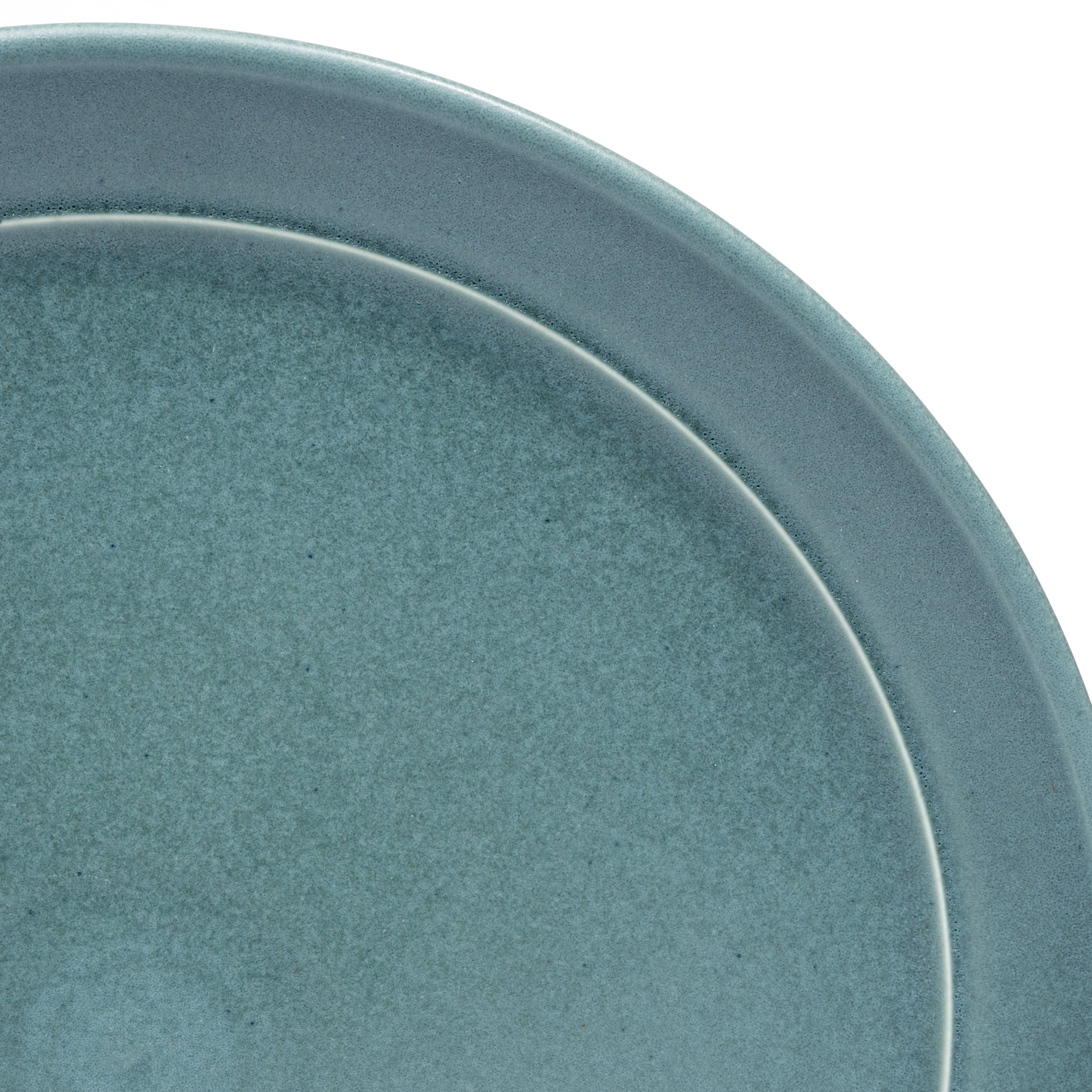
Verdigris is our most visually interesting glaze at close range and the one that changes most from room to room. The dappled gloss texture means the surface is not uniform: pools of deeper blue-green sit alongside lighter areas in a pattern close to natural patina on aged copper or stone. The color itself shifts with light, reading as a clear blue-green in daylight and pulling toward teal under warmer artificial light. At close range the texture takes on an almost geological quality. Of all six, this is the glaze that most rewards standing close to it.
Nightfall
Rich navy blue with dappled gloss speckle over a satin base.

Nightfall is the most dramatic of our glazes and the one that surprises people most in person. The base is a deep, rich navy, dark enough to read as nearly black in low light and distinctly blue in natural light. Over that base sits a dappled gloss speckle, small areas of higher gloss that catch light differently from the surrounding satin surface. The effect is quiet at a distance and striking up close, like a night sky, which is where the name comes from. On a table it adds depth and contrast without taking over.
See Them in Person
Our studio in Providence, Rhode Island is open by appointment, and it is the best way to understand any of the above. Book a visit →
If you can't get here, order a single piece in the glaze you're most curious about before committing to a full set. Individual pieces ship within a few days, and our return policy leaves you room to change your mind.
Myrth makes handcrafted porcelain tableware in Providence, Rhode Island. Founded by product designers Abby and Eric Smallwood, every piece is made in our studio from clay and glaze recipes we formulate ourselves.