
Early on, before we had our East Providence studio, before we understood material science the way we do now — we were selling at a local farmers market.
An older gentleman walked over to our table, picked up one of our bowls, tapped it with his finger, shook his head in what looked like disapproval, and walked away without saying a word.
I was horrified. And honestly confused. What just happened? What did he hear that I didn't?
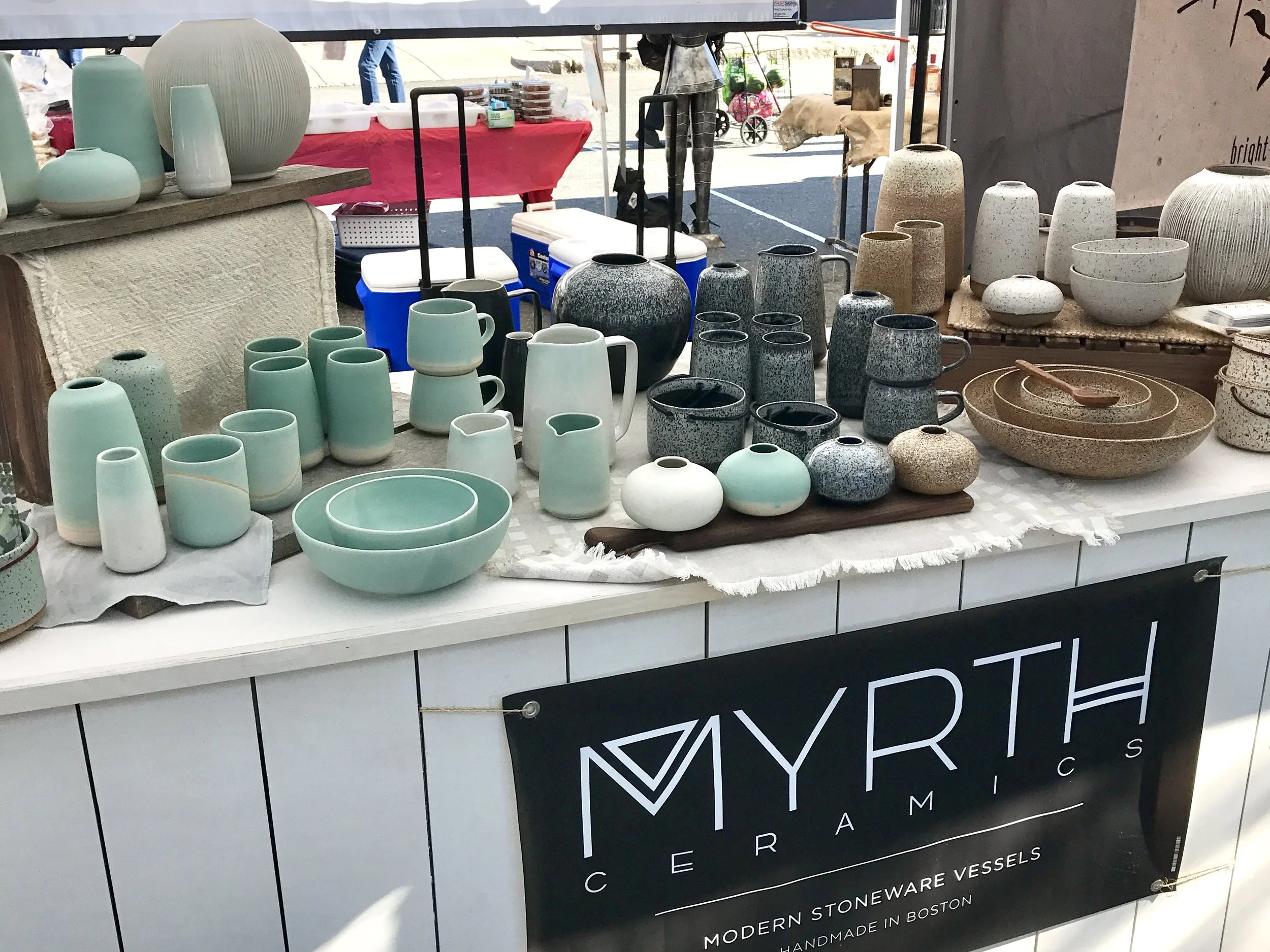
2017 Union Square Farmers Market
He could hear that our pieces were stoneware, not porcelain. The ring test. He knew in two seconds what we hadn't yet learned: when you tap a well-made piece of porcelain, it rings like a bell — a clear, sustained tone. Stoneware doesn't ring the same way. That moment sent us back to the studio to understand why.
We spent months learning about porcelain clay bodies, vitrification, particle alignment, and forming methods. We didn't launch our porcelain line until every piece passed the ring test. That's why our porcelain is restaurant-grade — built for the same daily service standards as fine dining kitchens.
Now, years later, our porcelain rings beautifully. And we understand exactly what that sound means.
This post is about what that gentleman at the farmers market could hear — and what the ring test actually tells you about ceramic quality.
What the Ring Test Actually Reveals
When you tap a ceramic piece with a spoon or your fingernail, the sound tells you three things:
1. Material type — Porcelain rings clearly. Stoneware has a lower, duller tone. The ring is specific to porcelain's clay composition and vitrification.
2. Particle alignment — Are the clay particles organized or random? Well-aligned particles vibrate together, creating resonance. Poorly aligned or random particles absorb vibration.
3. Structural integrity — Is the piece intact? A dead sound (no ring, no resonance) means there's a crack, even if you can't see it.
The ring test is most useful for porcelain. If you hear a clear ring, you're holding porcelain. If you don't, it might be stoneware, under-fired, cracked, or made with a clay body that doesn't vitrify fully.
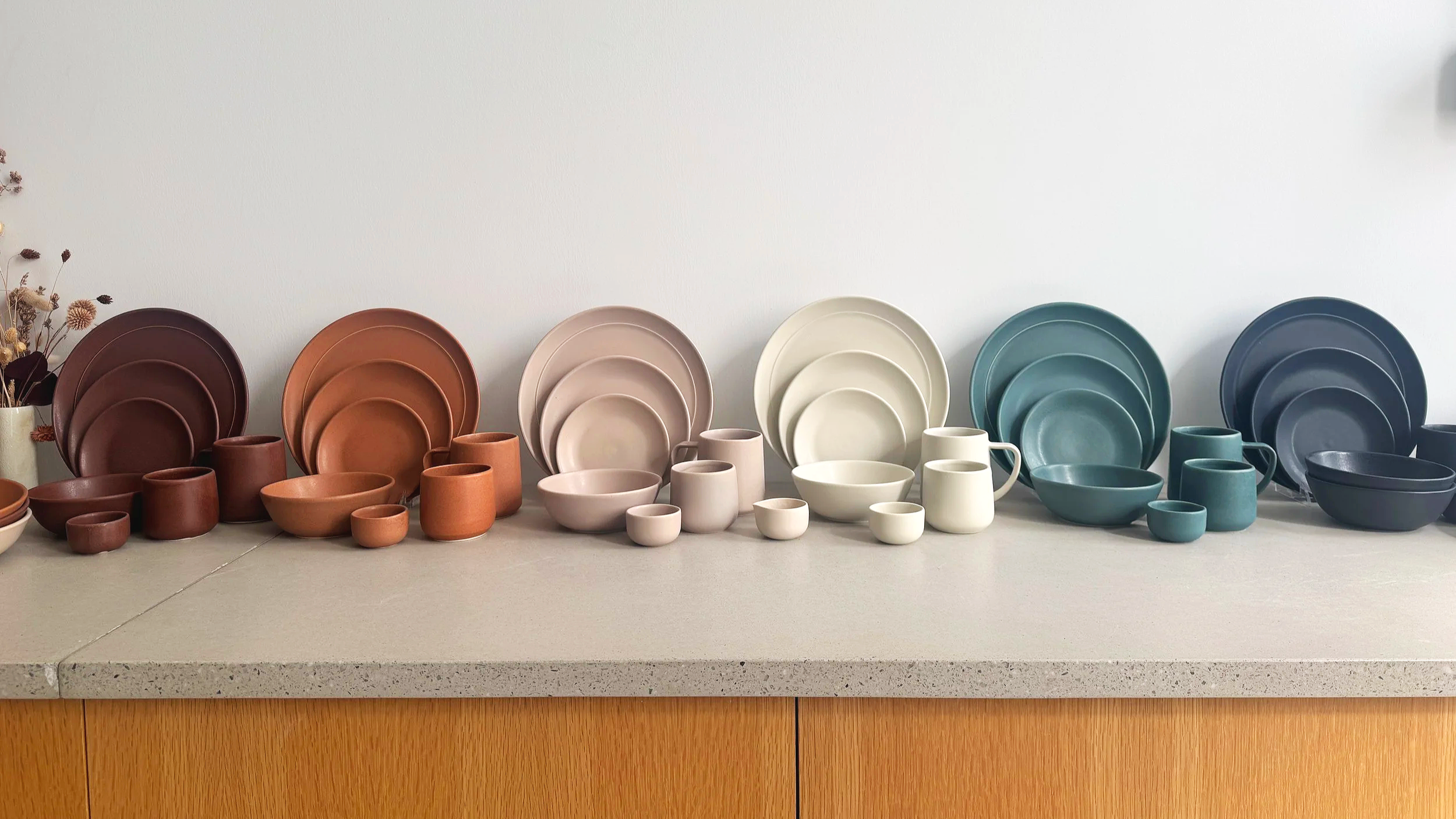
Myrth Showroom 2026
Why Porcelain Rings: The Playing Card Analogy
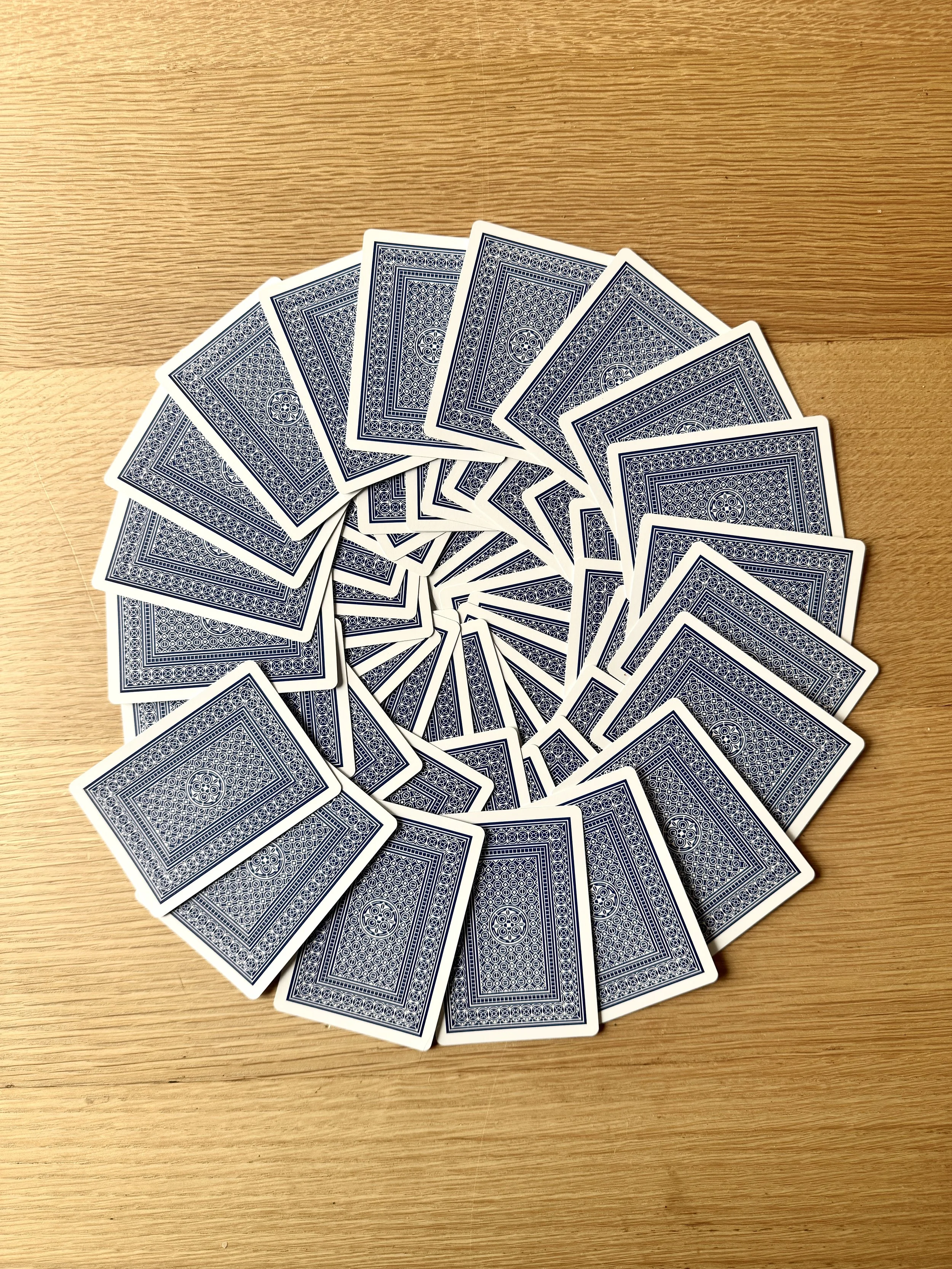
Porcelain particles stack and layer like playing cards.
Here's the material science, simplified.
Porcelain clay contains grolleg — a type of kaolin with flat, hexagonal particles at the microscopic level. Think of each particle as a playing card.
When we form porcelain on our roller jigger:
The clay is compressed under high pressure and velocity as it spins on the roller. That pressure forces the flat grolleg particles to align — like stacking playing cards in tight concentric circles around the center of the plate. Each particle lies flat against the next, creating a dense, organized structure.
When we fire this aligned clay to Cone 5 (2185°F), the particles don't just stack — they fuse together. This is called vitrification: the process where clay particles bond into a unified, glass-like matrix. The result is a structure that's exceptionally strong, non-porous, and resistant to chipping.
And because the particles are both aligned and fused, the piece vibrates freely when struck. That's the ring you hear.
By comparison:
Industry professionals generally understand that other forming methods create different particle structures. Hand-thrown ceramics tend to have particles in a looser spiral pattern from the throwing motion. Slip-cast pieces (where liquid clay is poured into molds) may have more random particle orientation as the clay settles. These methods can still produce quality ceramics — our own slip-cast platters, mugs, and vases are excellent examples — but the particle alignment differs from roller jiggering, which affects the acoustic properties.
Porcelain formed on a roller jigger creates some of the tightest particle alignment possible. That's why it rings so clearly.
Porcelain vs Stoneware: Durability and Performance
Stoneware doesn't ring the way porcelain does. It's a different material with different properties — and that difference matters when you're choosing tableware that will be used daily for years.
Porcelain: Contains grolleg (flat particles that align tightly), fires to full vitrification, produces a clear bell-like ring when tapped. The tight particle alignment and complete vitrification make it more chip-resistant, less porous, and more durable under repeated use and washing.
Stoneware: Contains different clay minerals, fires to vitrification but with a different particle structure, produces a lower tone or dull sound when tapped. It's durable, but the looser particle structure means it's more prone to chipping at edges and rims over time.
The ring test helps you distinguish between them — and understand why fine dining restaurants and professional kitchens choose porcelain for daily service. The same qualities that create the ring (tight particle alignment, full vitrification) are what make porcelain last decades.
How to Test It Yourself
The ring test is simple:
Balance a bowl on your fingertips (resting on the foot). Don't grip it tightly — you want it to vibrate freely, like a bell.
Tap the side of the bowl gently with a spoon, your fingernail, or a pen.
Listen.
Note: Bowls ring more clearly than plates due to their shape. If testing a plate, rest it in the palm of your hand with contact only at the foot (the raised ring on the bottom). This allows the vibration to carry across the rim for a crisp ring.
What you're listening for:
✓ Clear, bell-like tone that sustains for 2-4 seconds = Porcelain. Well-aligned particles, fully vitrified. High quality.
✓ Lower-pitched tone, shorter duration = Likely stoneware or a different porcelain formulation. Still quality, just different acoustic properties.
✗ Dull thud, no resonance = Could be stoneware, under-fired, or a clay body that doesn't vitrify fully.
✗ Dead sound, no vibration at all = There's a crack in the piece, even if you can't see it. The crack stops the vibration. Time to retire this piece.
How to perform the ring test.
Why We Care About This
When that gentleman walked away from our farmers market table years ago, we could have shrugged it off. One person's opinion. But he was right.
Our early pieces were stoneware. We were learning. And that moment — hearing it pointed out without a word, just a head shake — pushed us to understand porcelain deeply enough to make it ourselves.
Now we know how to formulate a porcelain clay body with excellent vitrification. We know how our forming method aligns particles. We know what the ring test is listening for. And every porcelain piece we make passes that test.
The ring test isn't just a party trick. It's a quick, reliable way to identify porcelain and assess its quality. And now you know how to use it.
Test the Ring Yourself: See (and Hear) Them in Person
If you're in Rhode Island or visiting the area, come see our studio. Pick up a bowl. Tap it. Listen. You'll hear the difference immediately.
Our East Providence studio is open by appointment — book a visit at myrth.us/visit.
Ready to build your collection? Our place settings are made to order in your choice of glaze — monochrome or mix and match. Shop place settings →
Myrth handcrafts porcelain tableware in East Providence, Rhode Island. Founded by product designers Abigail and Eric Smallwood, every piece is made in-house from proprietary clay and glaze recipes developed in our studio.