
 Image 1 of 6
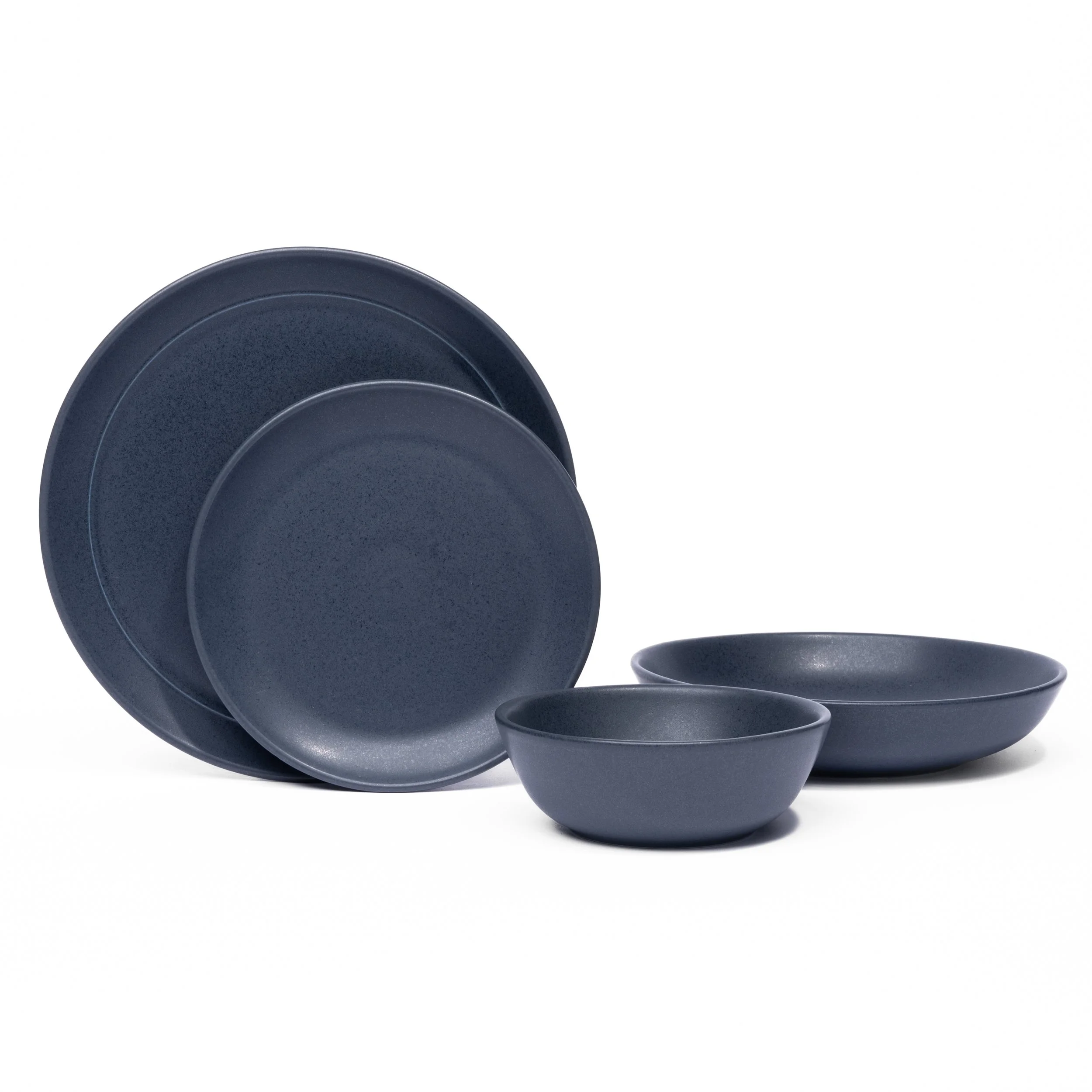 Image 2 of 6
 Image 3 of 6
 Image 4 of 6
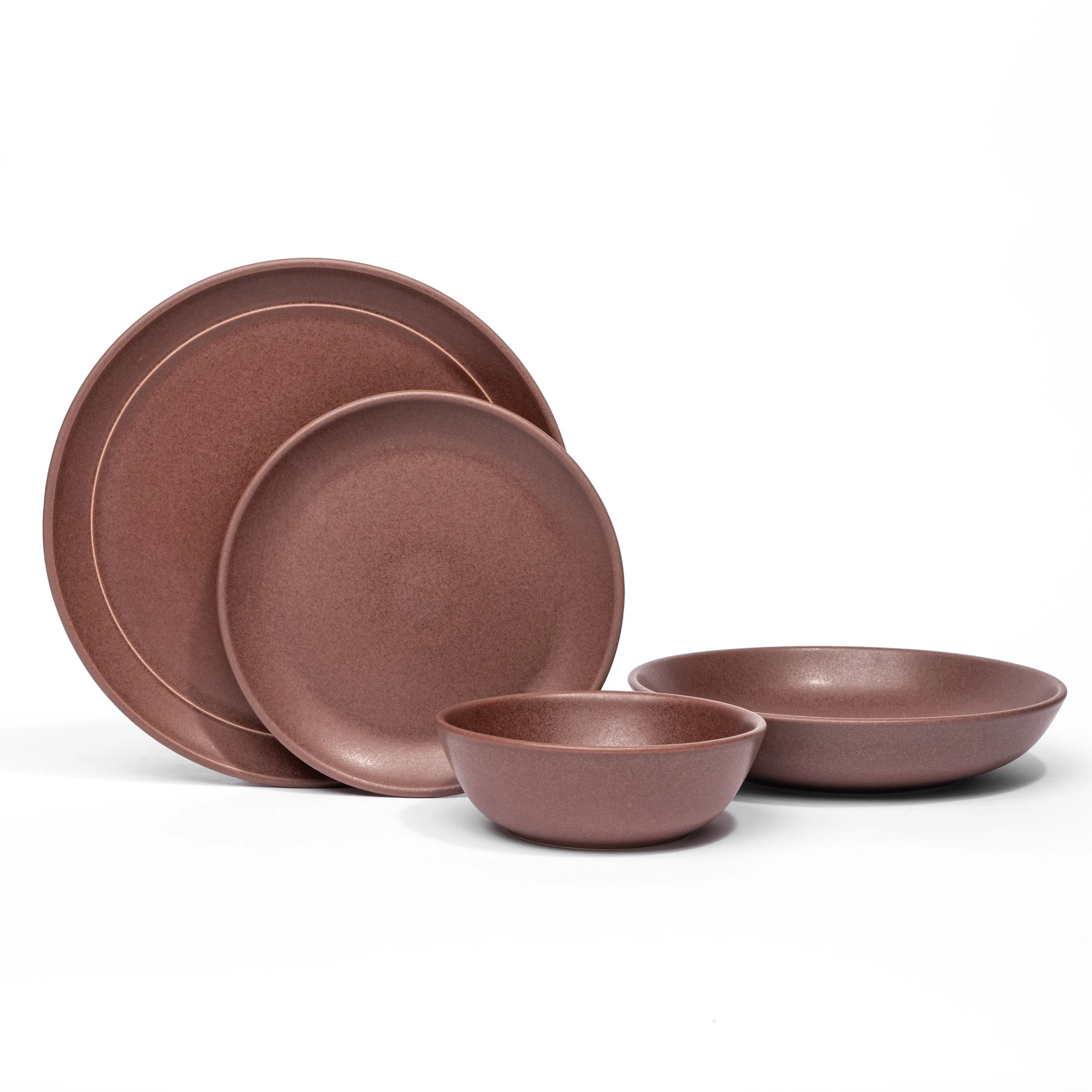 Image 5 of 6
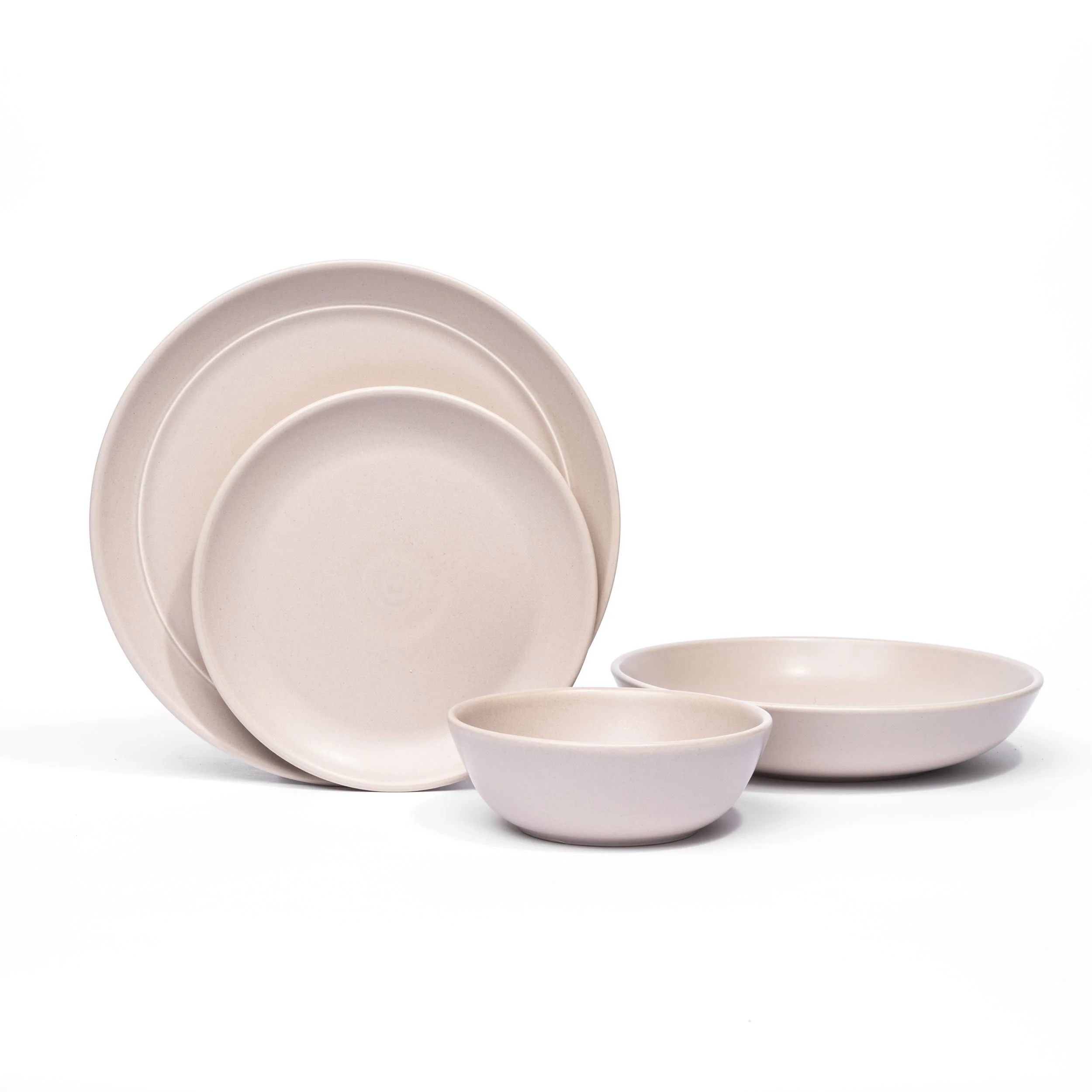 Image 6 of 6
Three Ways to Build Your Set
Our glazes were built to be mixed. Start with the one you are drawn to and go from there.
-
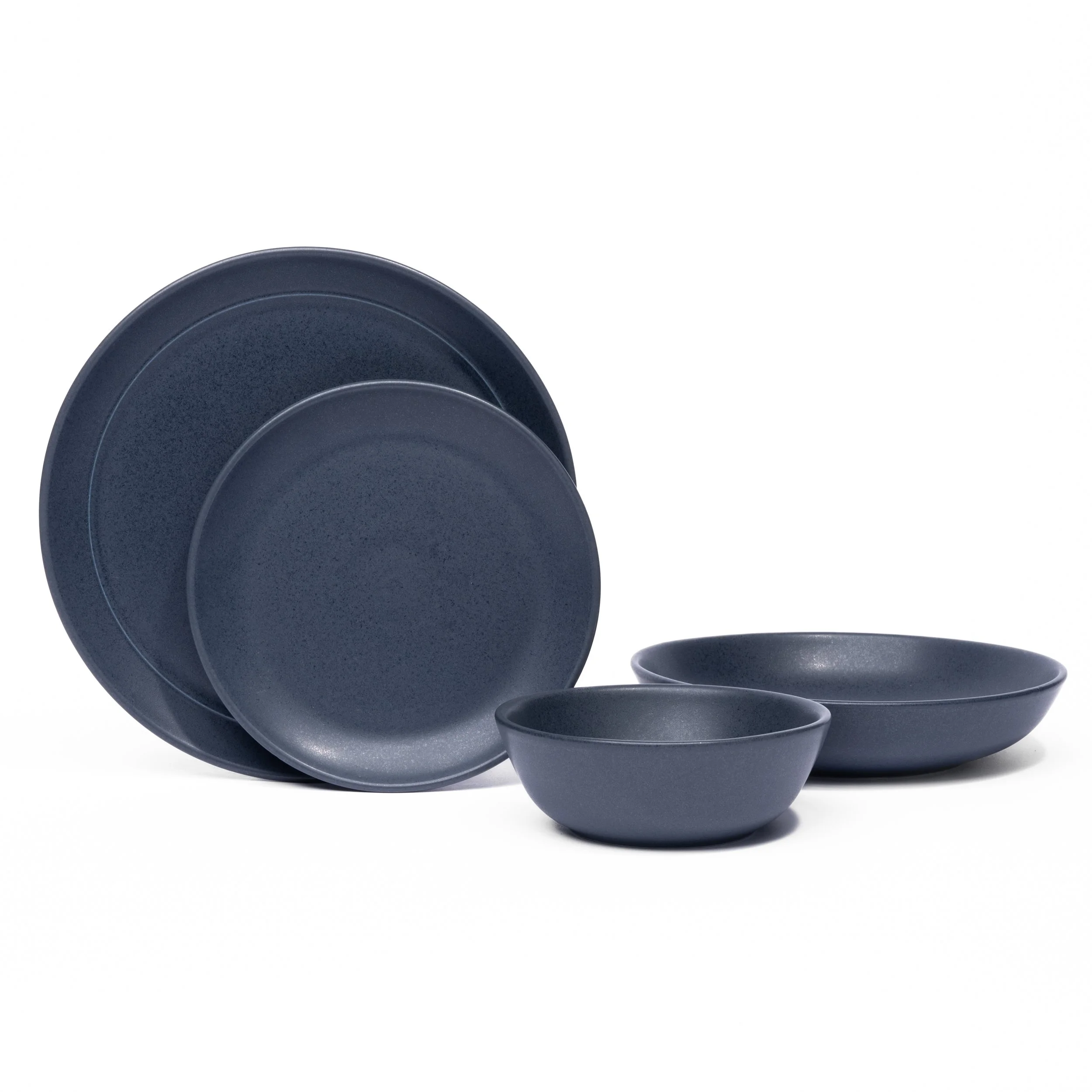
ONE COLOR
Every piece in the same glaze. Calm on a table, easy to add to later, and how most sets go out the door. If your dishes live on open shelving, this is the one that reads as part of the room.
-
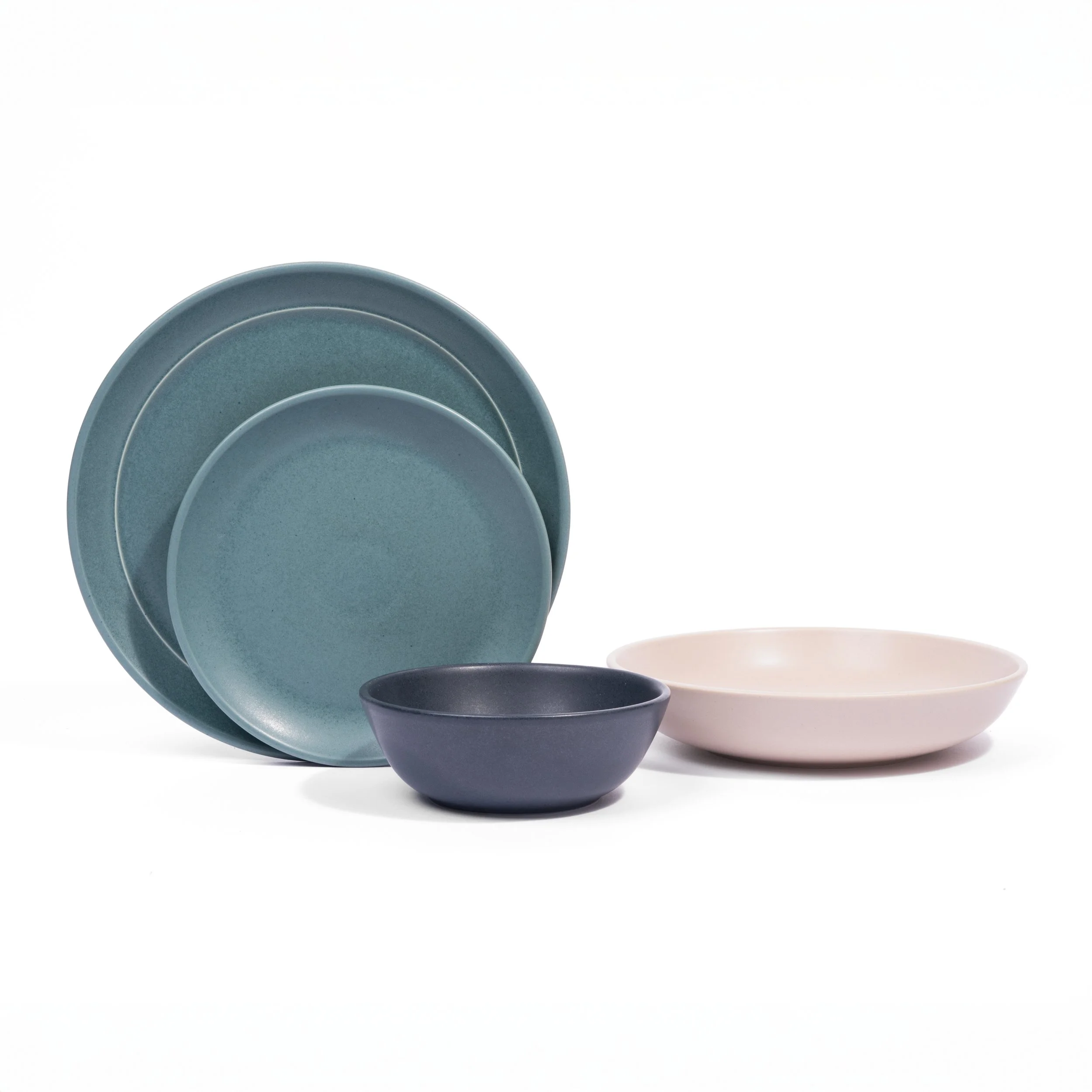
MIX THE SETTING
Two glazes in one setting, split by what the pieces do. Plates in one, bowls in another. Or hold the setting in a single glaze and let one piece break it, a Canyon Tasting Bowl against a Moonlight setting. Think about what you cook in each piece and let that decide.
-
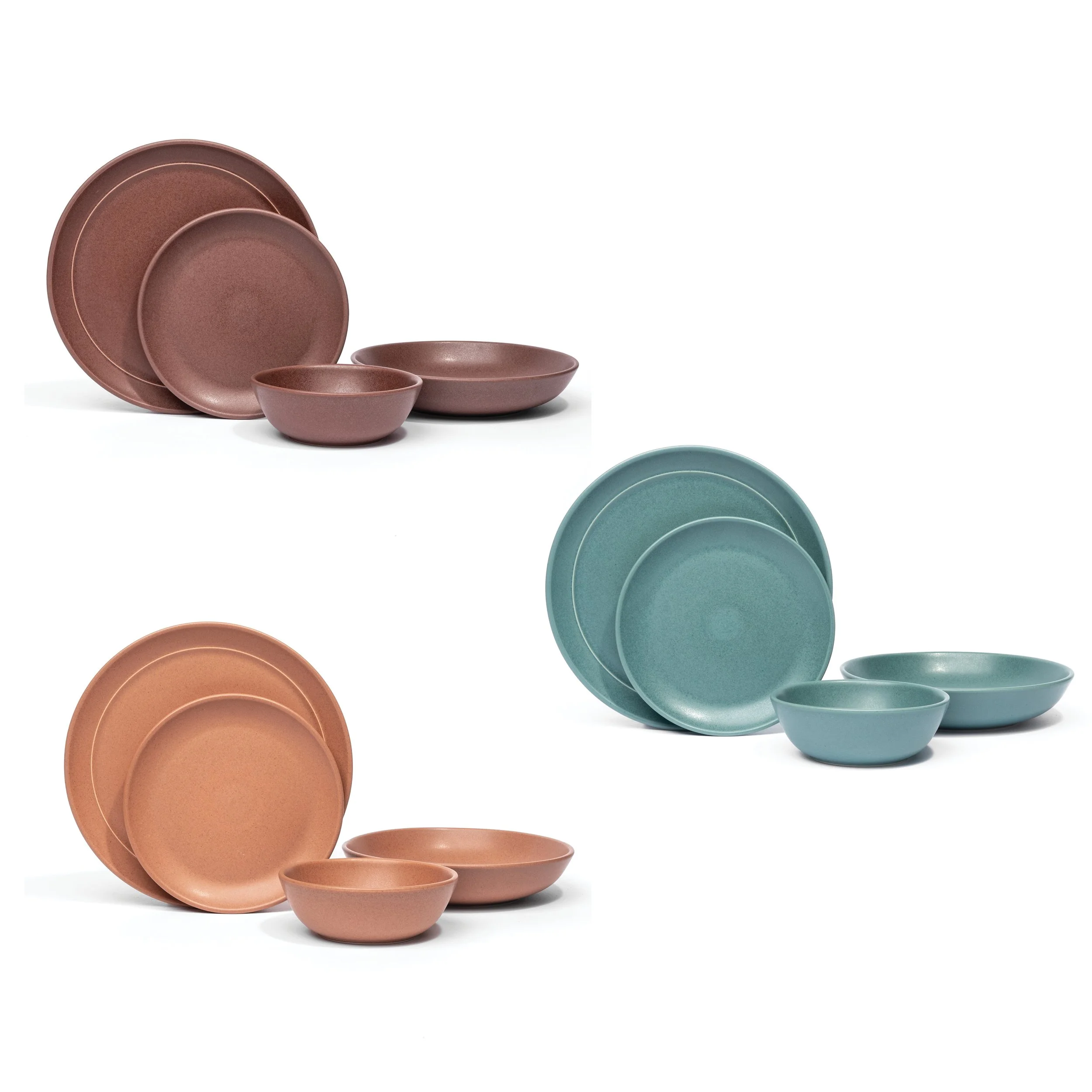
MIX THE TABLE
Each setting stays one glaze, and the glaze changes from setting to setting. Twelve settings might be four Nightfall, four Rosewood, four Dove. Set four for a Tuesday and the table is quiet. Set all twelve and it comes alive. This is how we buy it ourselves.
Our Glazes
Choosing a color is the part most people find hardest, so here is the honest guide.
All six glazes are our own proprietary recipes, mixed and tested here in the studio. We designed each one to carry visual texture, a fine mineral quality that comes from our raw materials and the way they behave in the kiln. The color reads with depth and character, that shifts with the light rather than sitting flat.
The texture is visual, though: what you feel in the hand is a soft, almost buttery surface, nothing like the slick smoothness of mass-produced ceramics, and it's the part no photo can quite show you.
Our glaze colors were also built to be mixed, so there is no wrong combination. Start with the colors you're drawn to and go from there.
-
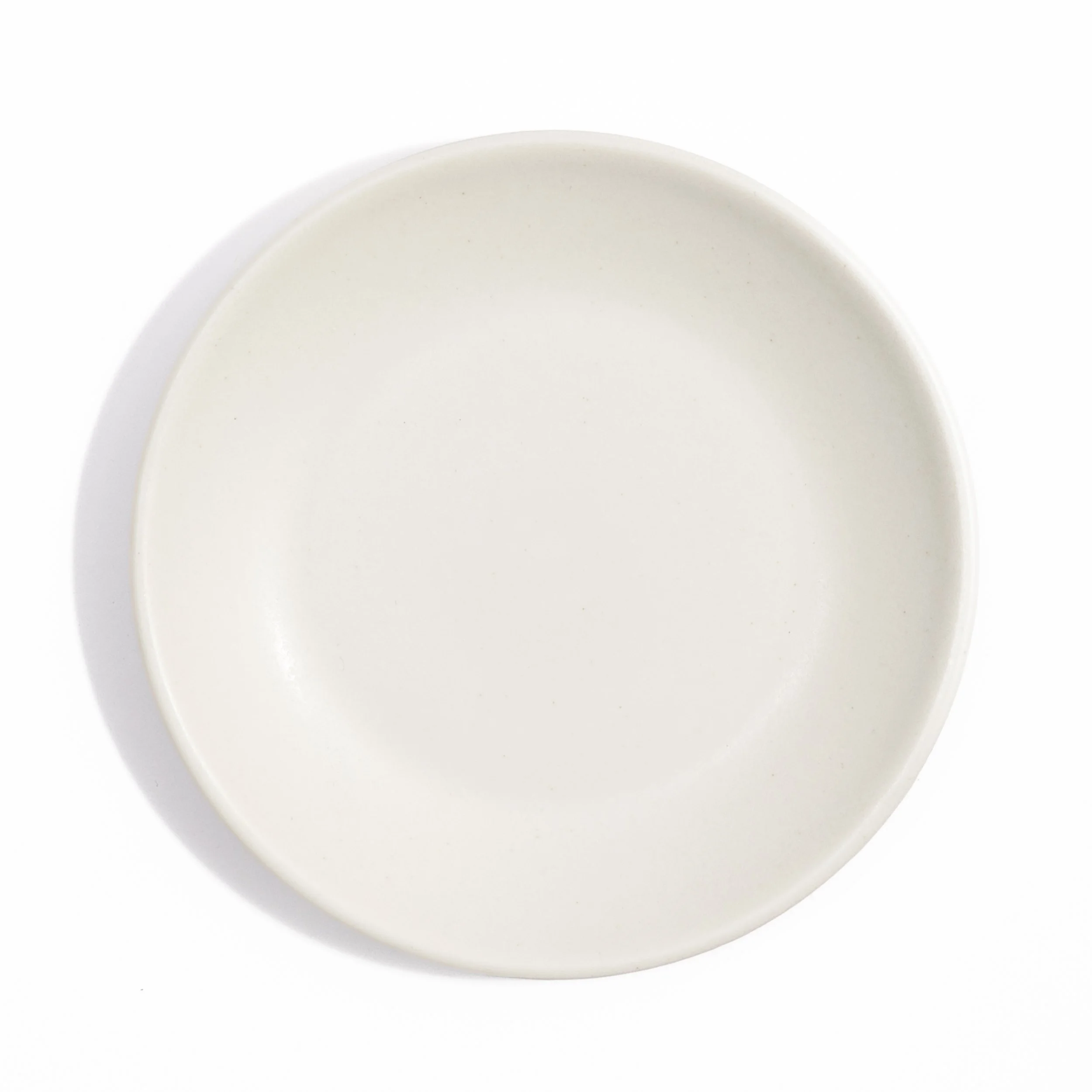
MOONLIGHT
Warm off-white with a satin matte finish. Absorbs light softly rather than reflecting it. The most versatile neutral in the collection, present on a table without competing with food or other glazes.
-
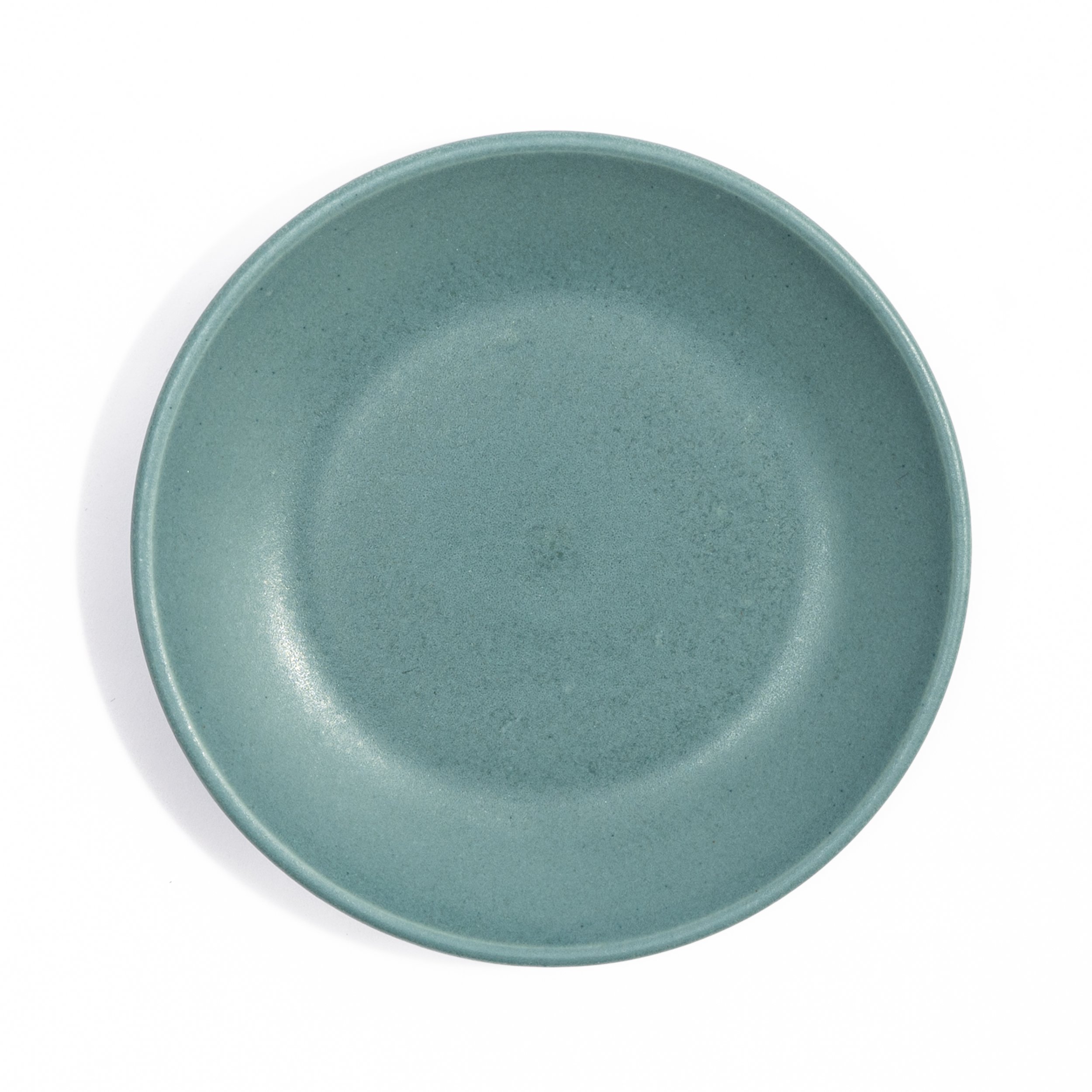
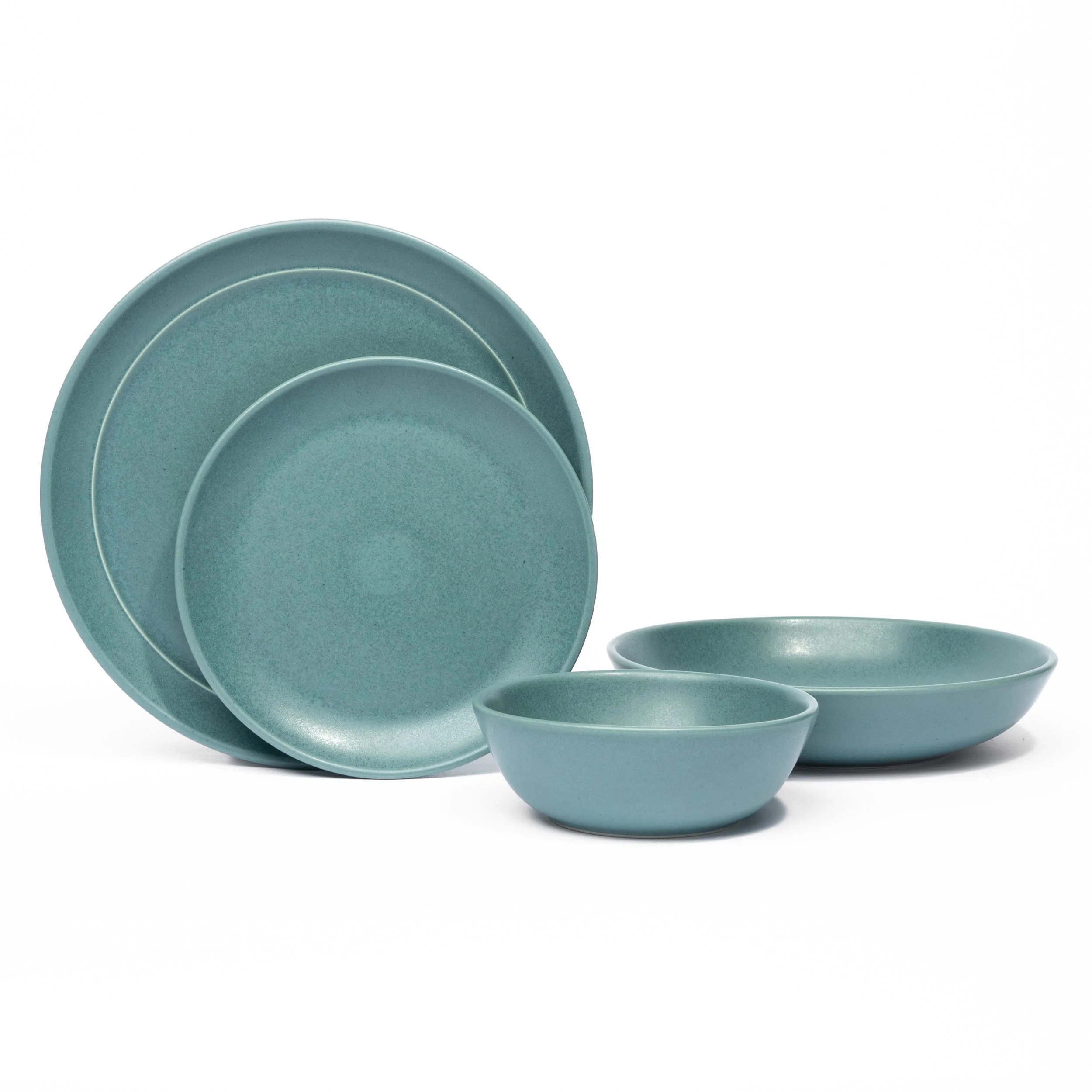
VERDIGRIS
Blue-green with a dappled gloss patina texture that shifts with light, cooler in daylight, warmer under incandescent. Up close the surface has a geological depth, like aged copper. Our most visually complex glaze in person.
-
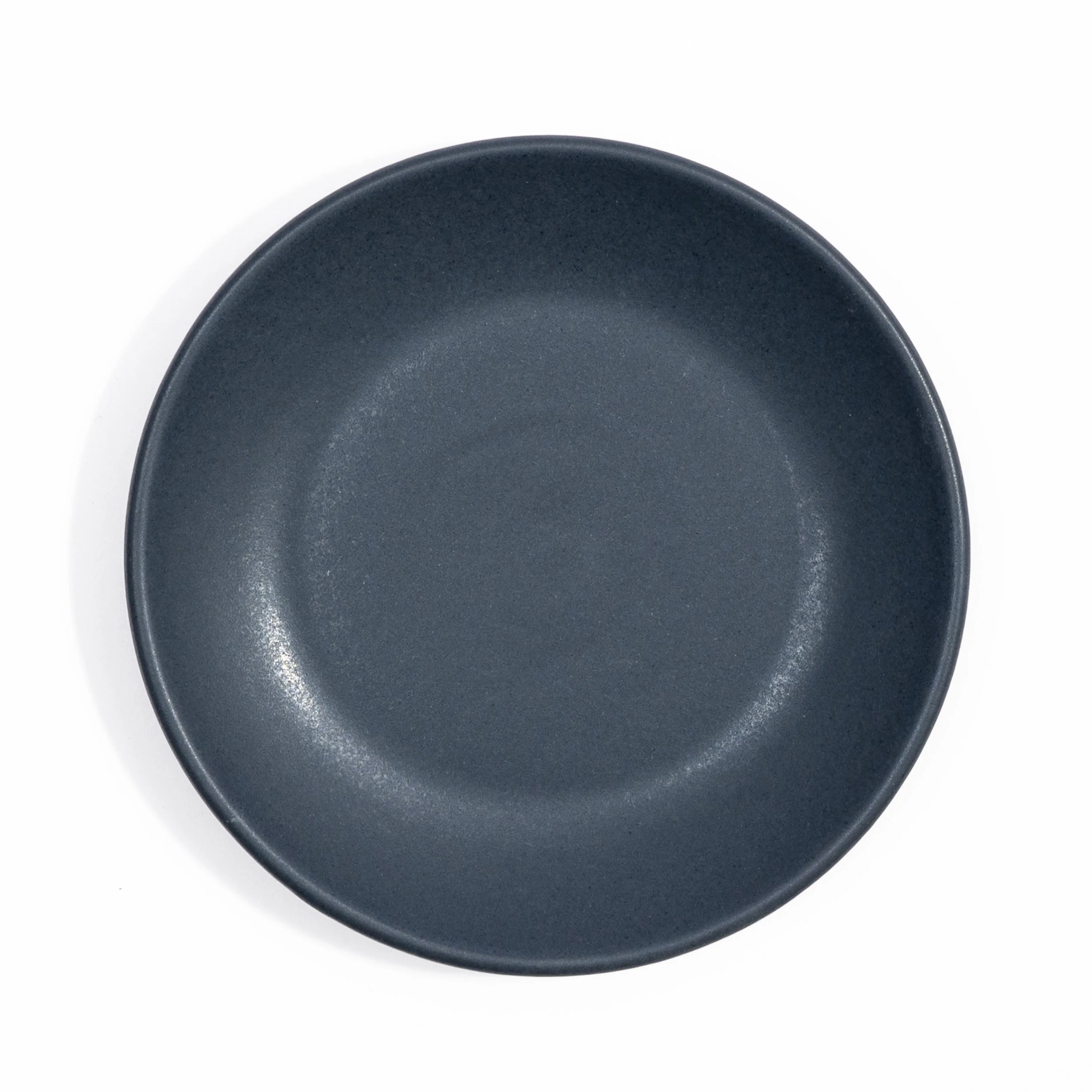
NIGHTFALL
Deep navy over a satin base with a dappled gloss speckle, small areas of higher gloss that catch light differently from the surrounding surface. Near-black in low light, distinctly blue in natural. Grounding on a table, striking up close.
-
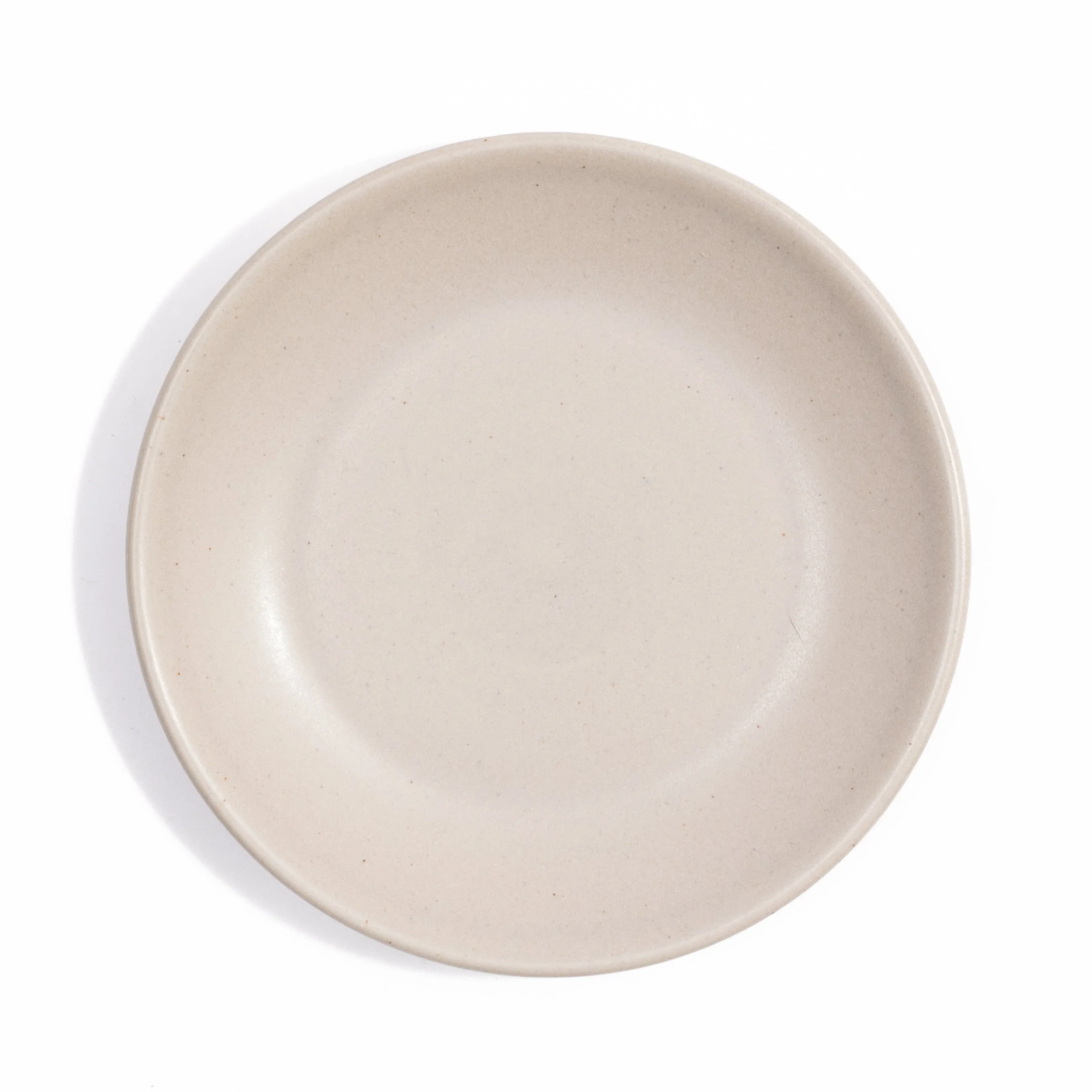
DOVE
Warm grey with subtle lavender undertones and a satin matte finish. Reads as neutral in most light but adds something you can't quite name. Works equally well alongside the warm glazes and the cool ones.
-
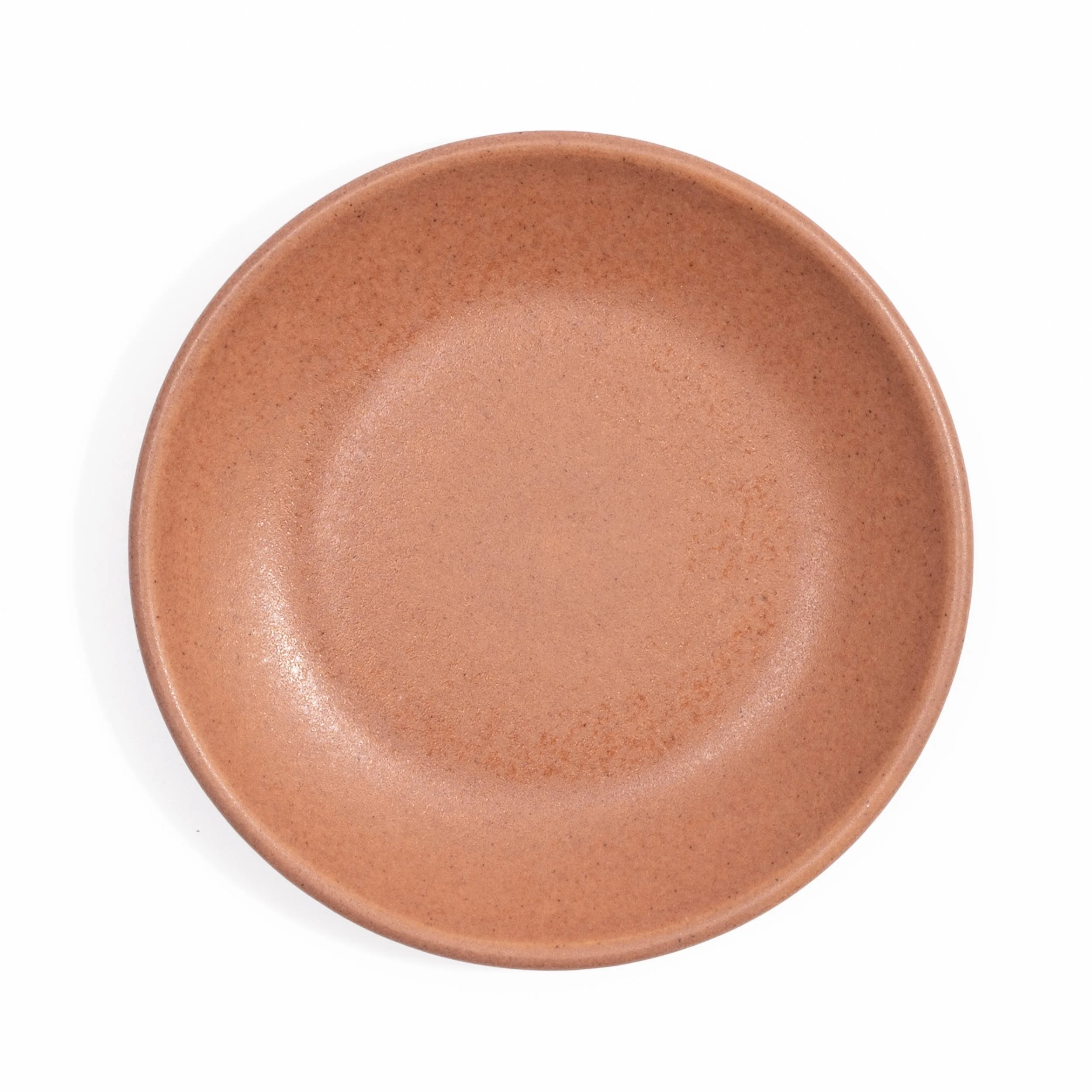
CANYON
Warm terracotta with a fine umber speckle across a satin matte surface. The speckle varies naturally from piece to piece, so a mixed table of Canyon reads as alive rather than uniform. Earthy in natural light, picks up red warmth under incandescent.
-
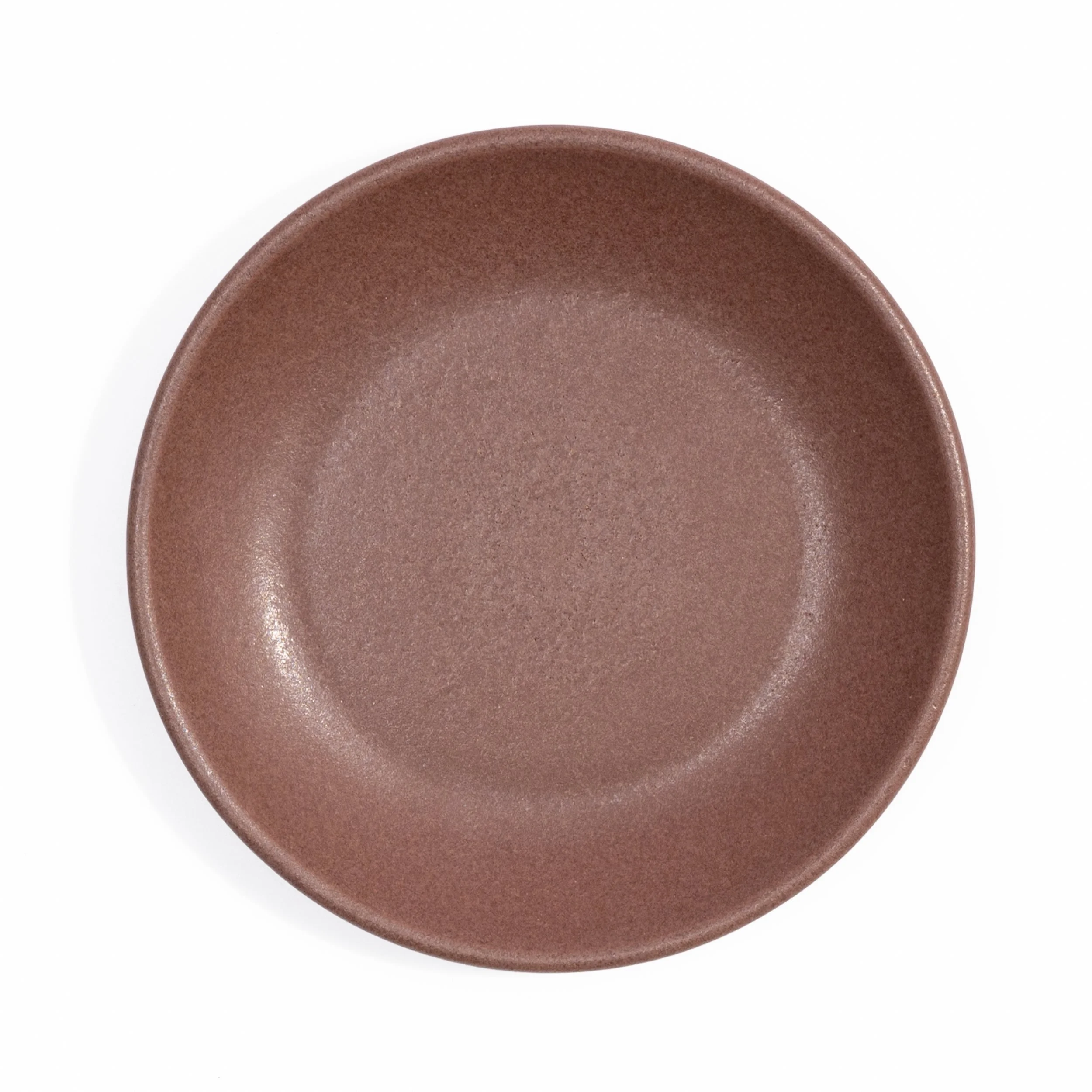
ROSEWOOD
Warm cocoa brown with red undertones and a textured soft gloss finish. Where the glaze thins at the rim it breaks to a thin copper-rose line. Velvety in low light, warmly luminous in natural light.
-
Our glazes are ours from scratch. Our clay body was refined through rounds of our own testing until it did what we needed. Both are proprietary, which is why nothing we make has a substitute. Because we develop the clay and the glaze together, the two move together in the kiln, and that is what keeps the glaze from crazing over years of use. The porcelain is dense and holds heat, so food stays warm between the kitchen and the table. It is engineered for restaurant-grade chip and crack resistance, and it is dishwasher and microwave safe.
-
Six Core Colors run year round, and Studio Editions run alongside them. All of them are developed here. Most studios mix glaze from someone else's recipe. We design ours from scratch, and the difference shows up in the surface: color with a minerality in it, shifting and dappling with the light rather than sitting flat. The texture is visual. What you feel is a lusciously soft hand, and that is the part no photograph has ever managed to carry.
They were built to be mixed, and there is no wrong combination.Learn more about our glazes →
-
Myrth tableware is dishwasher and microwave safe and built for daily use. Over time, silverware can leave faint gray marks on the glaze. They come off by buffing gently with a powdered cleanser like Bon Ami on a damp sponge or a Scotch-Brite pad.
-
Our glazes are ours from scratch. Our clay body was refined through rounds of our own testing. Both are proprietary. We formulate everything ourselves, out of standard ceramic minerals, so we know exactly what goes into a piece. Lead and cadmium have never been among the ingredients. We do not want them in your dishes and we do not want to handle them in the studio. If lead is the reason you are reading this, that is the whole answer: it is not in the recipe.
-
Most people build a set over time, a few pieces at a time, rather than all at once. We wrote a guide to doing it well.