Built for Service: Made by Designers, Trusted by Chefs
Most tableware brands have a catalog and a sales team. We have a studio and two people, and every piece that leaves here has been through both sets of hands.
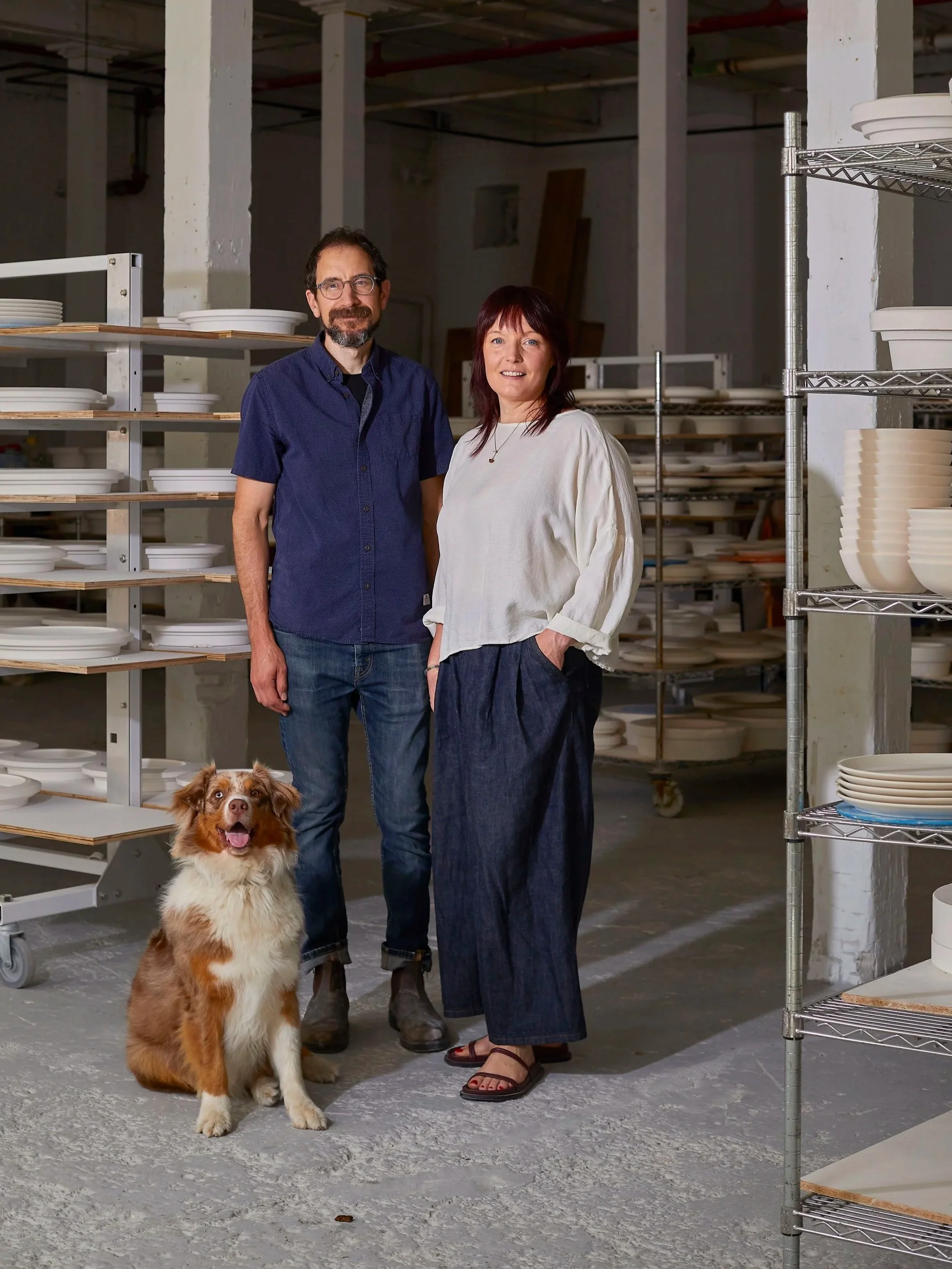
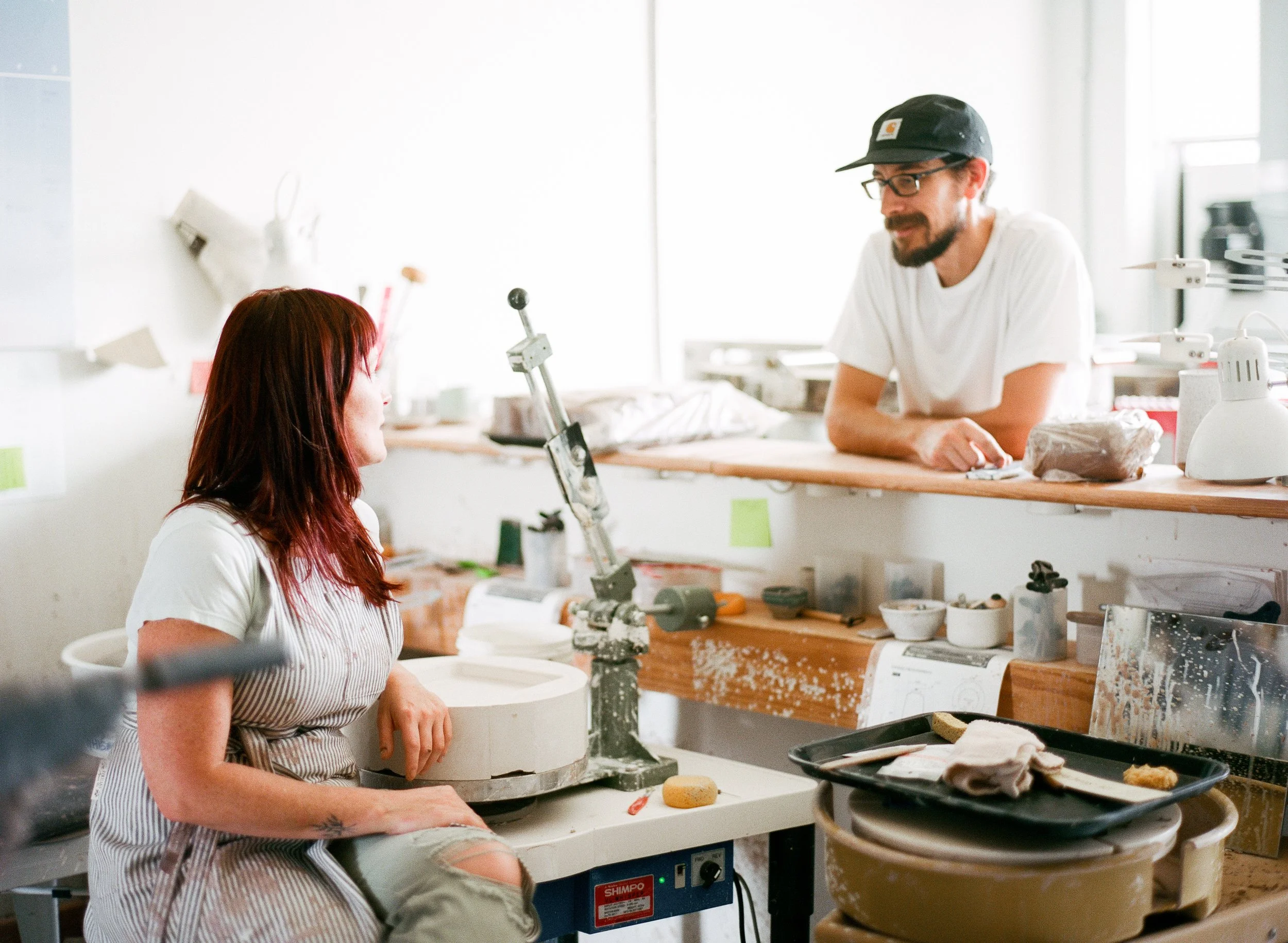
Abby, Eric, and Raine in the studio.
Myrth is a design practice that makes porcelain. Eric and I both trained as industrial designers at Syracuse, and we have each been designing products for more than twenty years. Fifteen of those years each went to work for brands like New Balance, Bose, and OXO. I worked in footwear, focused on materials, color, and trend. Eric worked out of Boston design consultancies. Product design is fundamentally about how people use things: how an object feels in your hand, how it fits into a daily ritual, how it holds up when real life happens to it. That question about the person on the other end of the object sits underneath every form we make.
We started making ceramics in a community studio in Boston in 2008, opened our own studio in 2015, went full time at the start of 2020, and moved the whole operation to Rhode Island in 2024. Manufacturing was never foreign to me. My grandfather ran a small sheet metal fabrication business, the kind of shop where everyone knows everyone and the quality of the work is personal. Both my parents worked there. My father restored classic cars. I grew up around people who made things with their hands and took real pride in it, and that shaped how I think about this work at every level.
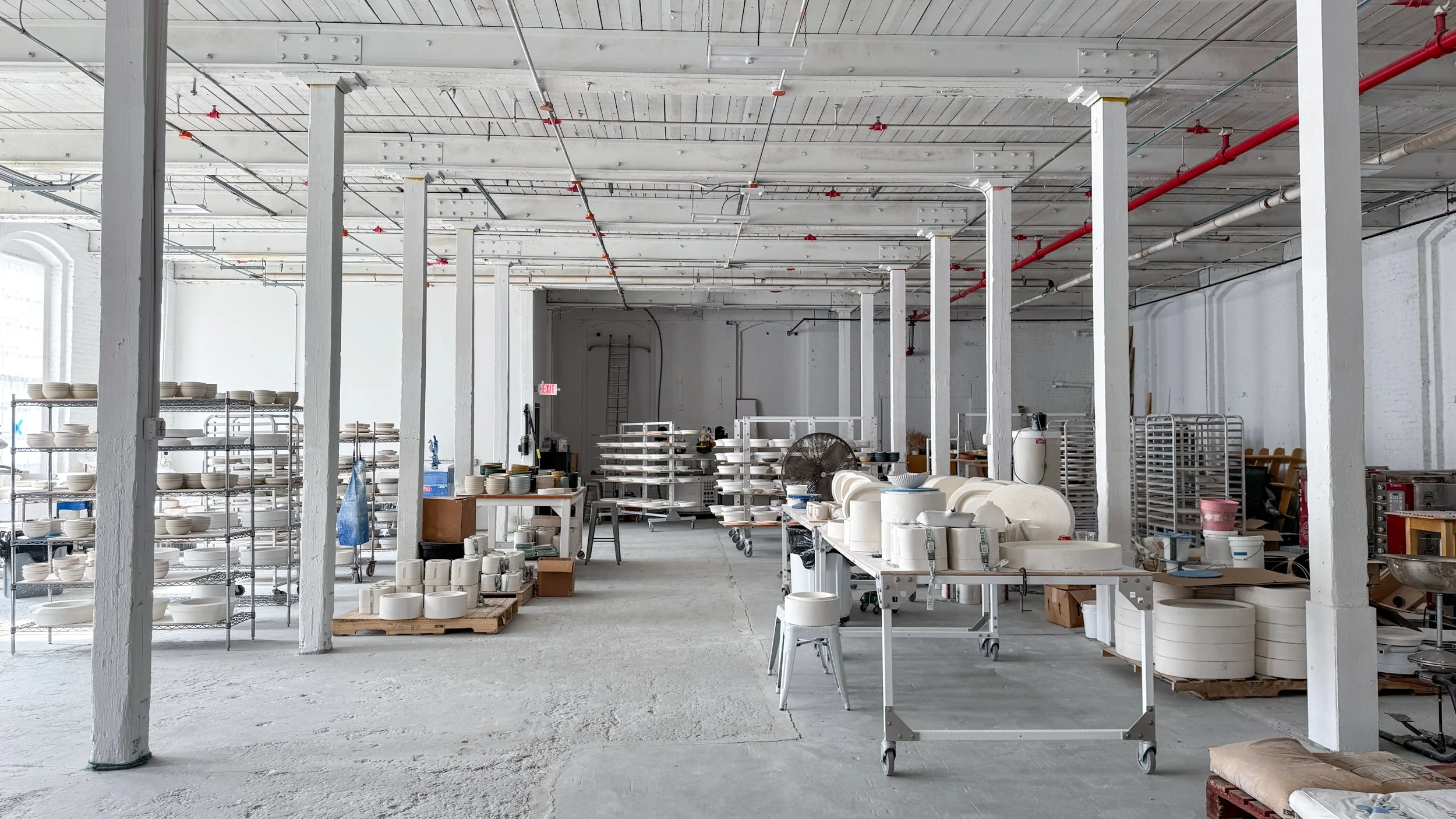
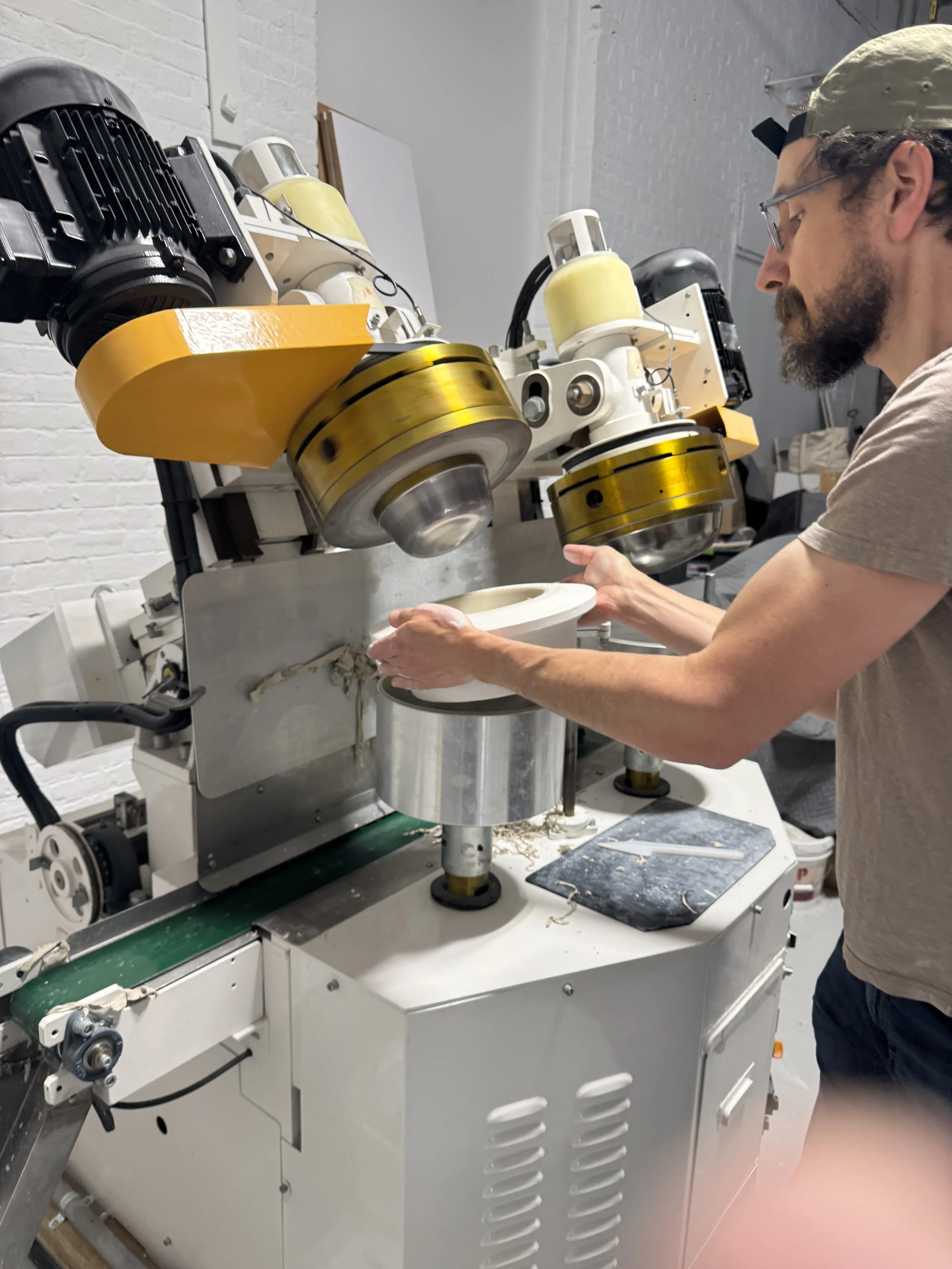
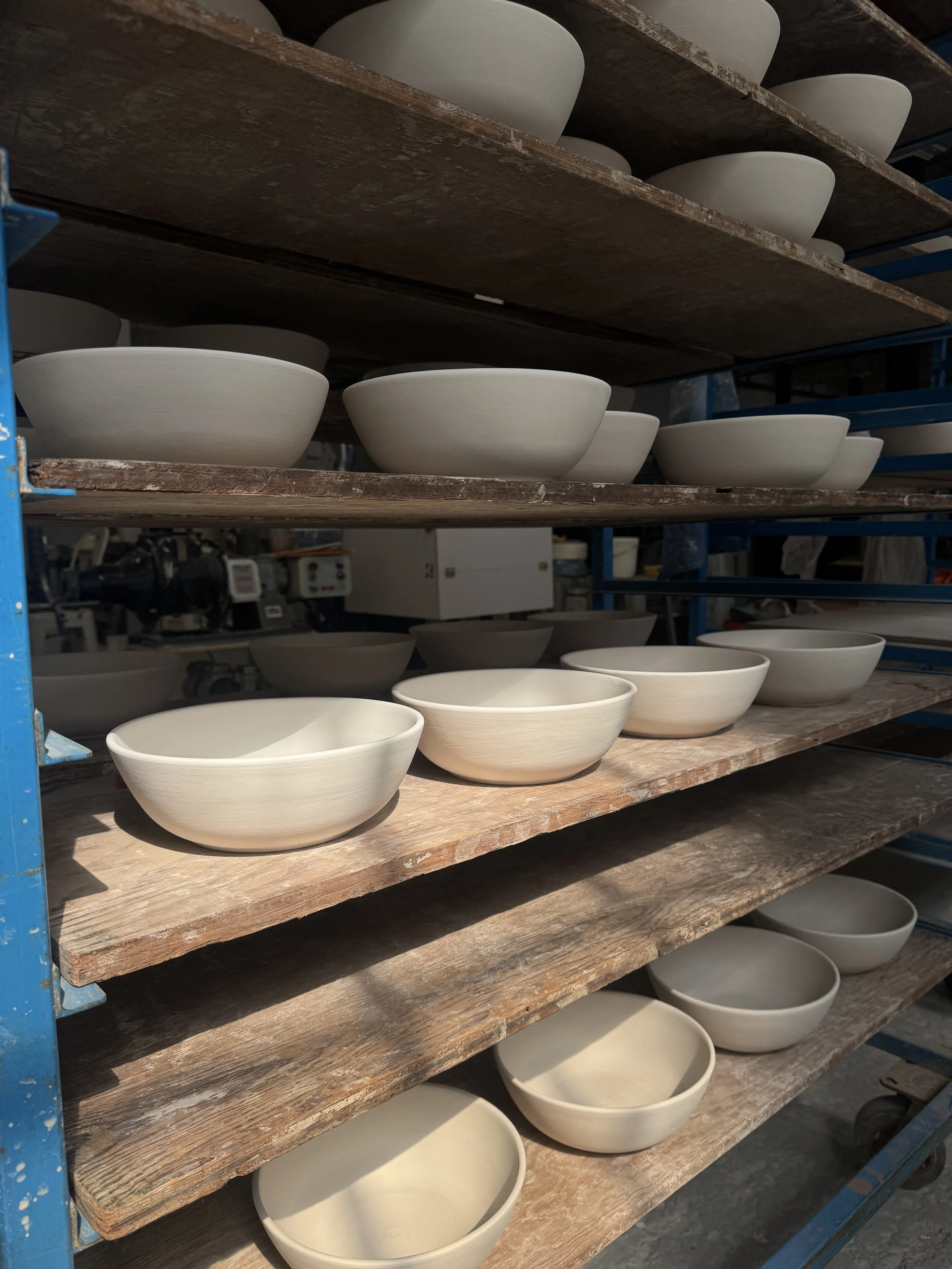
If you're a chef reading this, the orientation is probably familiar. You source your own ingredients. You develop your own technique. You don't hand off the parts that matter. We work the same way. We design our glazes from scratch, and our clay body is proprietary, refined through rounds of our own testing until it did what we needed it to do. Eric models every form in CAD and cuts the production molds himself, here in the studio, where most studios our size send that work out or design around molds someone else made. Every step of production happens under one roof, held to the same standard from raw material to finished piece. You can't hold a standard you don't own every part of.
The chefs who find us tend to notice the work before they know much about us. Our glazes have a minerality to them. They're never flat: the color shifts in shade, dapples, breaks where the glaze thins over a detail line, and shows a visual texture you can look into. That movement is designed in, developed over rounds of testing in our own studio, and it's why no two pieces read exactly alike and why a plate still looks like itself under service light.
What chefs are after is usually the same thing. Tableware that matches the quality of what goes on it, and doesn't look like every other restaurant in the city. Their food has a point of view, and the plate is part of that. We think about it this way: a piece isn't finished until it's plated. The form we make is the beginning. You complete it. It also has to survive the rest of the day. One kitchen we work with runs 1,500 covers, noon to ten, and the plates come off the line looking untouched.
We bring more than 40 combined years of product design and manufacturing to a studio built to produce at volume. The ceramics came the long way, in practice: glaze development, process refinement, and production capability worked out entirely under our own roof. What we ended up with sits between a design studio and a production facility, holding the standards of both.
If that's how you think about your kitchen, tell us the dish and we'll pair the plate.