
The Durability Project: Living With Myrth
Our kitchen is the longest-running durability test we have.
We've been using our own porcelain tableware at home since before we had a proper studio. What's in our cabinets now is made from our proprietary clay recipe -- the most durable porcelain we've ever produced -- and it's been through more daily use than we could ever track or measure.
This isn't a controlled test. It's a kitchen. Things happen.
A bowl dropped into a soapy sink from counter height. Plates clinking hard against each other while loading the dishwasher at the end of a long day. A spoon smacked firmly on the rim trying to get the last of the yogurt into the bowl. A stack of plates, too tall, tipping sideways in the drying rack. None of it planned, none of it gentle. All of it normal.
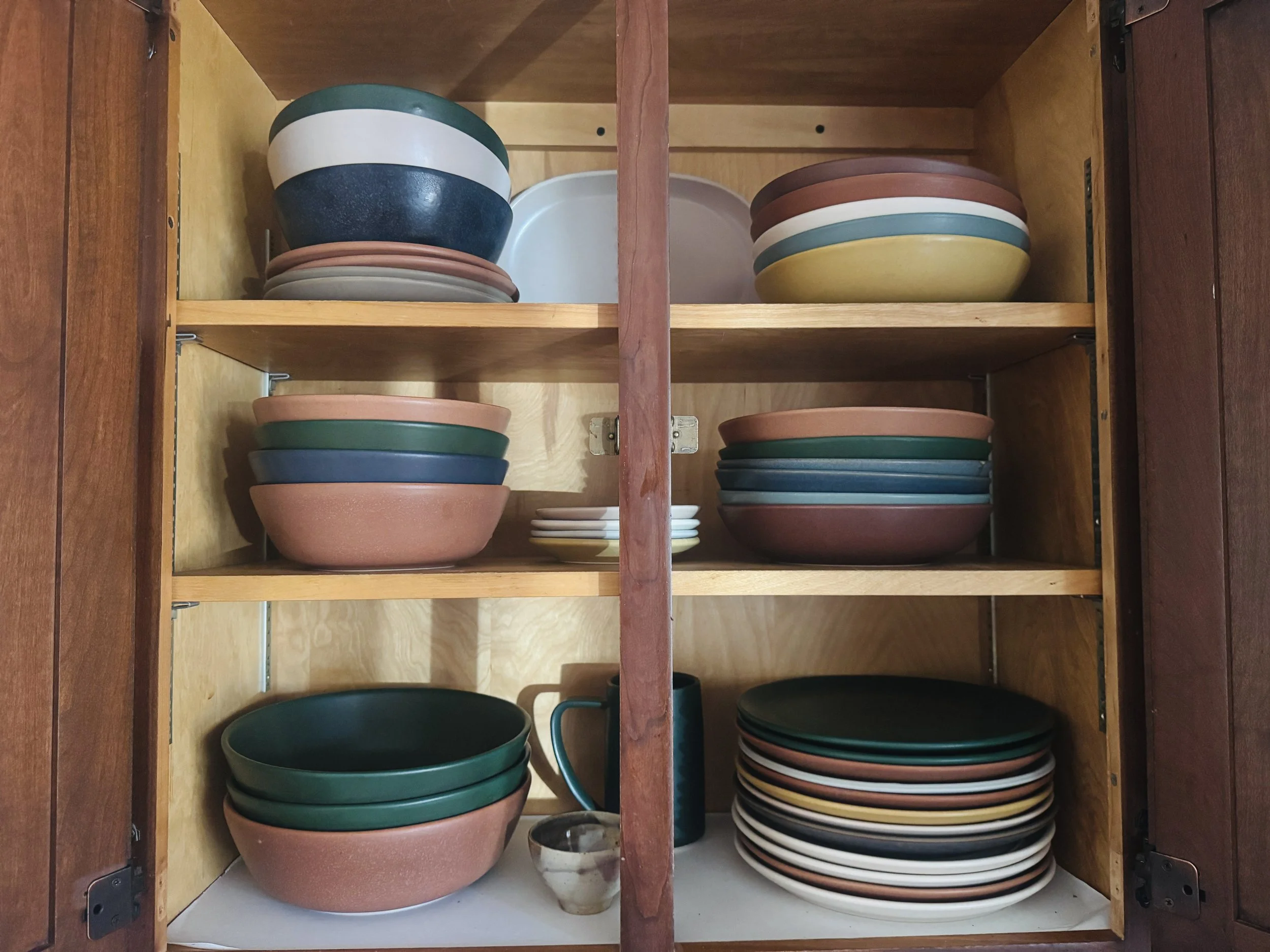
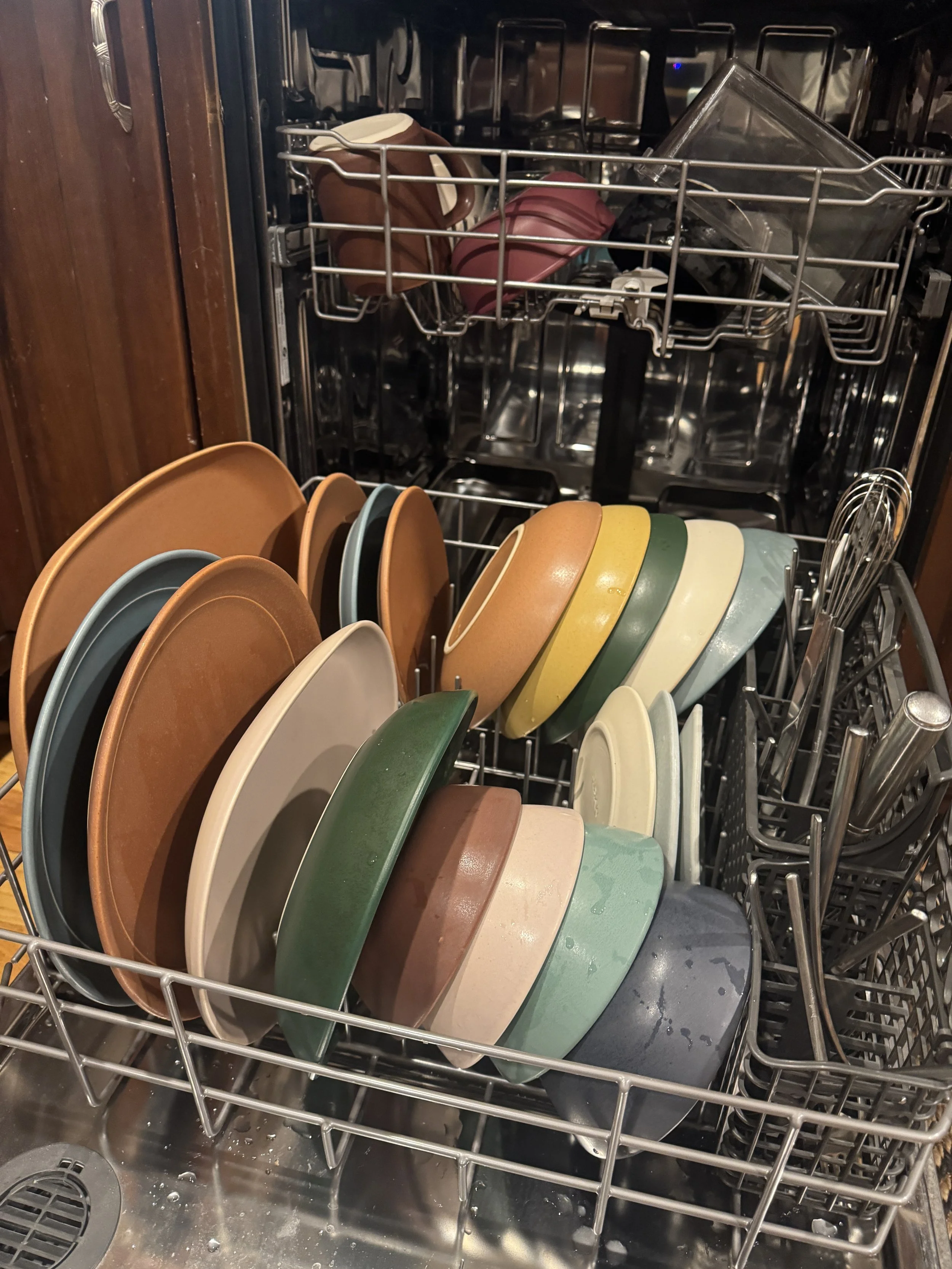
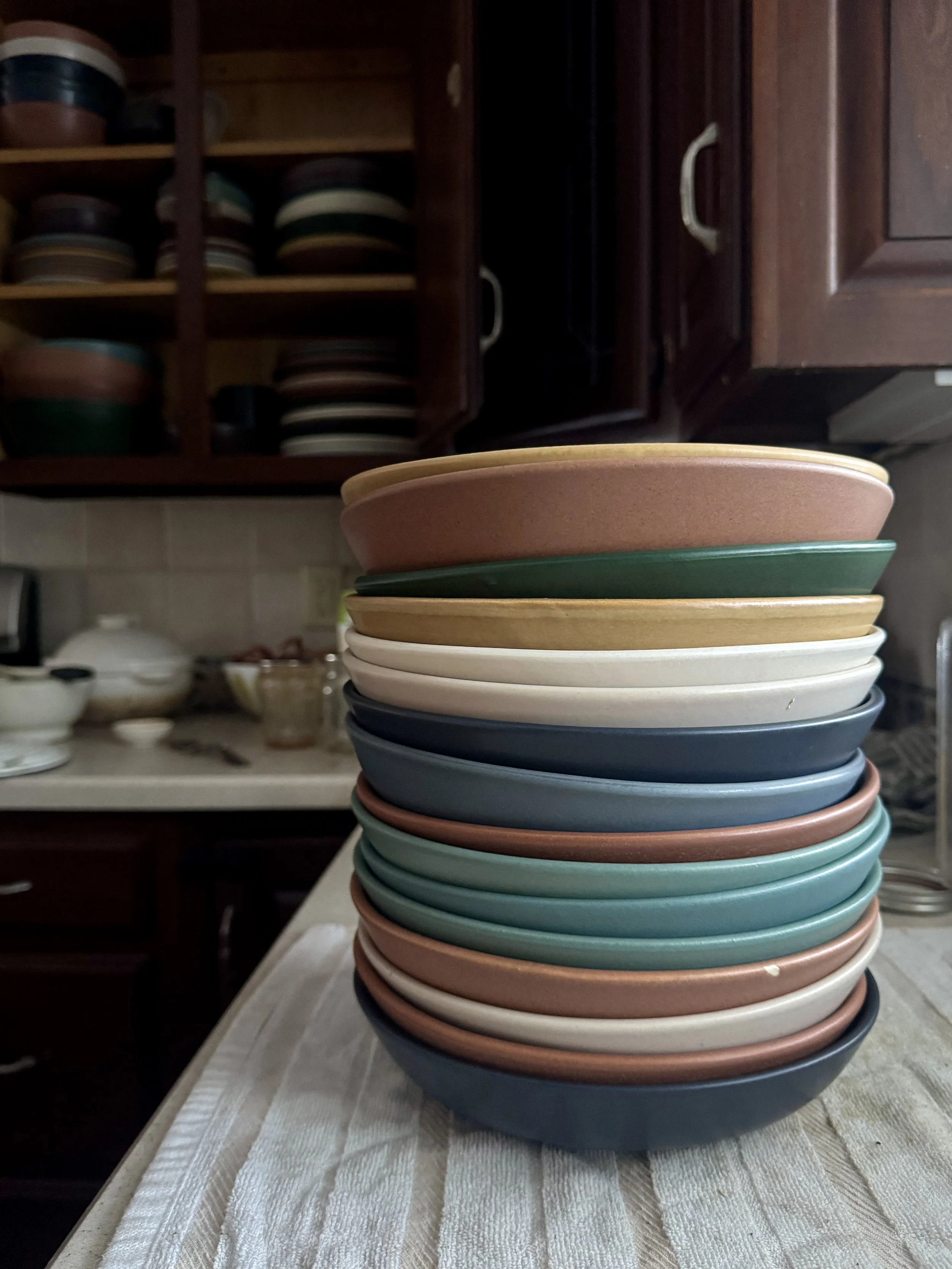
We rarely think about it anymore. When you build something for a professional kitchen, the bumps and rhythms of cooking at home are no big deal.
There is one piece that tells a different story. A Sienna Basso Bowl that cracked during our move from Massachusetts to Rhode Island in 2024. You can't quite see the crack. You can hear it though: a slightly different sound when silverware taps the side, a tone that's changed from resonant bell to dull thud. By most logic it should have split completely by now. It hasn't. It still holds food, still goes through the dishwasher, still sits in the cabinet with everything else.
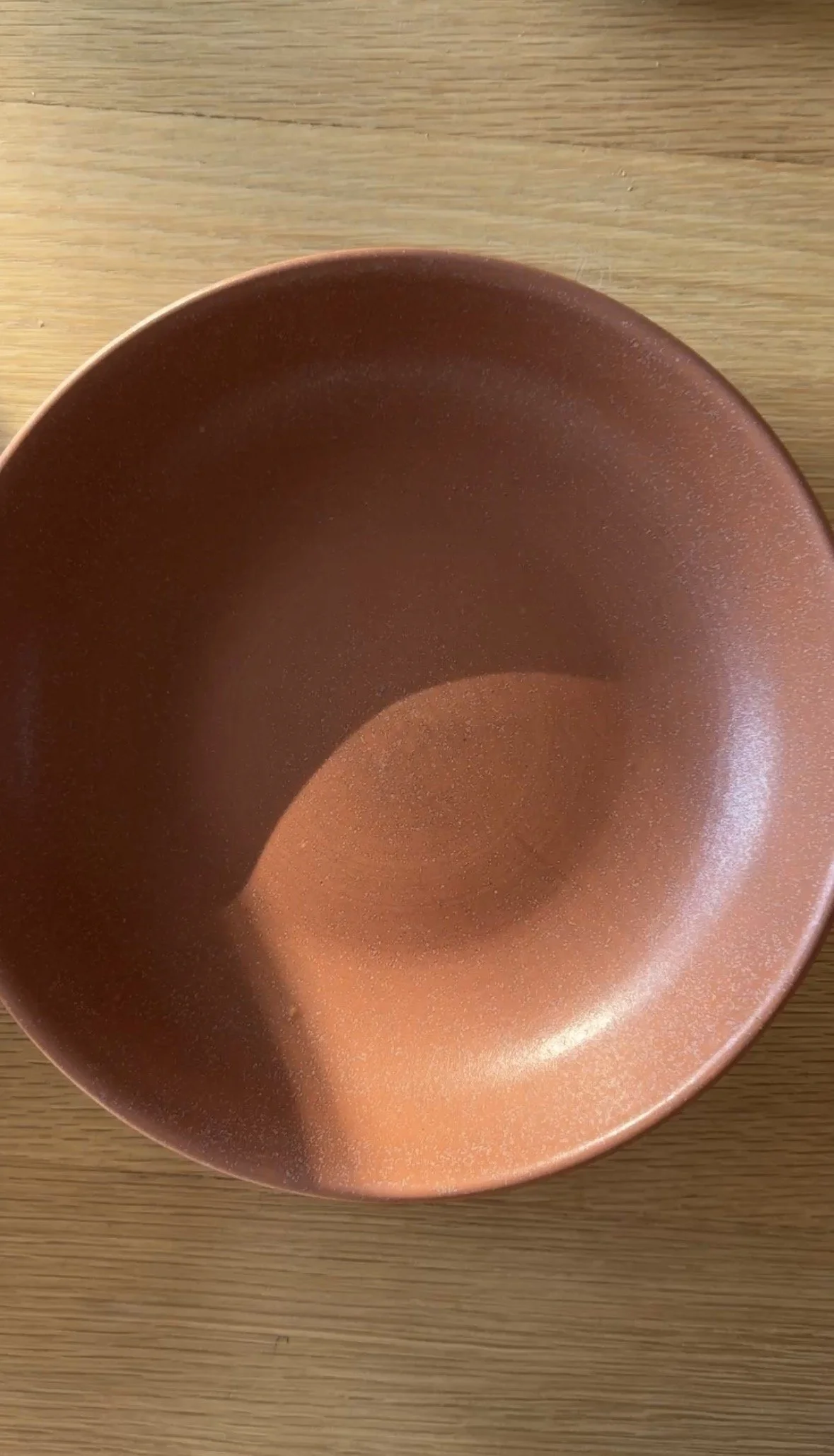
The Sienna Basso Bowl that won’t quit.
In the first post in this series we wrote about what happens when our ceramics fail from a drop: the clay body and glaze composition mean they split into two or three clean pieces rather than shattering. A side effect of how the material is made that we never planned for but have come to appreciate. This bowl is the other side of that story. It didn't get dropped. It got stressed. And instead of splitting, it held. Two years later it's still holding. That's not something we designed for either. It's just what the material does.
We honestly can't remember the last time we broke something completely. Not because we're careful -- we're not, we're cooking -- but because the pieces were built with a different starting assumption. Not "how do we make something beautiful" but "how do we make chip-resistant porcelain tableware that lasts, and also happens to be beautiful."
Every piece of our handmade porcelain tableware passes the ring test before it leaves our East Providence, Rhode Island studio. Every glaze is formulated specifically for our clay body so they move together rather than against each other. Every piece is fully vitrified so the clay becomes dense and non-porous rather than porous and prone to damage. These aren't incidental qualities. They're decisions we made at the beginning that show up every day in a kitchen that doesn't treat tableware gently.
The pieces made from our current clay recipe -- now six+ years in daily use -- look essentially the same as they did when we made them. Not perfect. They've lived. But whole. No chips, no crazing, no glaze that's started to look tired. Just durable porcelain tableware that did what it was supposed to do.
That's what restaurant-grade means in a home kitchen. Not indestructible. Built to last the life you actually live.
Part of our ongoing Durability Project. Read the full series at myrth.us/journal.