
The Durability Project: What Product Photos Can't Show: Glaze Quality, Texture, and Durability
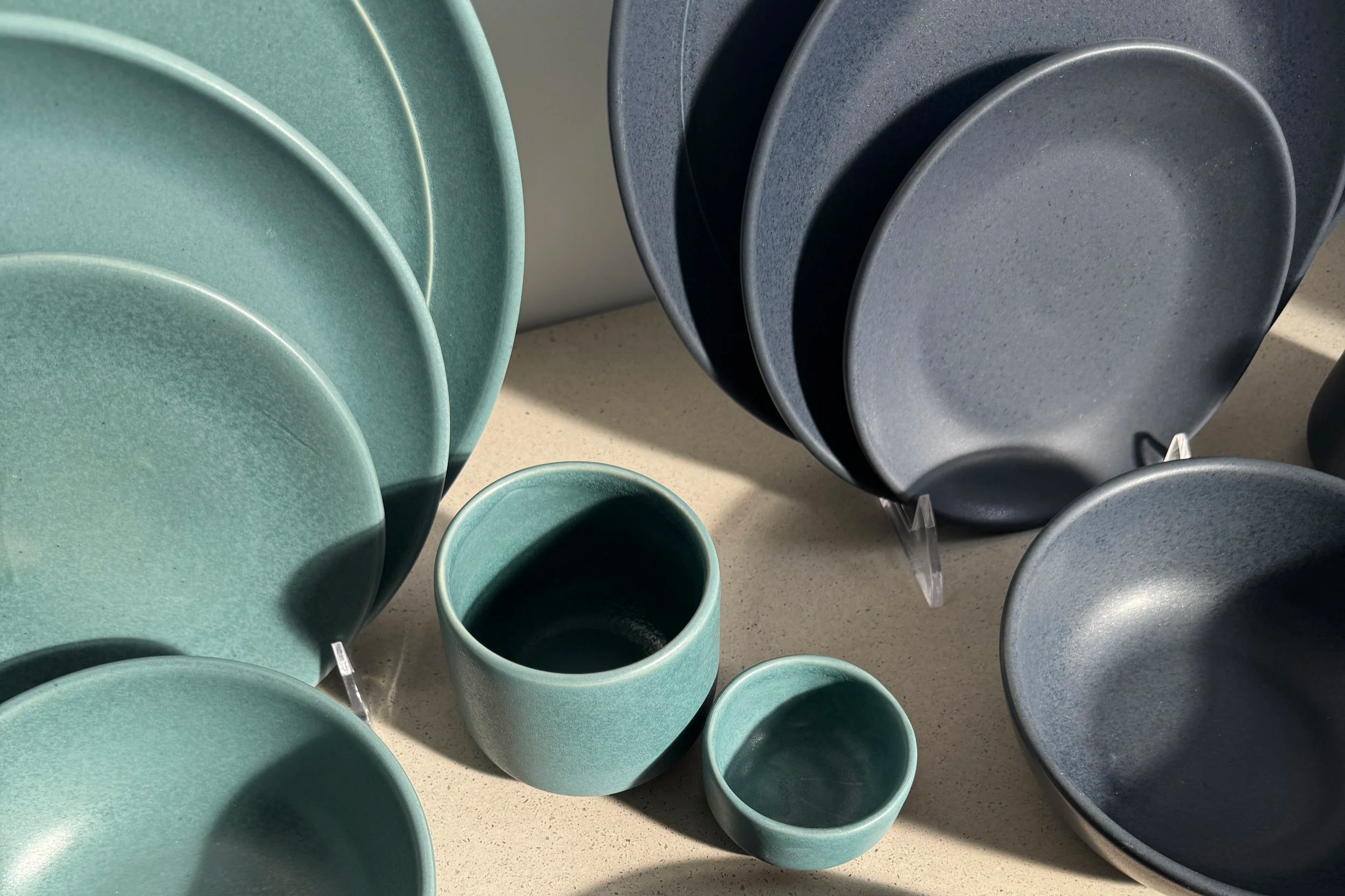
Every glaze in our current collection has surface qualities that standard product photography can't fully convey.
It's something we hear consistently from people who visit our East Providence studio. They pick up a plate, turn it in the light, and say something like — oh, I didn't realize how beautiful they are up close. The texture. The depth. The way the color shifts slightly depending on the angle.
Product photography does what it's designed to do: it shows you accurate color and clear form. But there are two critical things it can't convey. First, the surface qualities — texture, depth, how a glaze catches light at different angles. Second, the technical quality you can only test in person: glaze fit, the ring test, whether a piece will craze over time. Both matter. Both are invisible in a photo. Both are why these pieces last.
This post is our attempt to show you what we see up close every day in the studio.
What You're Missing in a Product Photo
Professional product photography prioritizes accuracy and consistency. Clean light, neutral background, true color reproduction. It's effective at what it does — but by nature, it flattens three-dimensional surfaces into two dimensions.
What a standard product shot can't show:
Texture. Our glazes aren't smooth in the way mass-produced ceramics are smooth. There's a fine mineral quality to the surface — a slight variation that you can see and feel. It comes from the raw materials we use and the way they behave in the kiln. You can see it at close range. You can feel it with your fingertips. It almost never shows up in a product photo.
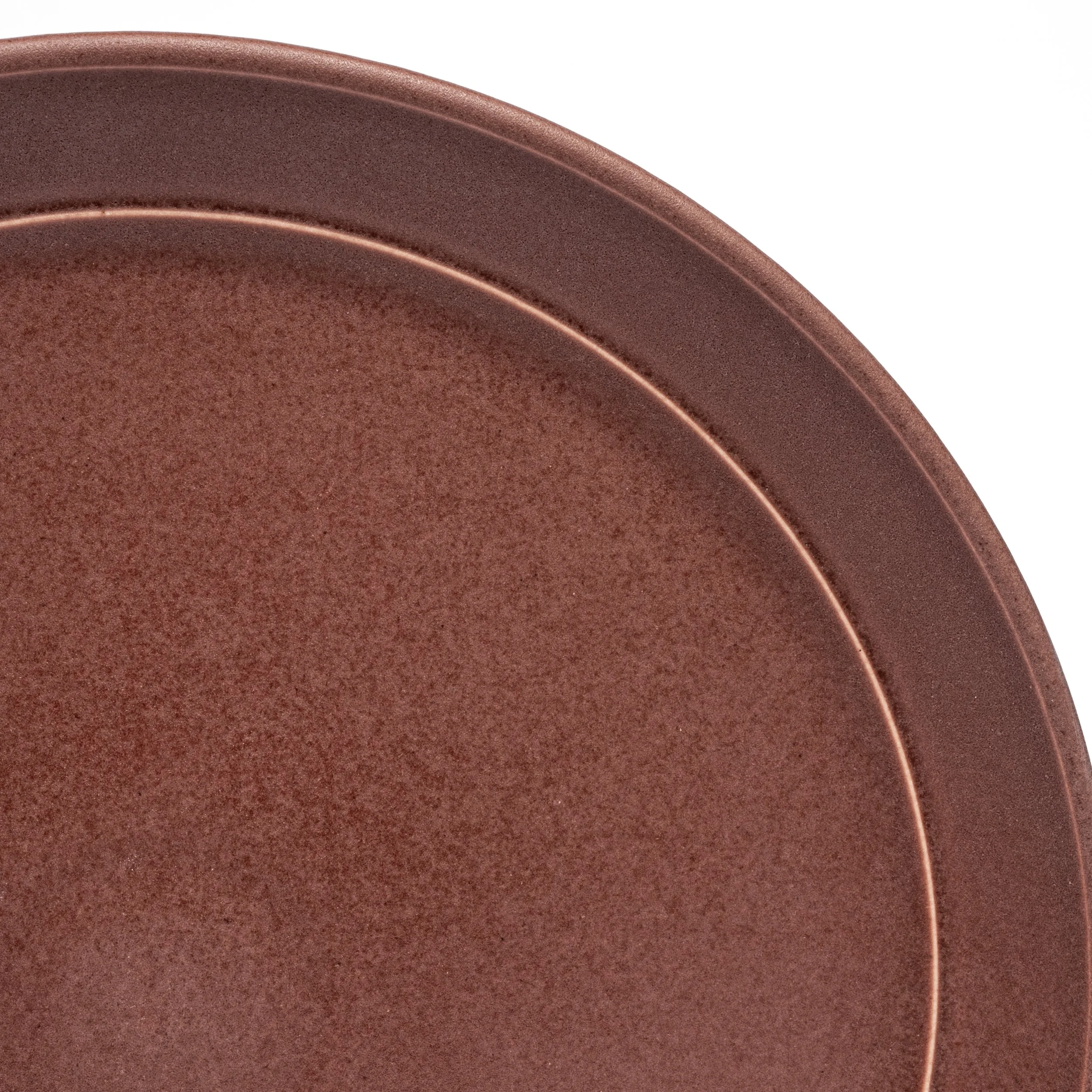
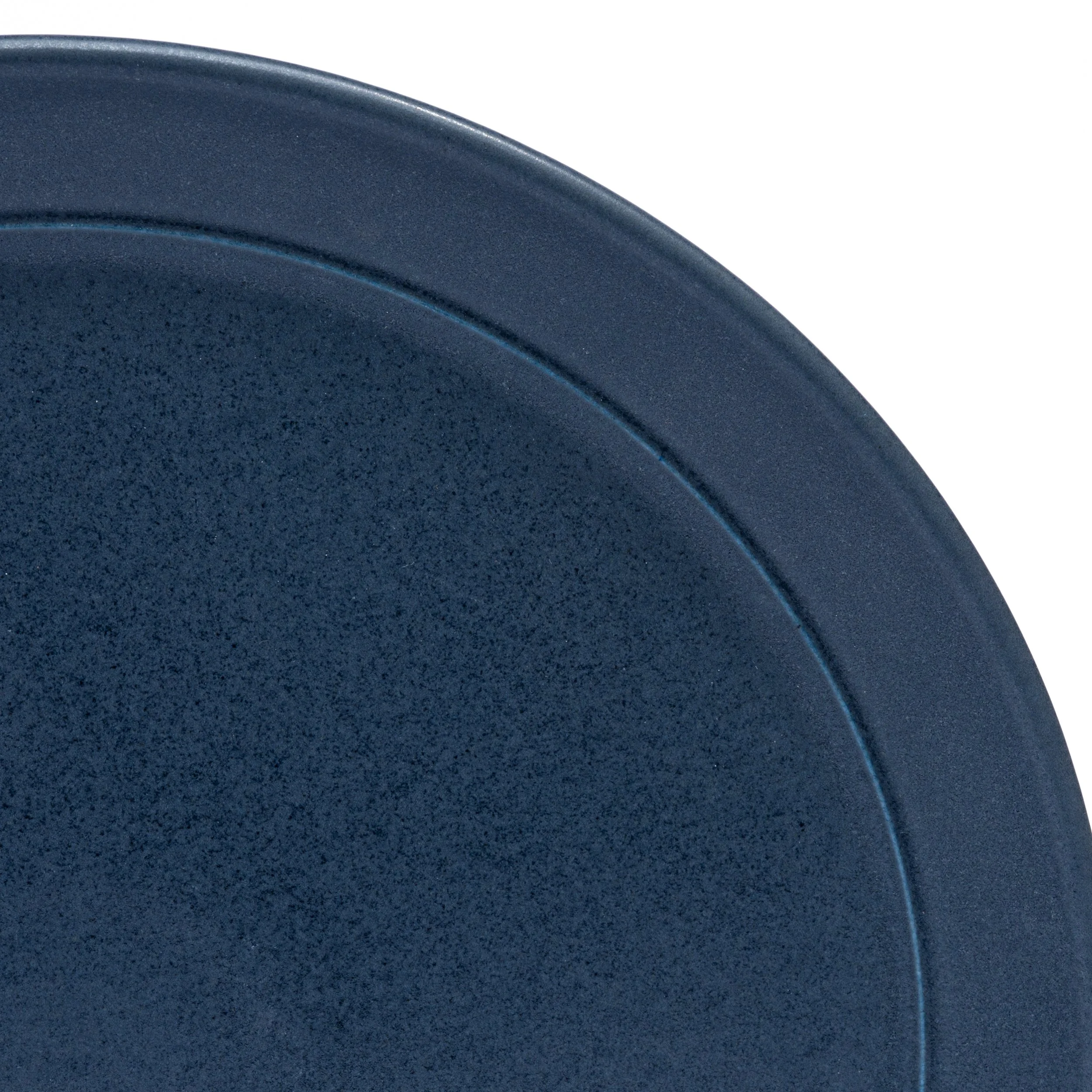
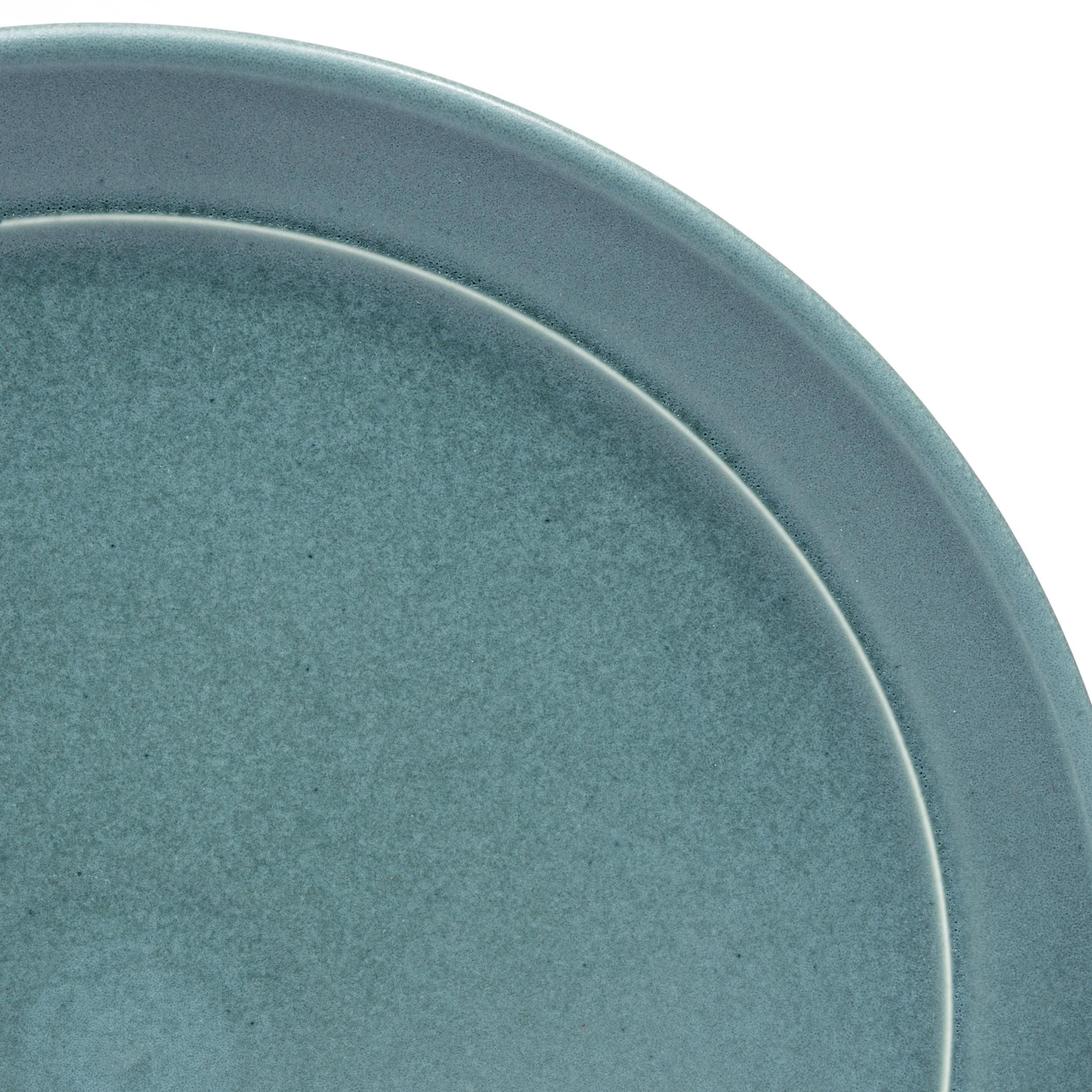
Depth. Several of our glazes have what ceramicists call a "breaking" quality — the color shifts where the glaze pools in recesses versus where it thins at edges and rims. In Rosewood, that means a thin copper line at the detail line of our Dinner Plate where the brown thins out. In Verdigris, it means the color deepens in the center and lightens toward the edge. In Nightfall, the dappled gloss speckle sits over a satin base in a way that changes completely depending on your light source. None of this reads in a flat photo.
Movement. Glaze forms a glass-like surface that responds to light dynamically — differently at every angle. This is why seeing our pieces in person always beats photography. A still image captures one moment of one angle under one light source. It's a significant limitation when the thing you're selling is defined by how it interacts with light.
Quality. Tap a well-made porcelain plate with a spoon and it rings like a bell — a clear, sustained tone. A dull thud means the glaze doesn't fit properly, which leads to crazing and chipping over time. This is something you can't see in a photo, but you can hear in person. It's proof the maker matched the thermal expansion of the glaze to the clay body — technical work that separates restaurant-grade porcelain from mass production.
These aren't separate concerns. The surface beauty and the technical durability come from the same source: months of glaze development, testing thermal expansion coefficients, adjusting recipes in tiny increments until the glaze not only looks right but performs right. What you're seeing in the close-ups below isn't just aesthetic detail — it's evidence of that work.
A Closer Look at Each Glaze
Rosewood
Warm cocoa brown with red undertones and a textured soft gloss finish.
Up close, Rosewood has a fine mineral scatter across its surface — tiny variations in the brown that give it a depth that reads as almost velvety in low light and warmly luminous in natural light. The defining detail is the dinner plate detail line: where the glaze thins at the raised edge, it breaks to a thin copper-rose line that runs the circumference of every piece. It's a detail that disappears entirely in standard product shots and is immediately noticeable in person. Warm, grounded, works with both natural wood tones and richer, more saturated interiors.
Canyon
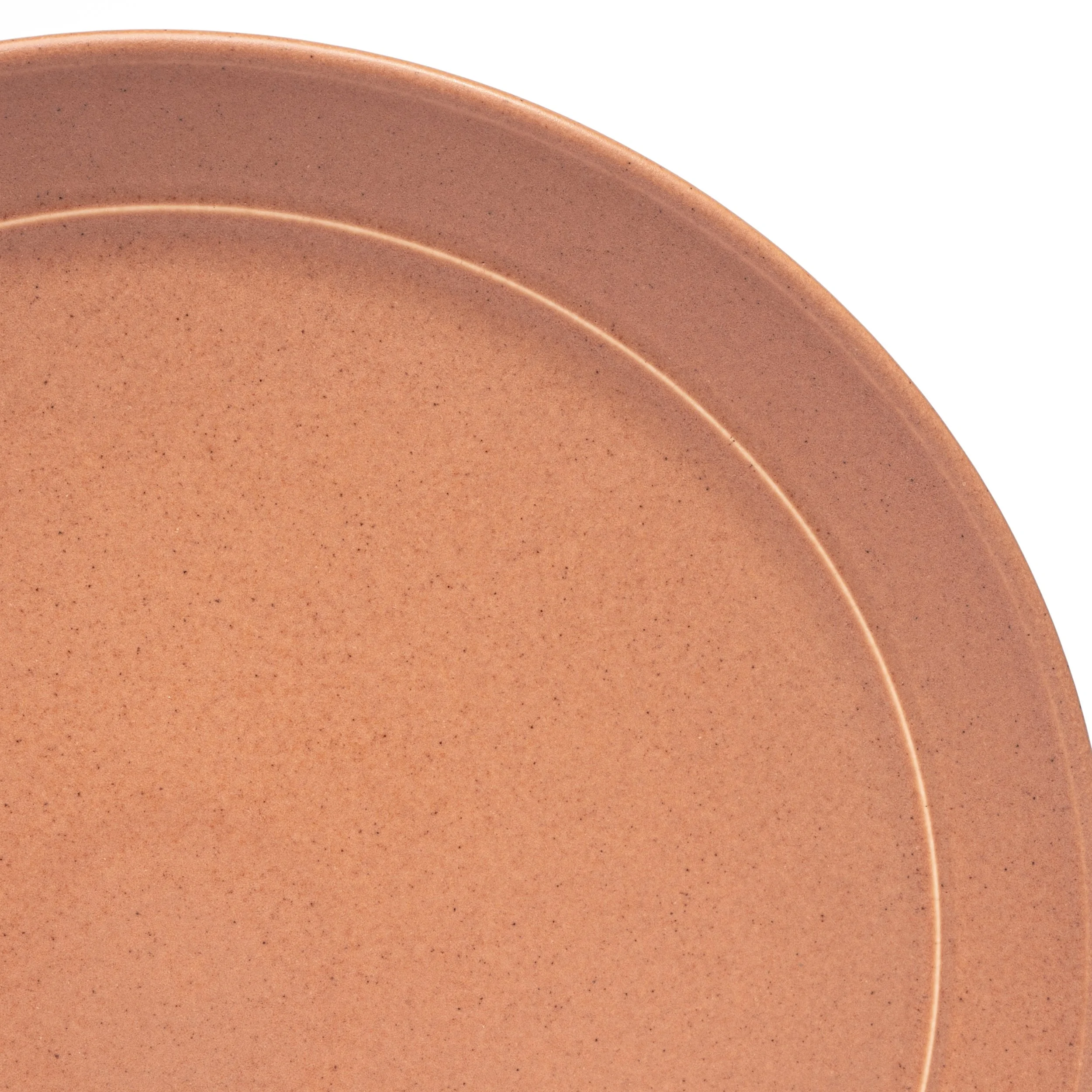
Warm terracotta with soft umber speckle and a satin matte finish.
Canyon's surface has a fine speckled quality — small flecks of deeper umber distributed across a warm terracotta base. The semi-matte finish means it absorbs light rather than reflecting it, giving it a soft, tactile quality. In natural light it looks almost earthy; under warmer artificial light it picks up more of the red. Of our warm glazes, Canyon has the most visual movement at close range — the speckle pattern is different on every piece, which is one of the things that makes a mixed table of Canyon pieces feel alive rather than repetitive.
Dove
Soft warm grey with hints of lavender and a satin matte finish.
Dove is our most understated glaze up close, which is exactly what makes it useful. The satin matte finish is exceptionally smooth, and the warmth in the grey — the pale lavender undertone — is subtle enough that it reads as neutral in most light but adds something you can't quite name to a table. It's the glaze that works with everything: warm glazes, cool glazes, natural linens, bold textiles. At close range you start to notice that it isn't quite grey and isn't quite beige — it's something in between that shifts with the light.
Moonlight
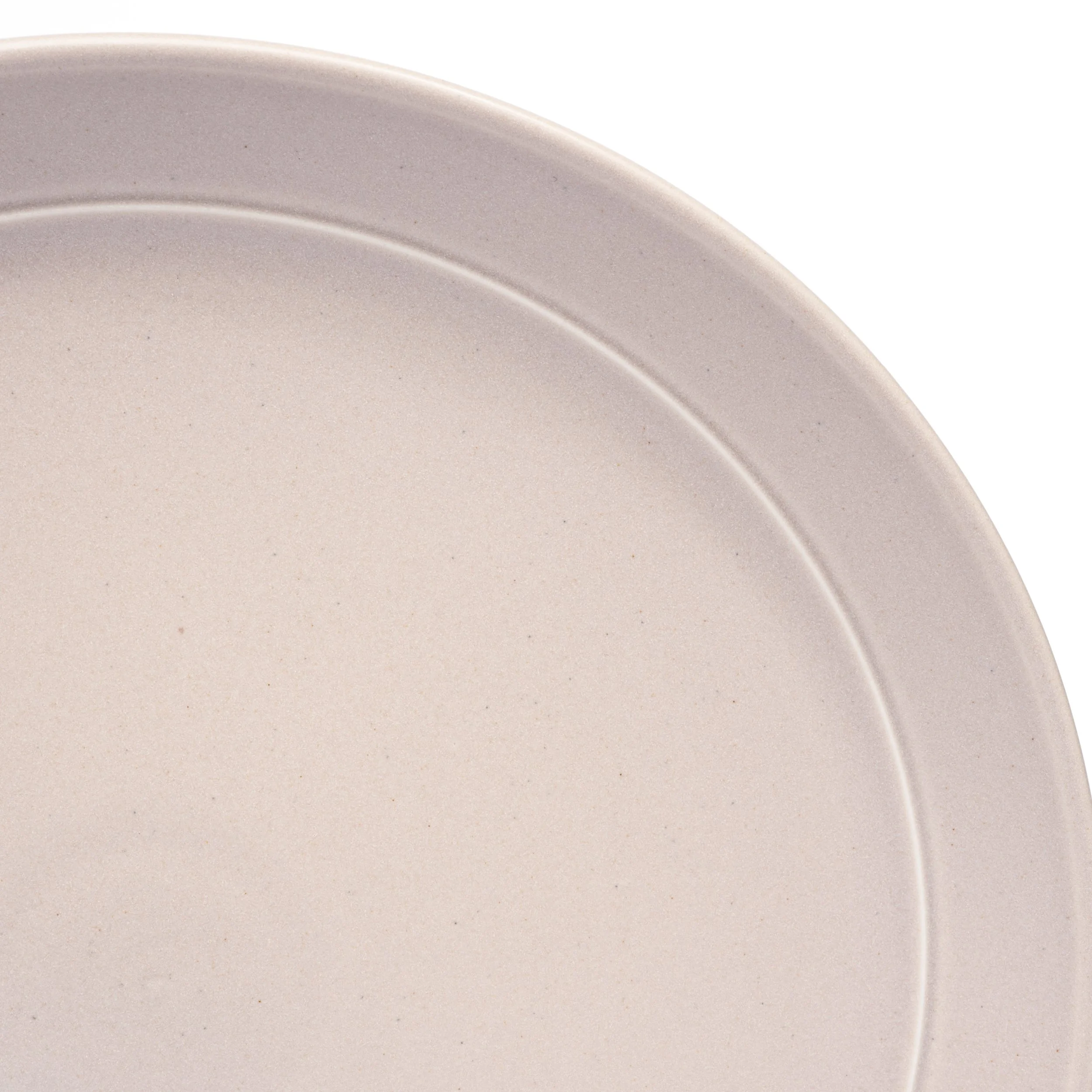
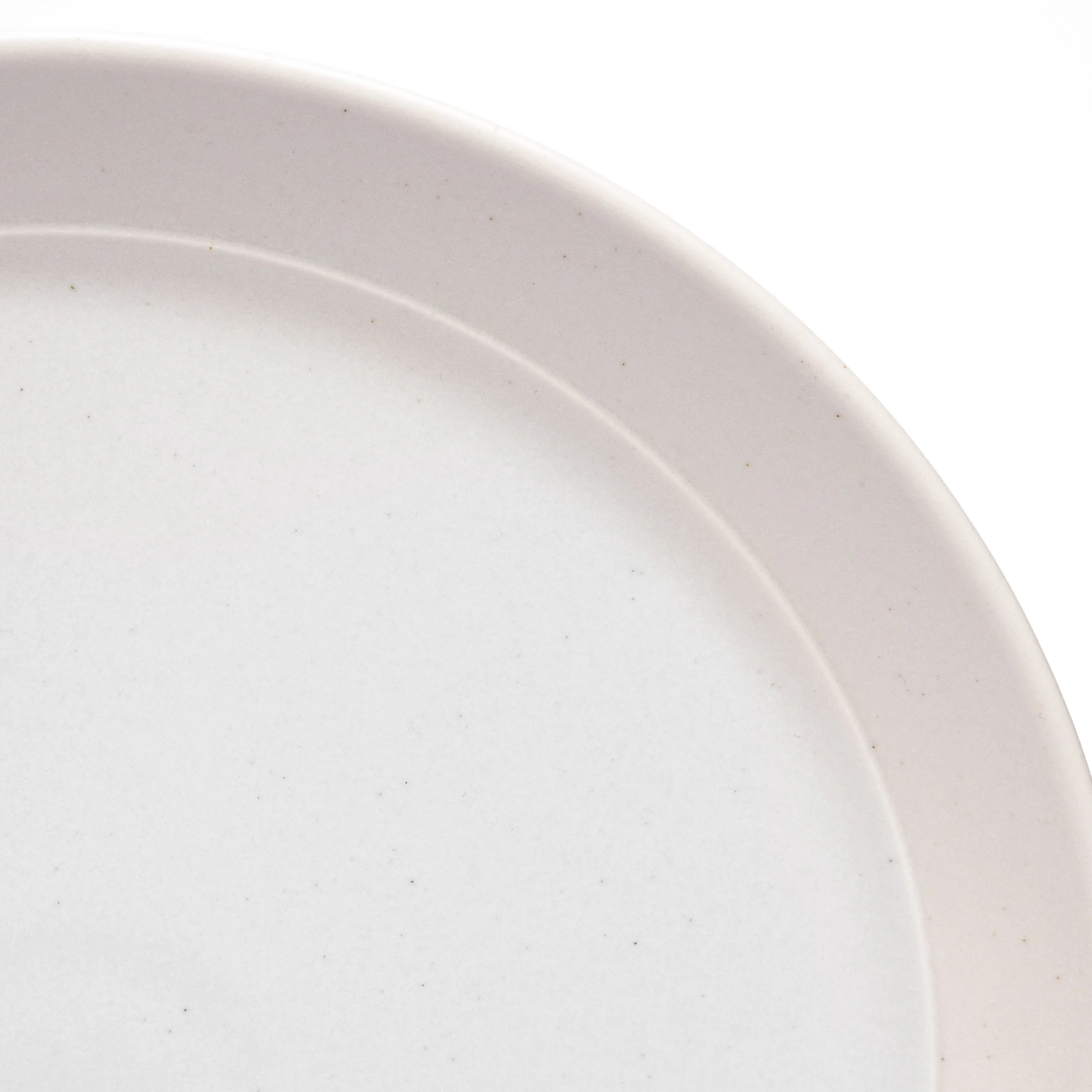
Simple, sophisticated off-white with a satin matte finish.
Moonlight is the clearest example of how finish changes everything. As an off-white, it could be flat and plain. The satin matte finish gives it a softness that a glossy white never has — it absorbs light gently rather than bouncing it back. Up close the surface has a slight warmth that distinguishes it from clinical white. It's the glaze that disappears into a table setting in the best possible way — present without competing, letting food and other pieces take the foreground.
Verdigris
Greenish copper blue with a dappled gloss patina texture.
Verdigris is our most complex glaze to photograph and our most visually interesting at close range. The dappled gloss texture means the surface isn't uniform — pools of deeper blue-green sit alongside lighter areas in a pattern that looks almost like natural patina on aged copper or stone. The color itself shifts significantly with light: in daylight it reads as a clear blue-green; in warmer artificial light it pulls more toward teal. At close range the texture has an almost geological quality. This is a glaze where the macro photography does more work than any other — standard product shots show you a color; the close-up shows you a surface.
Nightfall
Rich navy blue with dappled gloss speckle over satin base finish.
Nightfall is the most dramatic of our glazes and the one that surprises people most in person. The base is a deep, rich navy — dark enough to be nearly black in low light, distinctly blue in natural light. Over that base sits a dappled gloss speckle: small areas of higher gloss that catch light differently from the surrounding satin surface. The effect is subtle at a distance and striking up close — like a night sky, which is where the name comes from. On a table it adds depth and contrast without overwhelming. Up close it's one of the most technically interesting surfaces in our collection.
The Ring Test: How to Hear Quality
Tap a well-made porcelain plate with a spoon. It should ring like a bell — a clear, sustained tone that resonates for several seconds.
This isn't just a party trick. It's proof of proper glaze fit.
Here's what's happening: porcelain and glaze each have a coefficient of thermal expansion — the rate at which they expand and contract with temperature changes. When these coefficients match, the glaze and clay body move together seamlessly through firing, cooling, and daily use. The result is a tight, unified structure that vibrates freely when struck. That's the ring you hear.
A dull thud means the glaze and clay aren't matched. Microscopic tension builds in the glaze layer, which eventually shows up as crazing — those fine spiderweb cracks that appear after months or years of use. In extreme cases, the glaze can chip or flake. Mass-produced ceramics often skip the rigorous testing required to achieve proper glaze fit because it's expensive and technically demanding.
Every glaze we develop goes through months of testing. We adjust recipes in tiny increments, fire test tiles at different temperatures, check thermal stress under real-world conditions. We don't release a glaze until it passes the ring test and survives our durability protocols — dishwasher cycles, oven heating, thermal shock from hot food on cold plates.
It's the difference between porcelain that lasts decades and ceramics that show wear in the first year.
Next time you're evaluating ceramics — ours or anyone else's — tap a piece gently with a spoon. Listen for the ring. It tells you whether the maker did their homework.
Why This Matters Beyond Aesthetics
There's a functional dimension to glaze quality that's easy to overlook.
The same depth and texture that makes these glazes visually interesting is a product of the raw materials and firing process that makes them durable. A well-developed glaze — one that has been tested through many micro-batches and firing cycles to achieve the right surface — is more stable, more resistant to crazing, and more resilient against the silverware marks that come with daily use.
Crazing is one of the most common defects in ceramics, and most people don't realize it's a defect at all. Those fine spiderweb cracks that appear on plates and bowls after months or years of use? That's not normal aging. It's a structural failure caused by mismatched thermal expansion between the glaze and the clay body.
When a glaze doesn't fit the clay — which is common in mass production where generic glazes are applied to generic clay bodies — the mismatch creates stress. Every time a piece heats and cools (in the kiln, in the dishwasher, from hot food on a cold plate), the glaze and clay expand and contract at different rates. Over time, that stress shows up as crazing.
These aren't cosmetic issues. They're structural failures that compromise durability and food safety. Crazed glaze creates microscopic cracks where bacteria and stains can accumulate. It's why old, crazed dinnerware often looks perpetually dirty even after washing.
Every glaze in our collection is formulated specifically for our porcelain clay body. The glaze and the clay have matched thermal expansion coefficients — they expand and contract at the same rate through every temperature change. No stress, no tension, no crazing. Our porcelain doesn't develop those fine cracks over time because the chemistry was done right from the beginning.
The surface you're seeing in these close-ups isn't decoration. It's the result of the same rigorous development process that prevents crazing and makes these pieces last decades.
See Them in Person
If you're in Rhode Island or visiting the area, the single best way to understand what we've been describing is to come see the pieces. Our East Providence studio is open by appointment — book a visit at myrth.us/visit.
If you can't visit, the next best thing is ordering a single piece in the glaze you're most curious about before committing to a full set. Every individual piece ships within a few days and our return policy gives you room to evaluate.
Ready to build your collection? Our place settings are made to order in your choice of glaze — monochrome or mix and match. Shop place settings →
Myrth handcrafts porcelain tableware in East Providence, Rhode Island. Founded by product designers Abigail and Eric Smallwood, every piece is made in-house from proprietary clay and glaze recipes developed in our studio.