
Introducing Ume: Our First Studio Glaze.
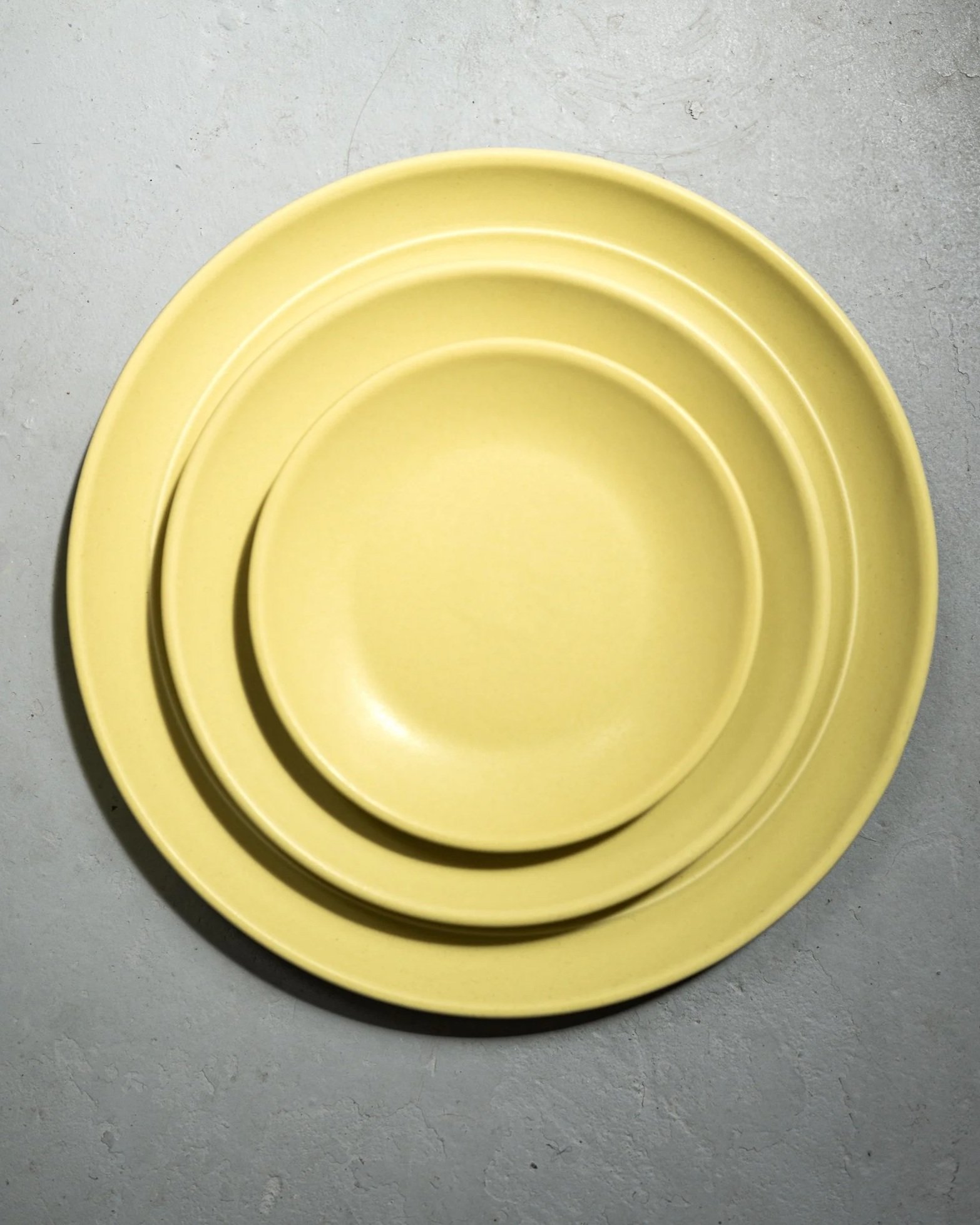
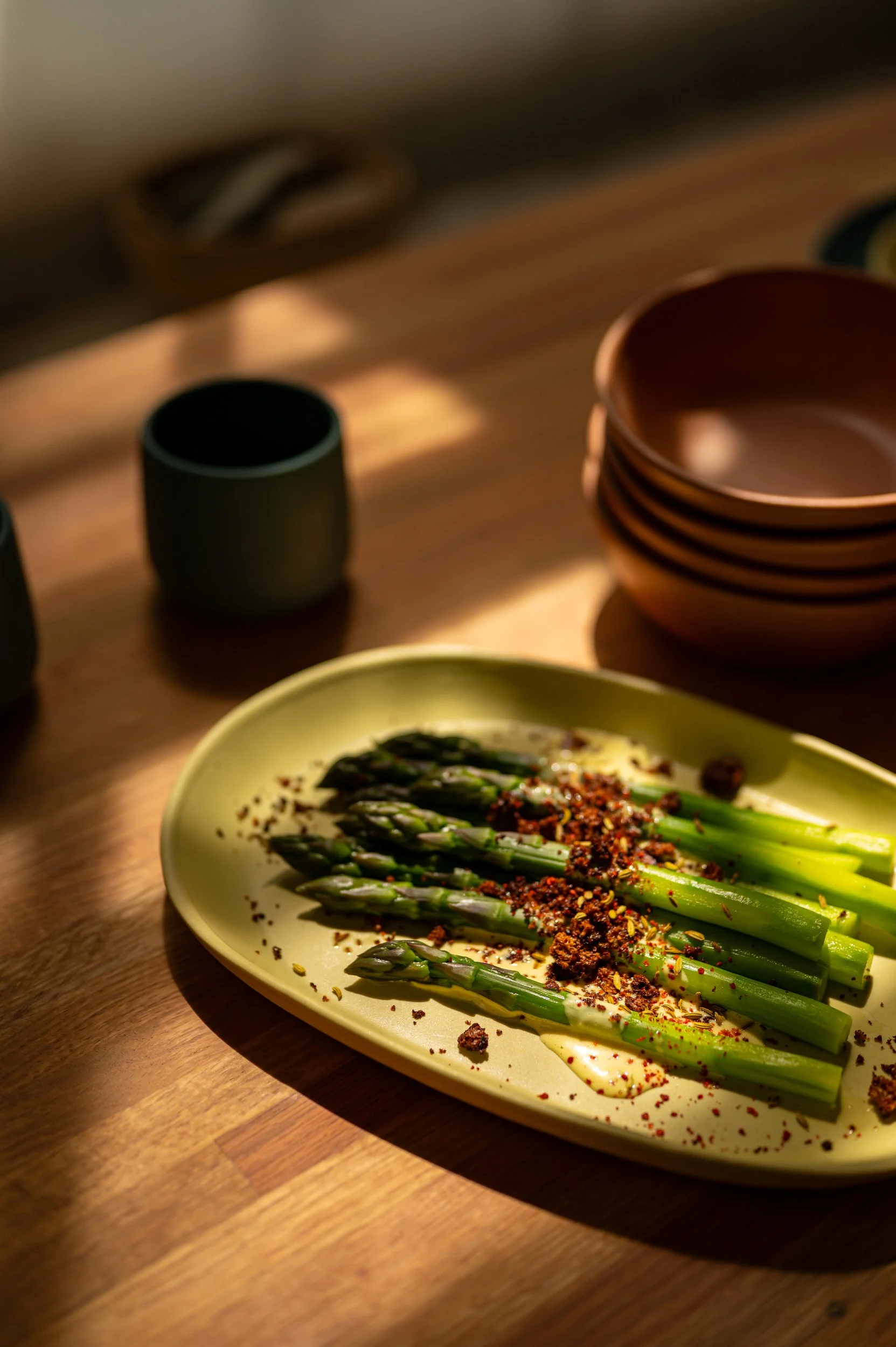
There is a specific color that only exists for a few weeks a year.
It happens right after a long winter, when the first leaves come out on trees that spent months dormant. The color is so optimistic it's almost startling. Too yellow to be green, too green to be yellow. It doesn't last. Within a few weeks it deepens, commits to being one thing, and the moment is over until next year.
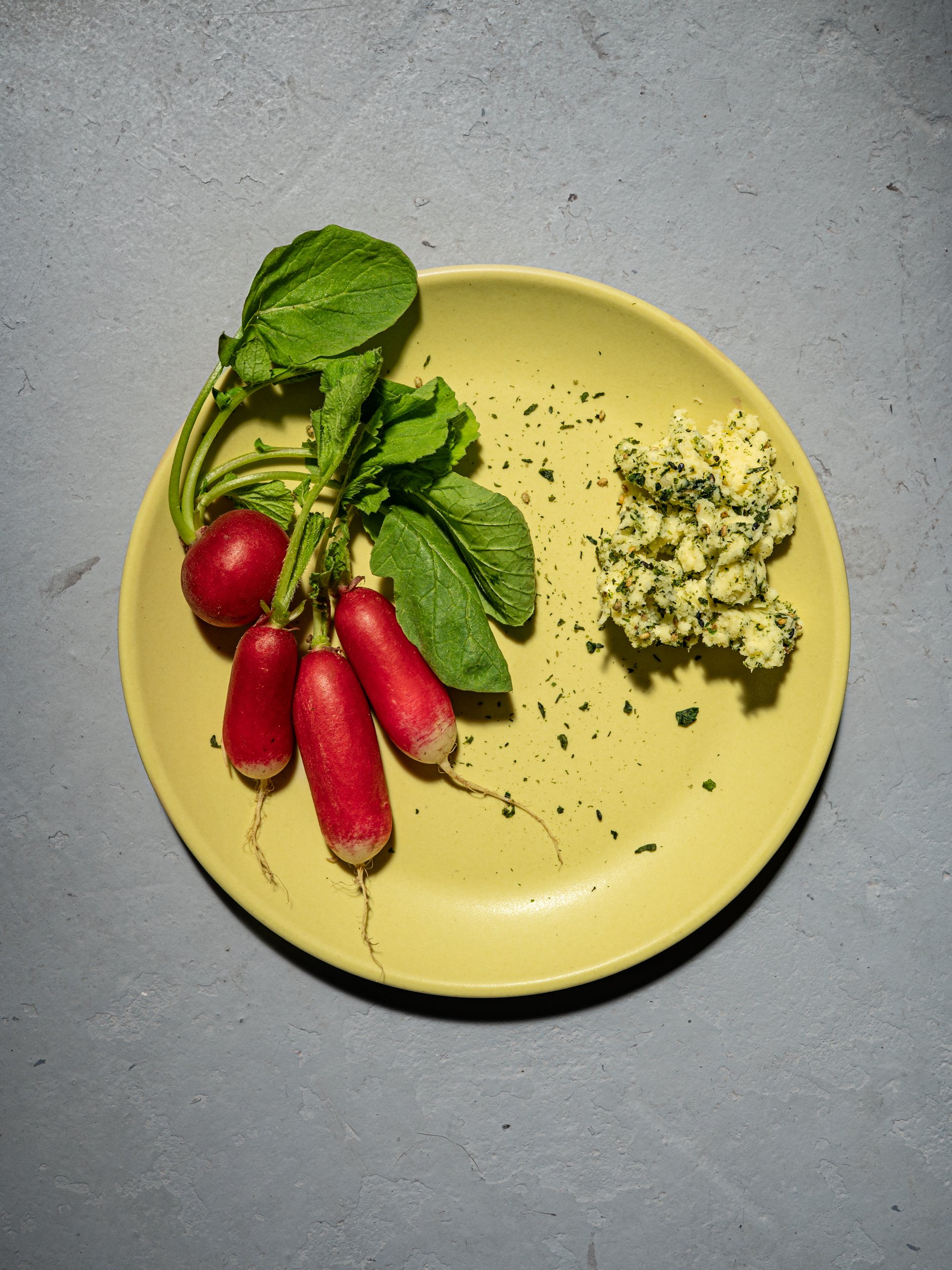
Ume Appetizer Plate. Radish, nori butter, sea salt.
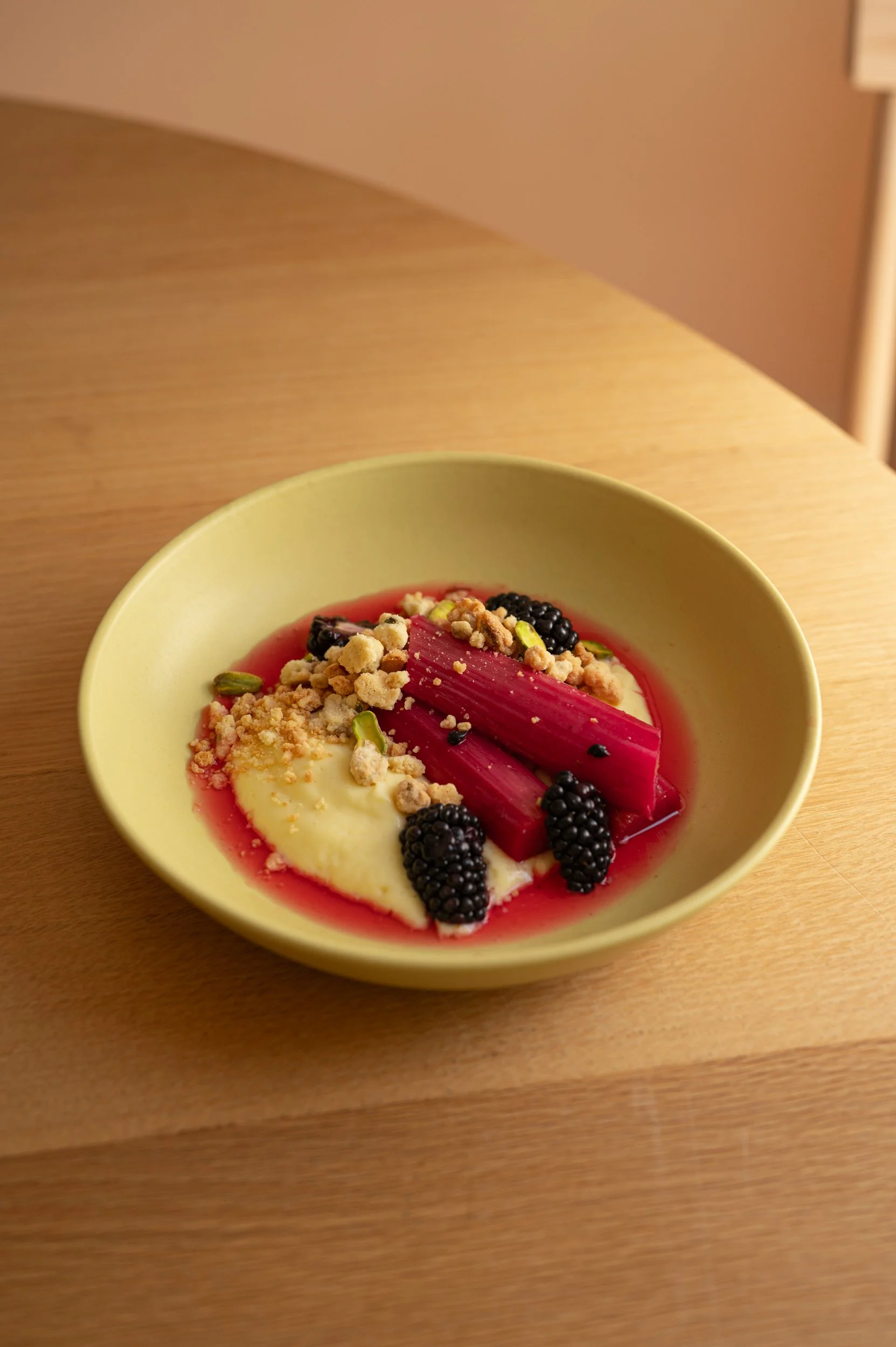
I have wanted that pale chartreuse in our porcelain collection for as long as we've been making tableware. Not a lime. Not a sage. Not an olive. That specific in-between, that can't-quite-place-it, that first breath of life in the springtime.
It took us a while to develop this exact shade.
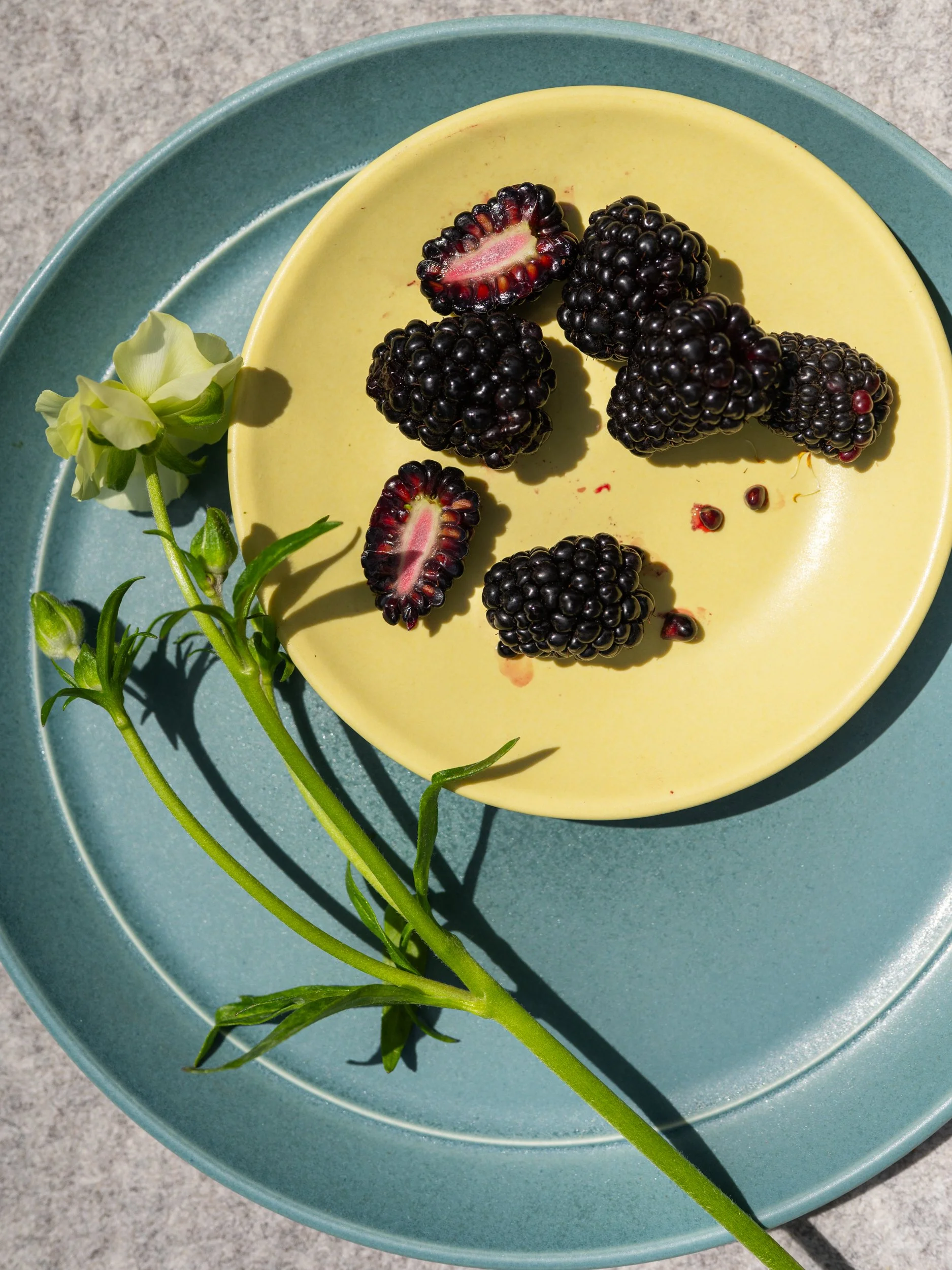
We tested a lot of directions. Some pulled too lime, some pulled too lemon. We kept trying to get to a color where you genuinely couldn't tell which way it leaned, where the ambiguity was the point. What we landed on is vivid and bright, almost startlingly so. It sits right at the edge of yellow, the kind of color that reads differently in morning light than it does at a dinner table. When we finally got there, we knew the name immediately: Ume.
Ume is the Japanese plum, and fresh nanko-ume in late spring are exactly this color before they fully ripen to warm yellow. Nanko-ume is the premium variety, fleshy and aromatic, the one serious cooks reach for. It's the base for umeboshi, the intensely sour, salty pickled plum that chefs treat as an umami bomb. Ume kosho. Ume vinegar. The bright, clean lift that chefs reach for when they want something fruity, sour, salty, and deeply aromatic all at once. We've been working around chefs long enough that when we landed on this color, the reference felt right on every level. Not just visually. Contextually. Seasonally.
But there's another reason the name felt exactly right. In Japan, ume is far more than a fruit. The ume tree blooms in February, often while snow is still on the ground, one of the first signs that winter is ending. For centuries it has symbolized resilience and the arrival of something new. Ume festivals called ume matsuri celebrate it specifically for that quality: beauty that shows up before conditions are easy, before the season has fully committed. That felt like the right spirit for a glaze we've wanted to make for years and are finally releasing now, at the beginning of ume season.
Fresh ume from California's 2026 harvest are on their way to the studio, and we'll be shooting and cooking with them soon. More on that to come!
The development process
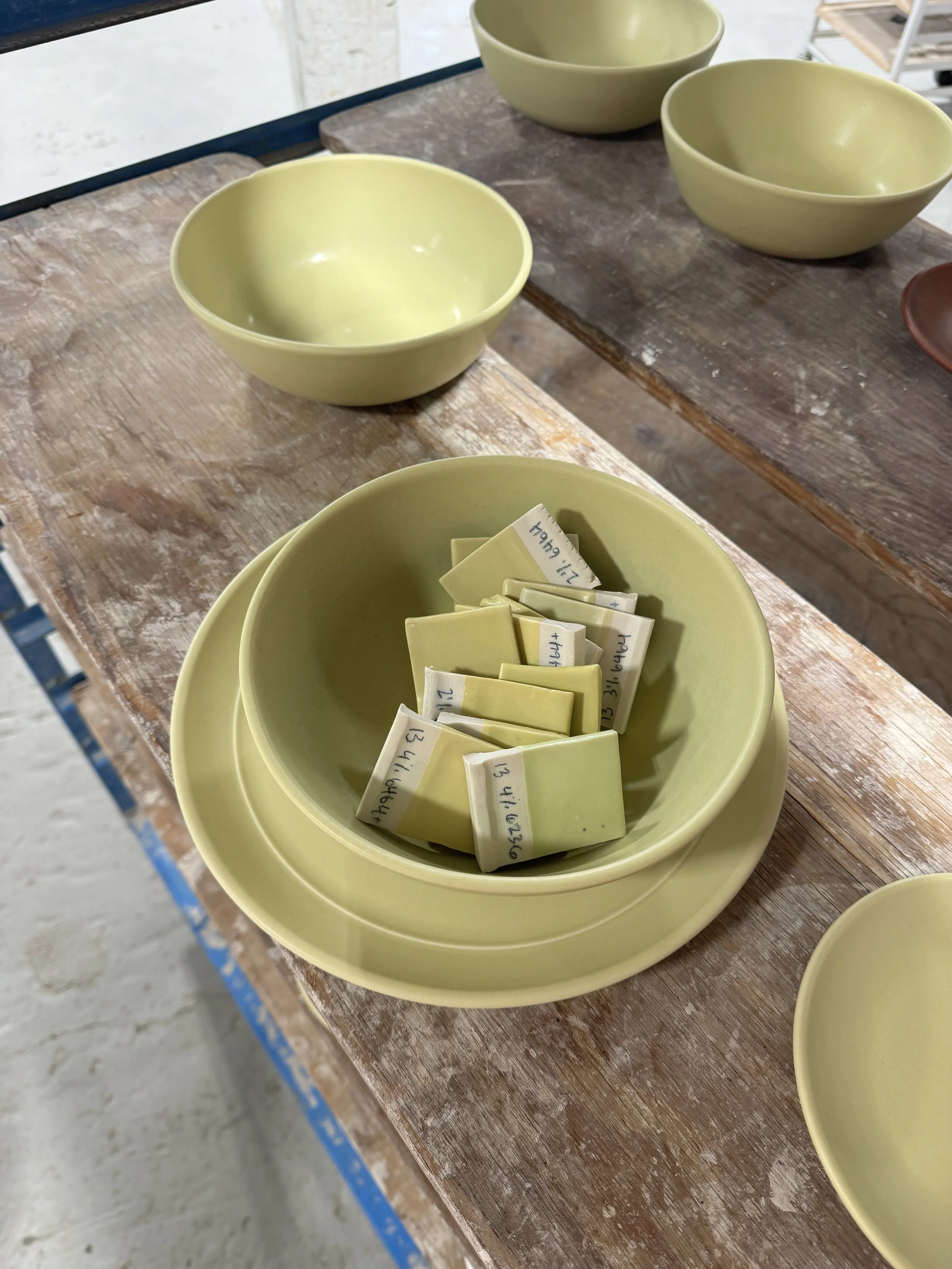
The handcrafted porcelain pieces in these photos are sitting on one of the same ware carts we use every day in our East Providence studio. Those tile samples in the center of the bowl are from the testing process, each one a slightly different formula. Looking at them now they almost all look the same, but each represents a batch of adjustments, a firing, a morning of pulling tiles and making notes. That's how glaze development works. You're creating color with heat and chemistry, it's almost cooking color. We chase a color we can see vividly in our heads, that doesn't quite exist yet in any of the batches, and we keep going until we find it.
Ume is the pale chartreuse of our dreams.
Right at the edge of yellow. The same edge the leaves are on when they first come out in spring, before they commit. The same edge a nanko-ume sits on just before it ripens. That in-between is what we were after the whole time.
Introducing Studio Glazes
Ume is also something new for us: our first Studio Edition glaze.
We have six Core Colors: Canyon, Dove, Moonlight, Nightfall, Rosewood, and Verdigris. These are always available across our full porcelain tableware collection. They are the backbone of what we make, developed over months of testing before we launched in October 2025. They're designed to live on your table for decades without going anywhere.
Studio Edition Glazes are different. They're colors we develop that belong to a specific moment: a season, a collaboration, a studio milestone, a new technique. They tend to be a little more nuanced, a little more particular than our core palette. They're for the person who already has a collection and wants to add something unexpected. They're for the person who looked at our Core Colors and thought "beautiful, but not quite my color" and maybe this is. They're for long-time customers who want to know what we're working on in the studio beyond the everyday line.
Each Studio Edition Glaze is limited, running for one season only.
What's available in Ume
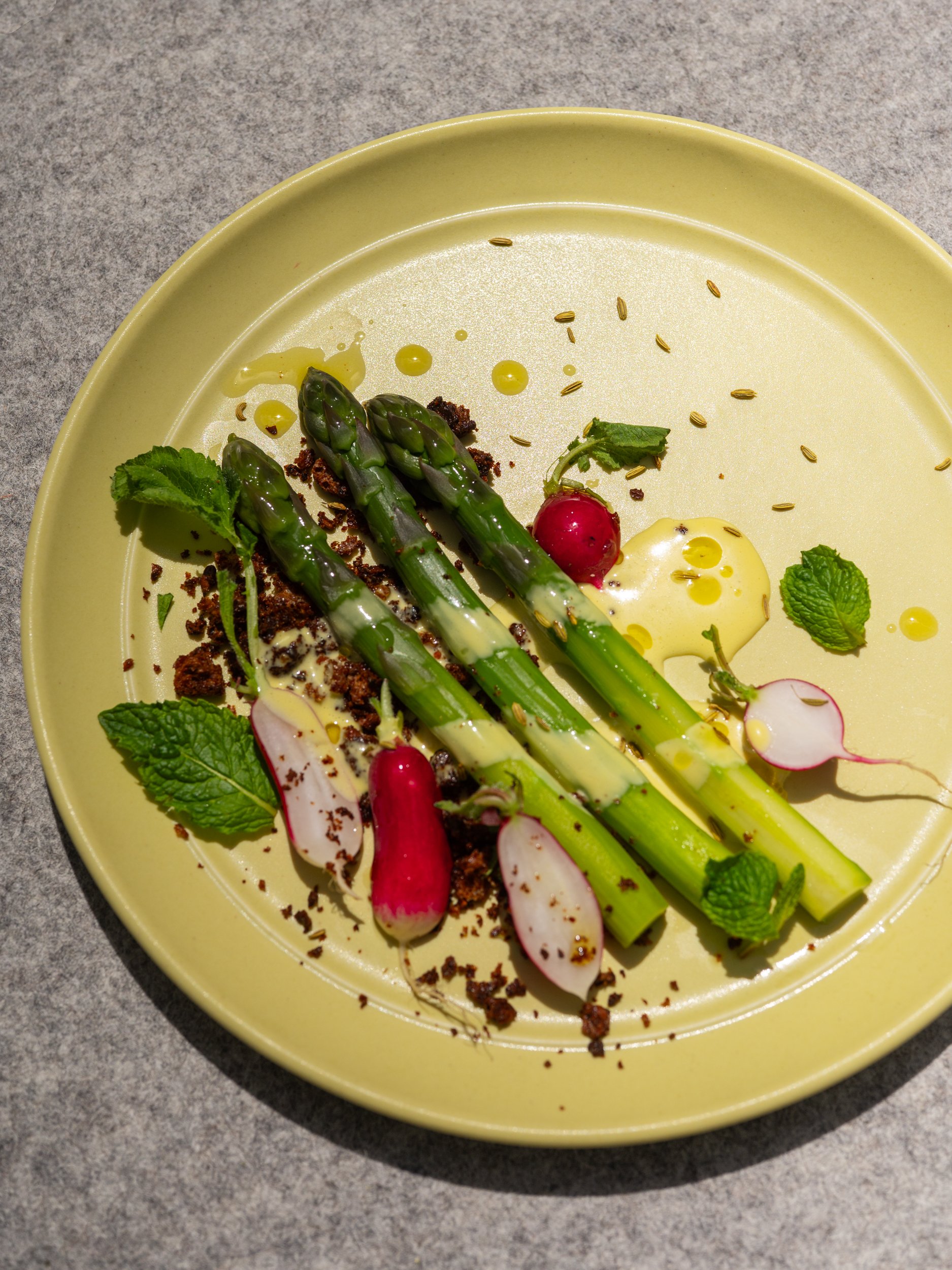
Ume launches with our full handmade porcelain tableware lineup: the Dinner plate, Appetizer plate, Morsel plate, Tasting plate, Basso bowl, and Helping bowl, plus our place settings. We'll be adding platters, drinkware, and more over the coming weeks, so if you don't see what you're looking for yet, check back soon.
All Ume tableware is made to order in three to four weeks, fired in our East Providence, Rhode Island studio to the same restaurant-grade standard as everything we make. Fully vitrified, built to last.
Update, August 2026: Ume has closed for retail and returned to our hospitality palette, where it lives on in restaurant service. Our next Studio Edition arrives shortly. See what is currently in the shop.