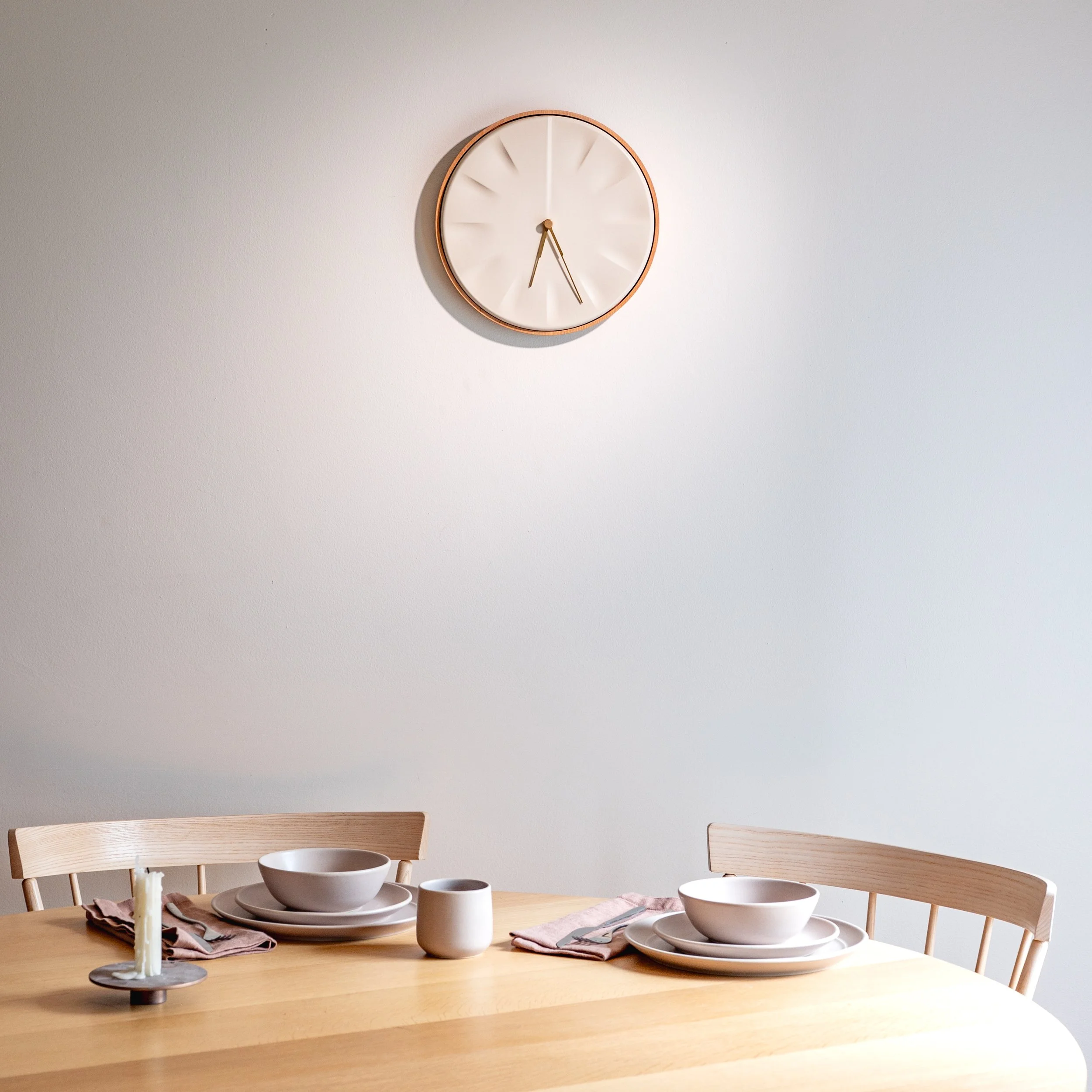
Light Tells Time: Designing the Wall Clock
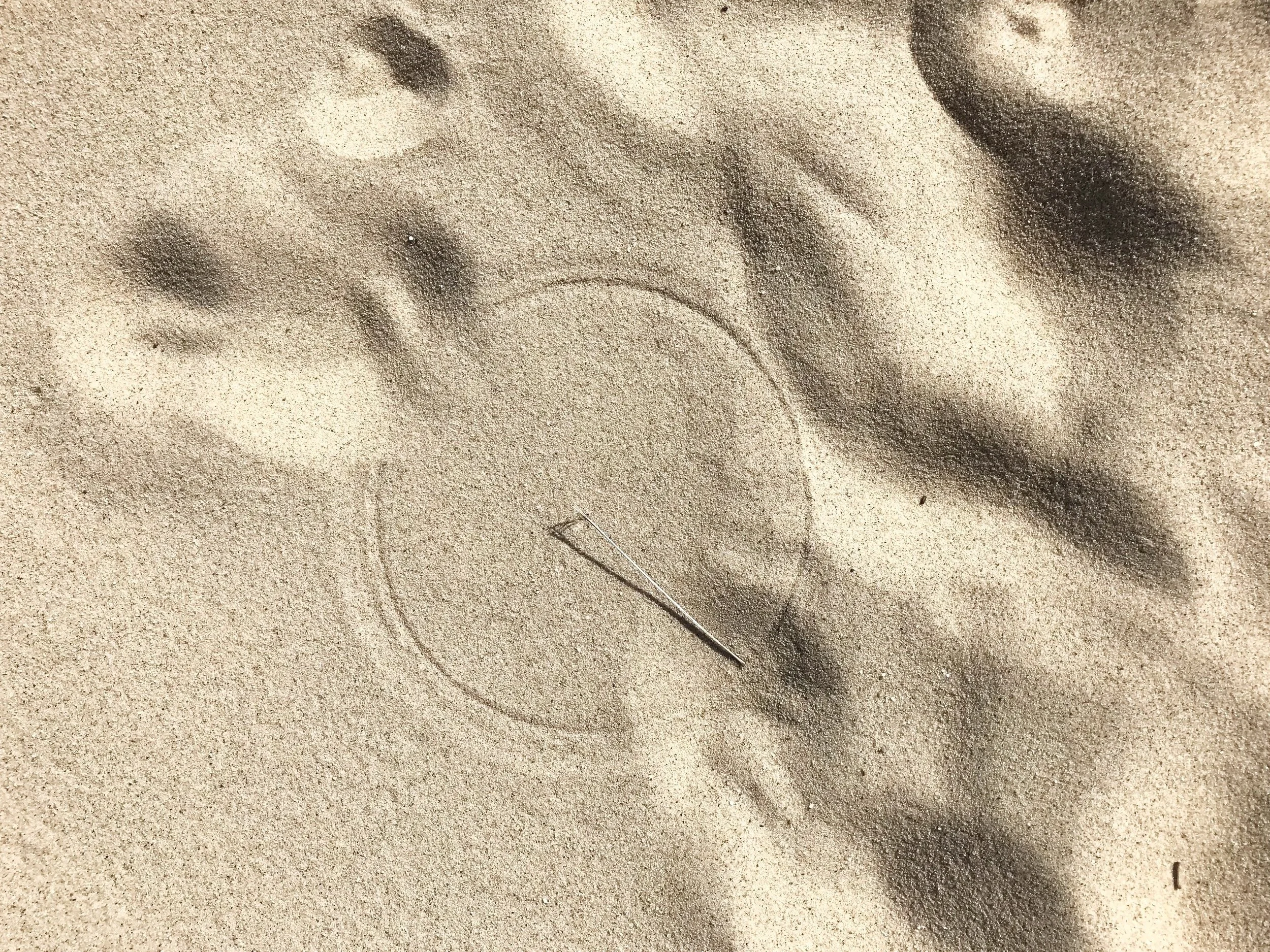
We have a photo from years ago, taken on a beach in Provincetown. A single blade of grass had pushed up through the sand, and the wind had bent it over at a low angle. As the wind shifted around it, the tip swept a full turn and drew a clean circle in the sand. It was a sundial of sorts, made by nothing but grass and weather, and it stayed with us.
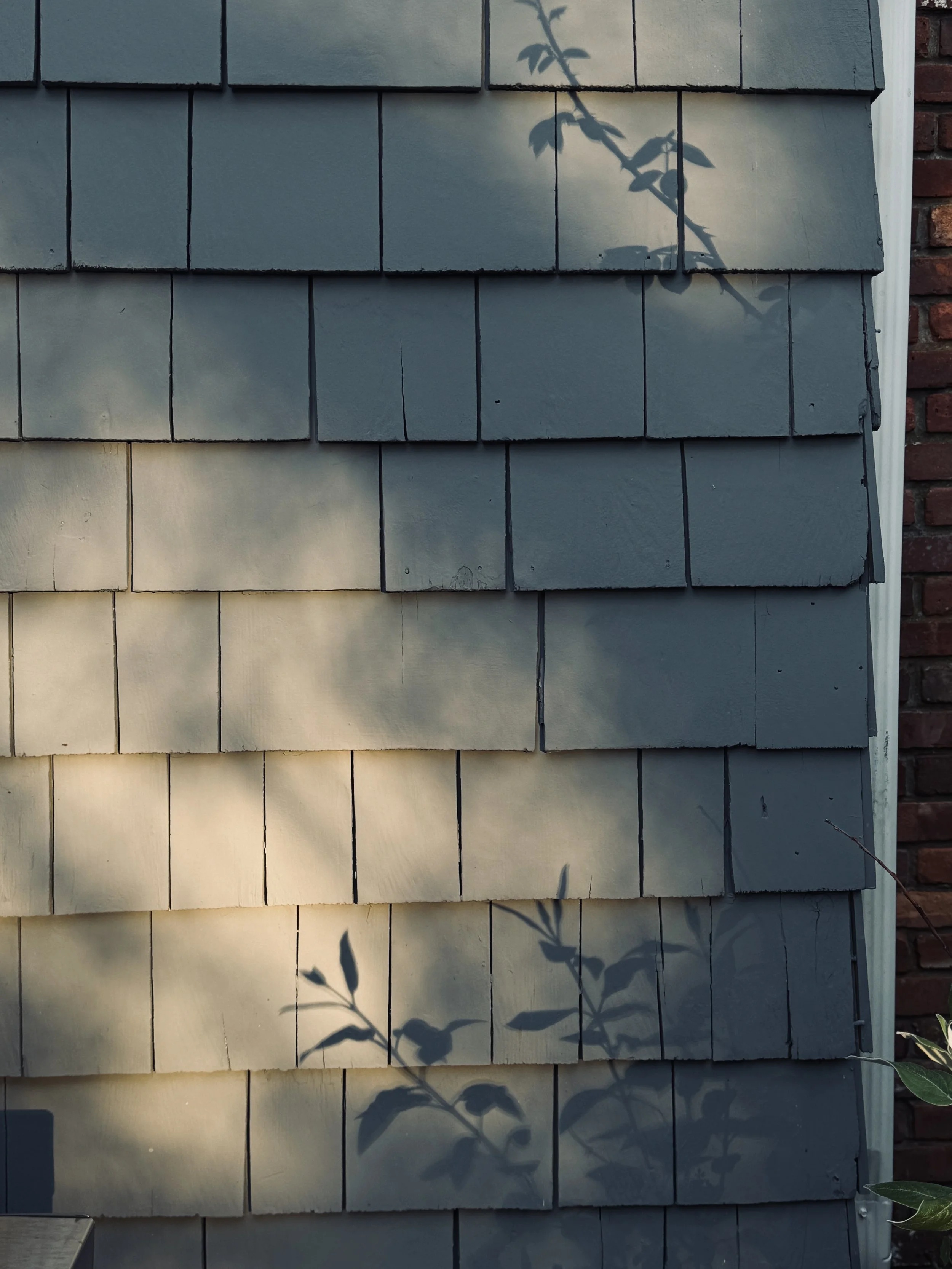
Light is what we notice most at home. It comes in low in the morning, stretches across the floor through the afternoon, and fades as the evening goes on. We've been photographing it for years: a window's shadow climbing a wall, a glass throwing color across the counter, the last of the sun on a plate. The Wall Clock started there, with wanting a piece that would hold that movement on a wall.
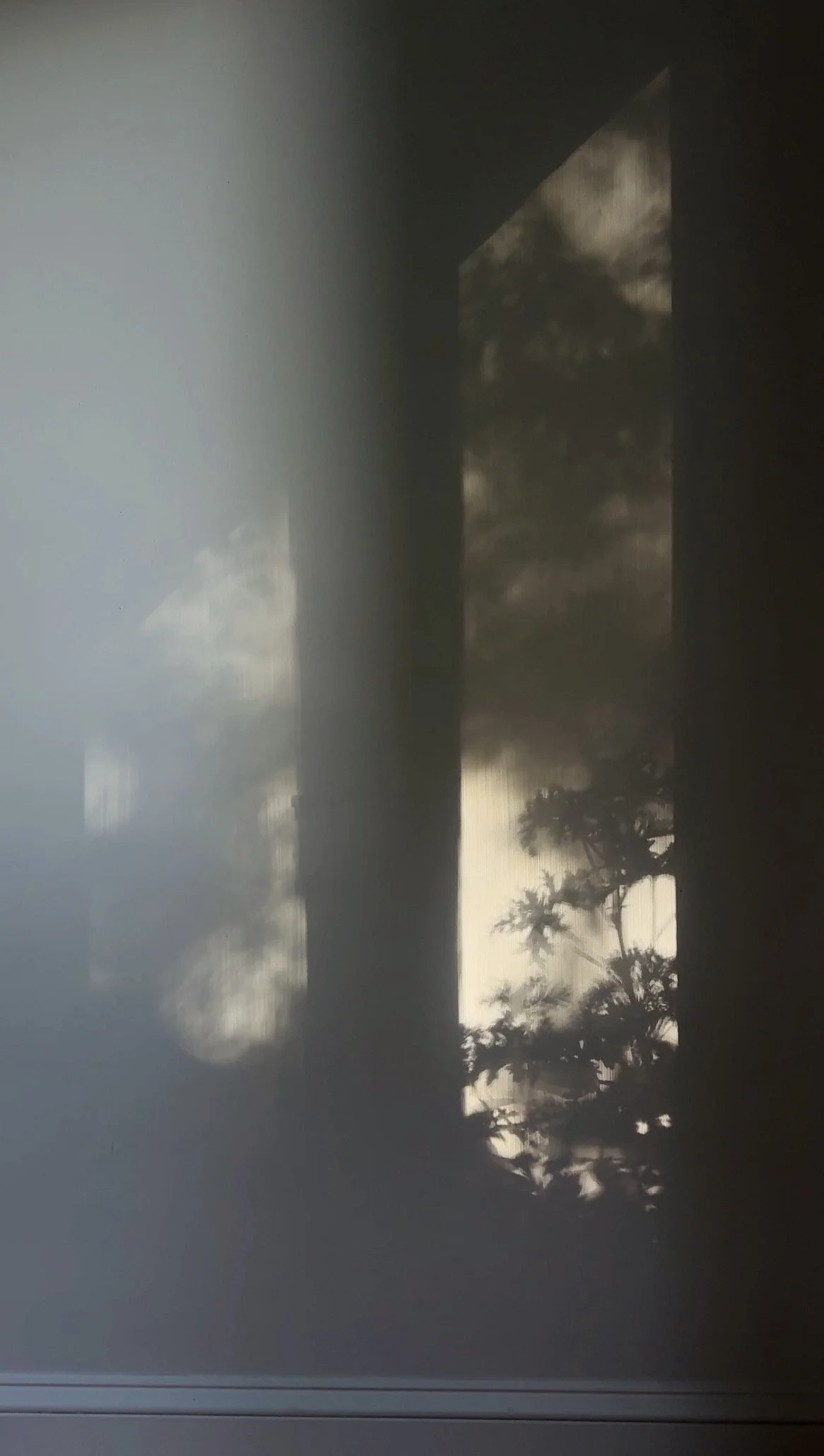
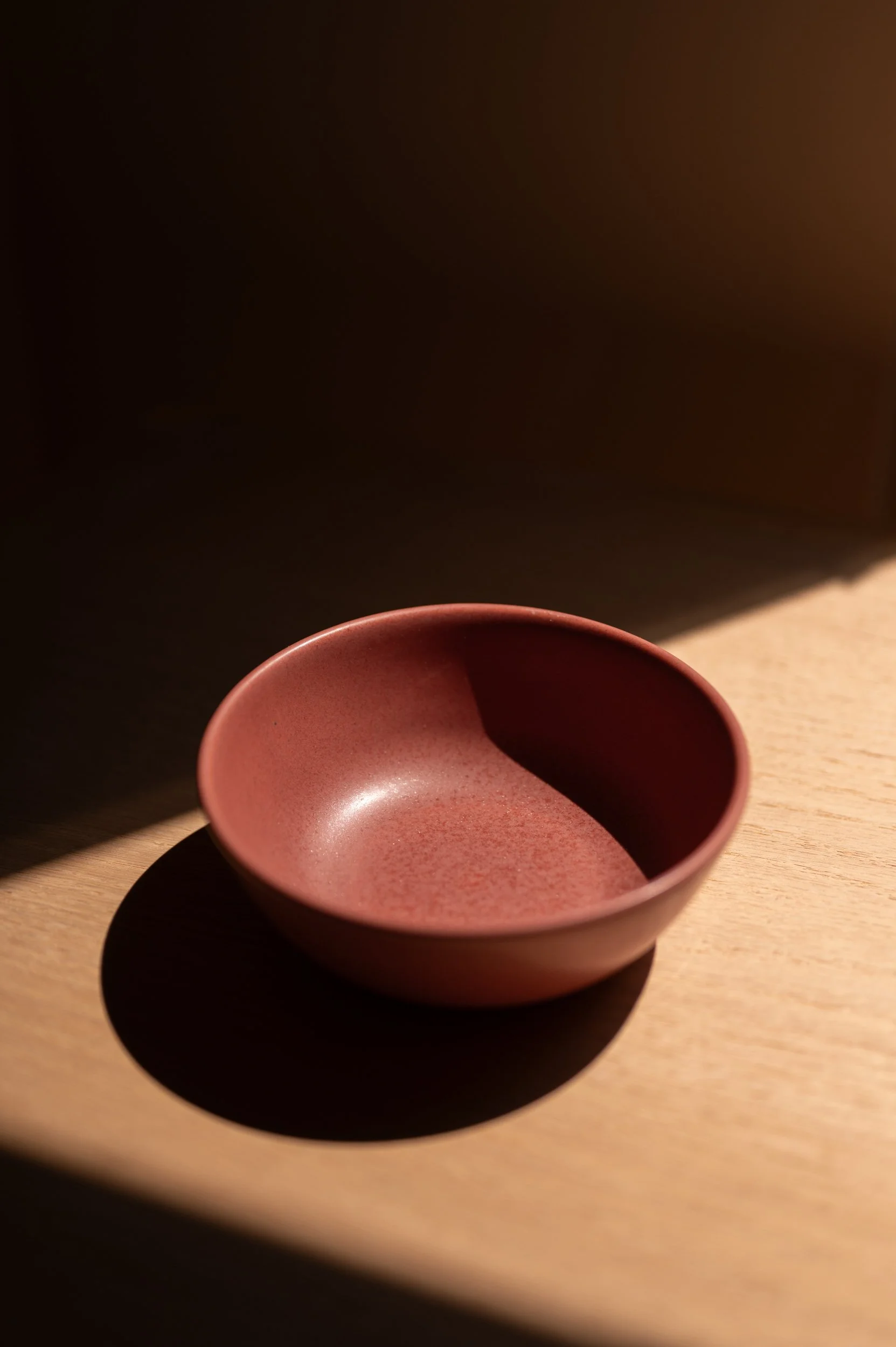
Like everything we make, it began as a conversation between Eric and me, and then several more after that. We design every piece together, and it always starts with talking it through. For the clock, we wanted a timepiece more than a clock: something beautiful enough to stop you, and to watch as it changes through the day. We wanted it to be calm to live with, with no numbers on the face. And we wanted to design something that didn't belong on the table, after years of making pieces that do.
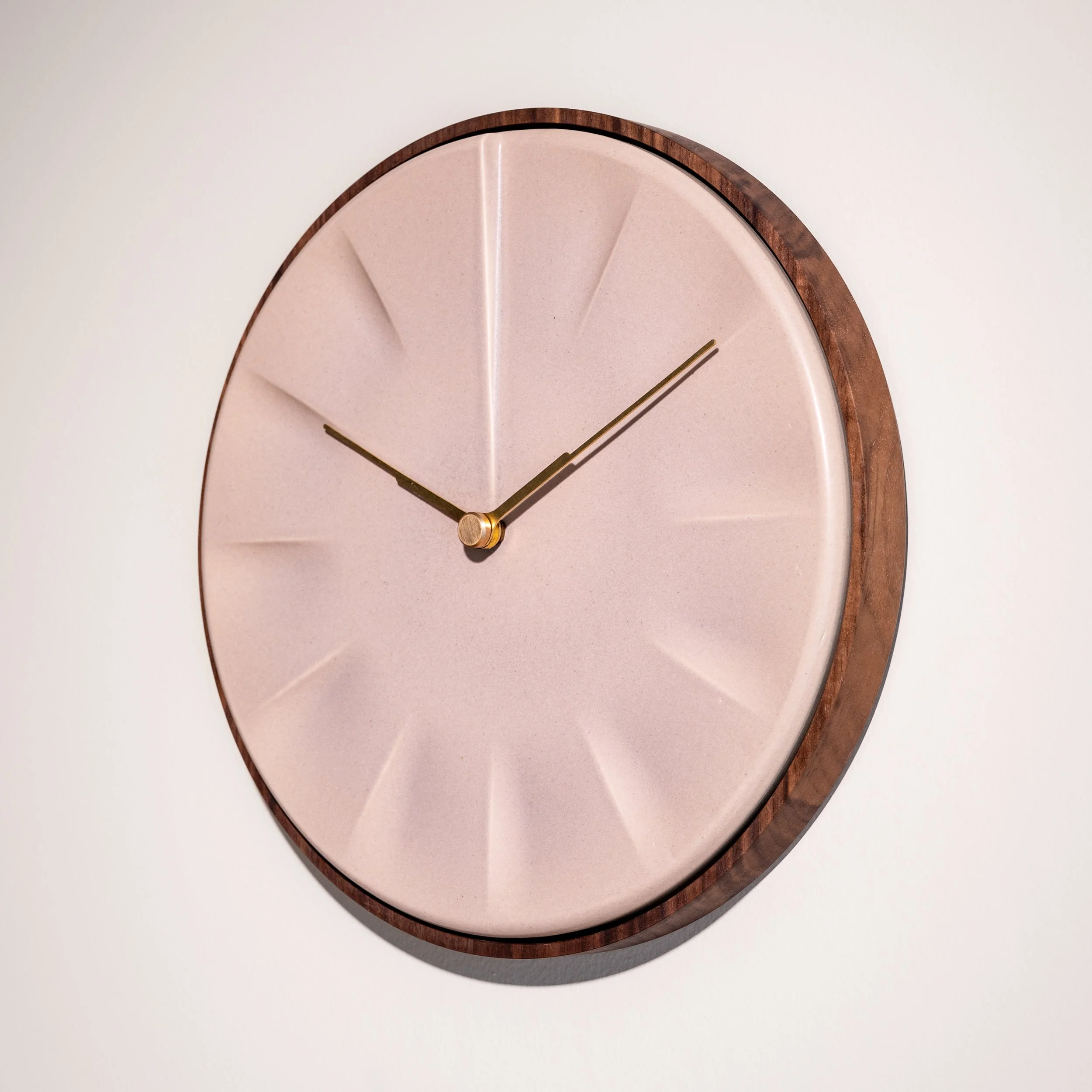
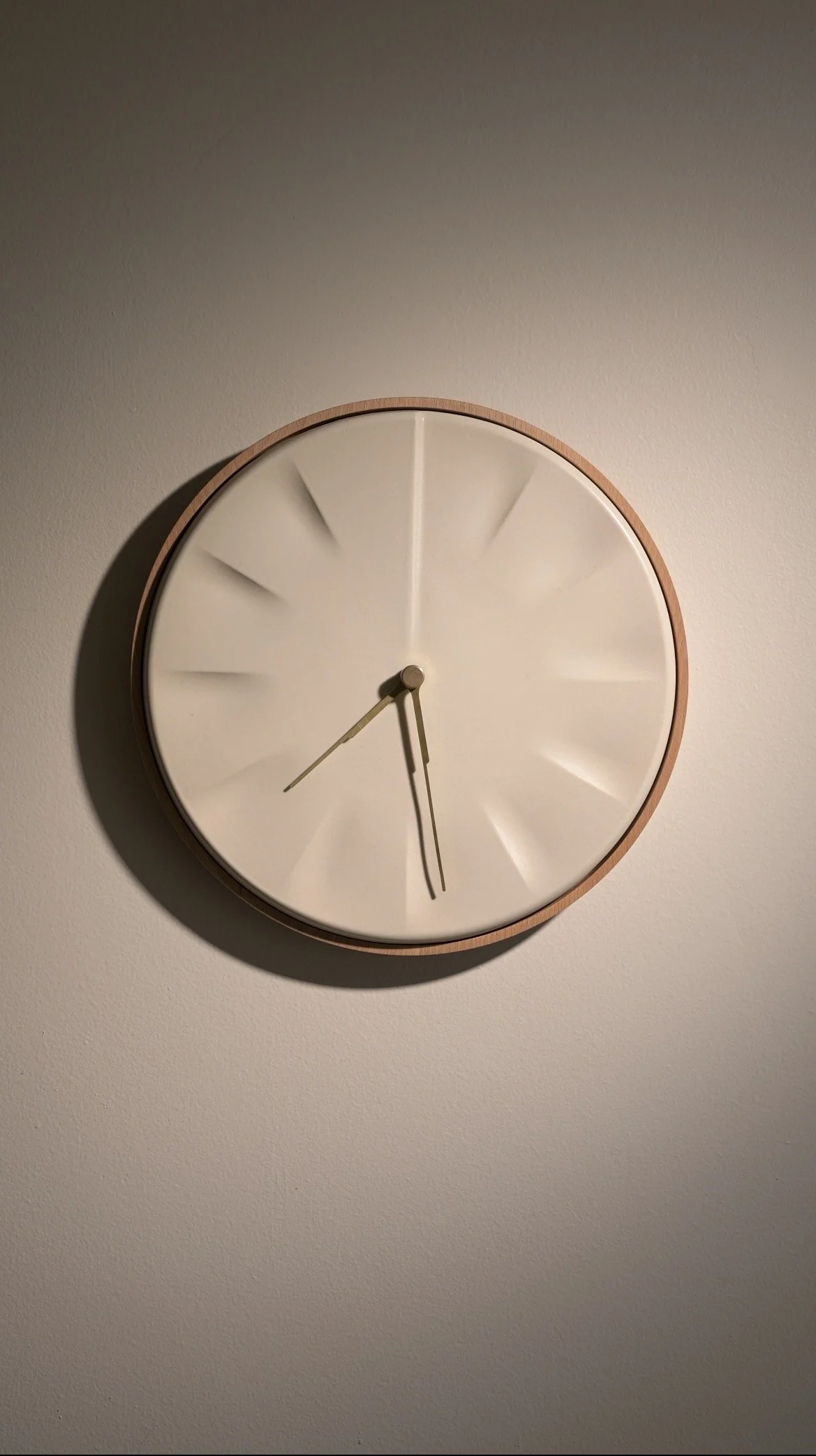
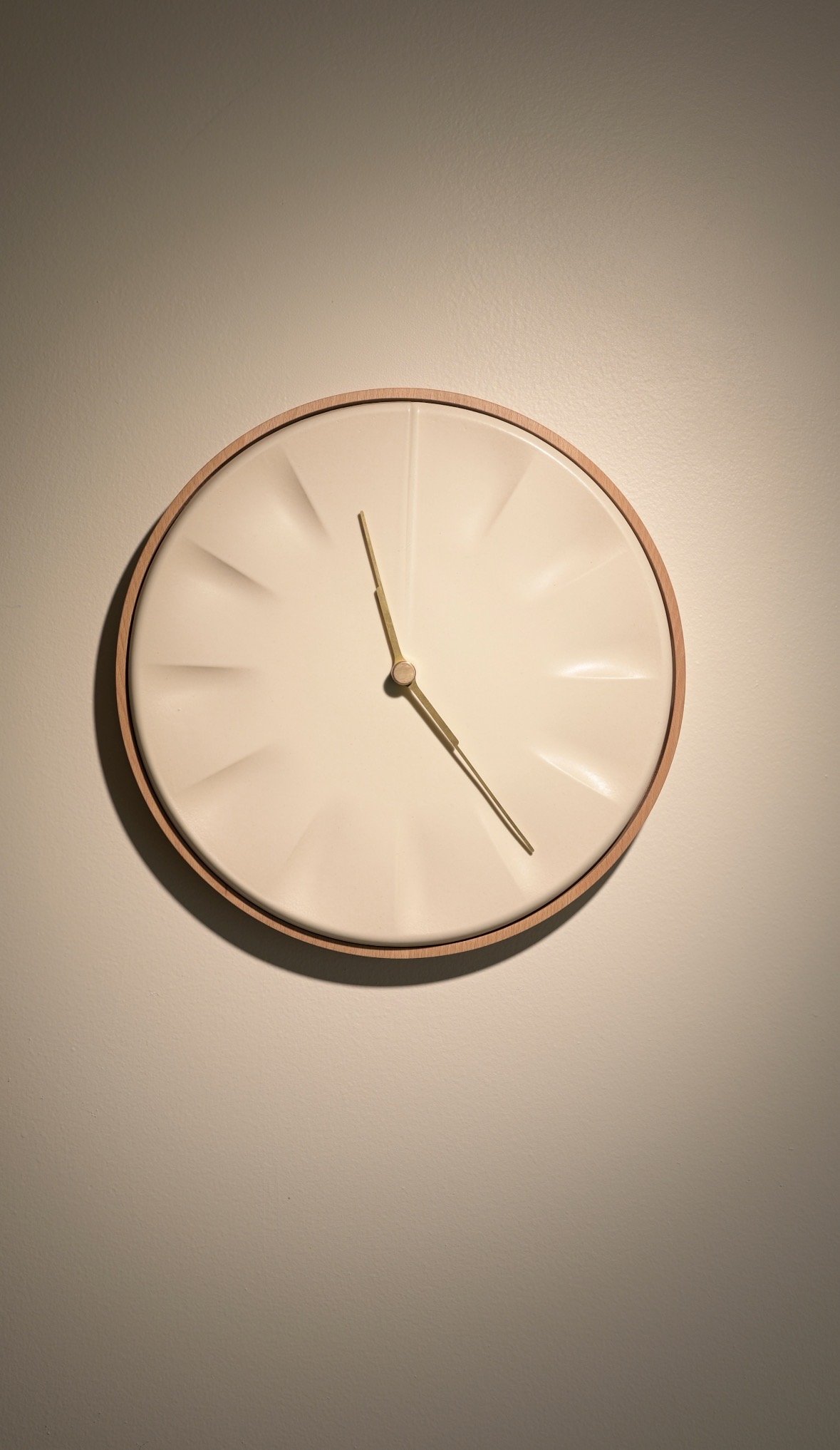
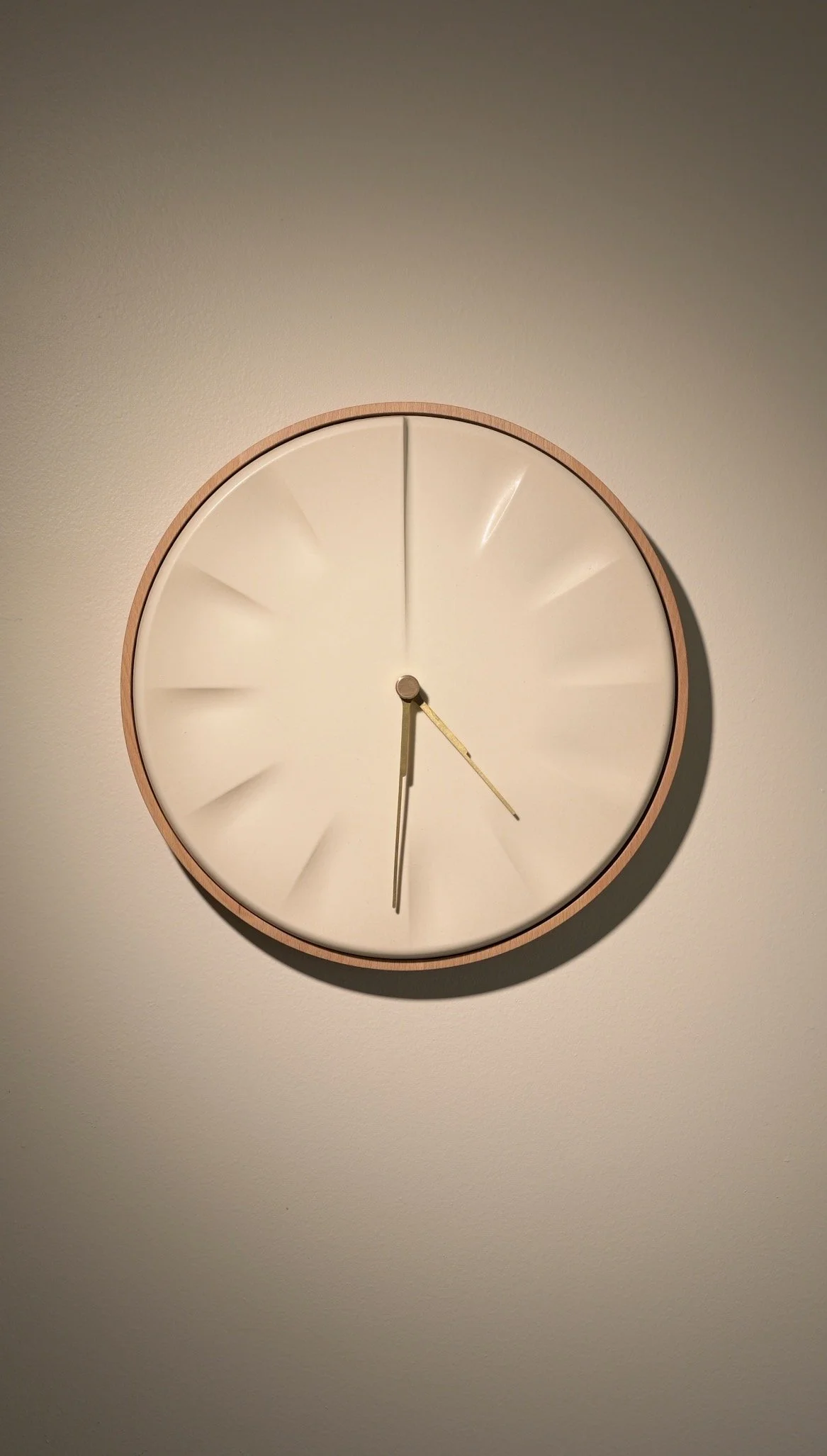
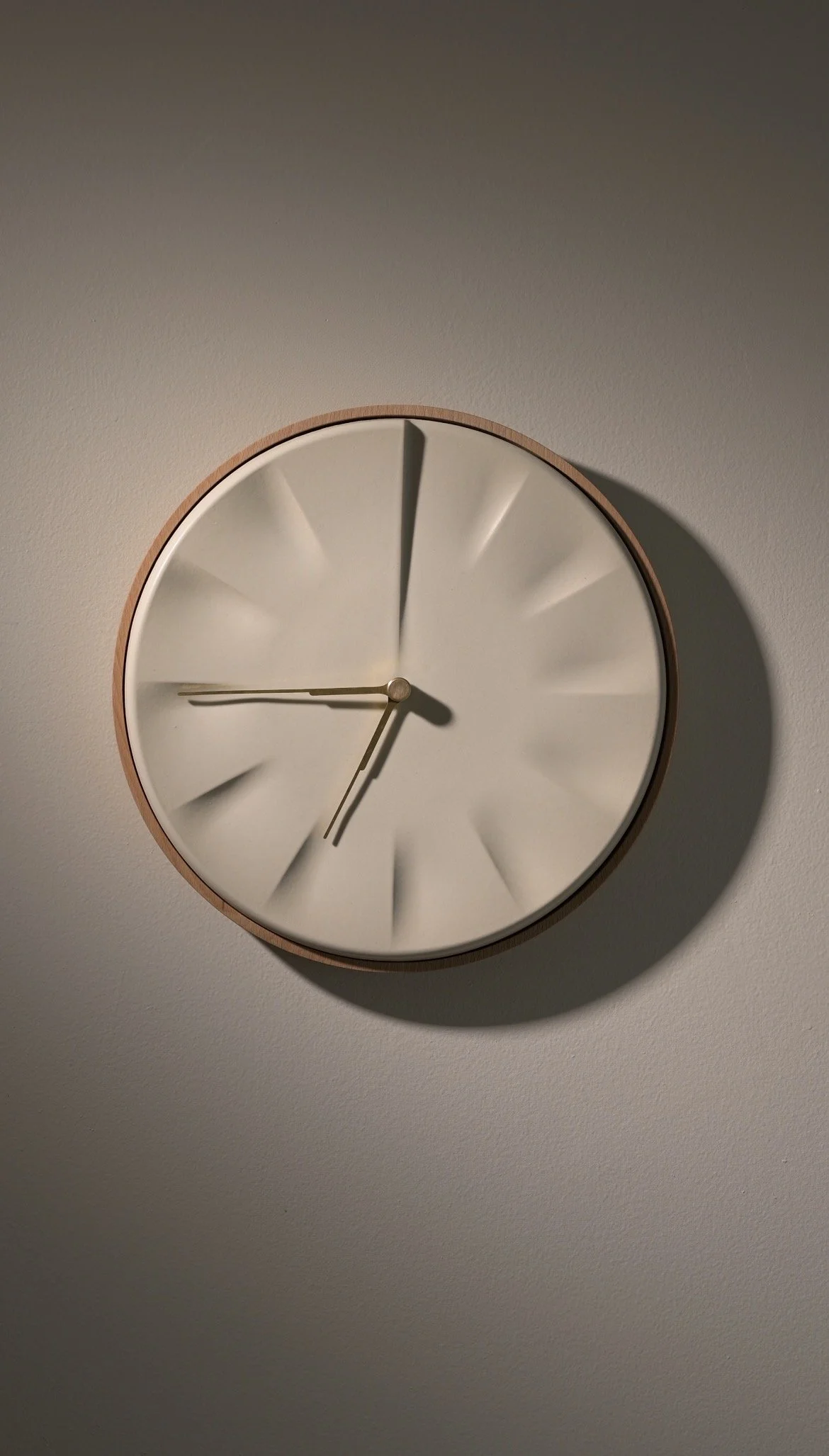
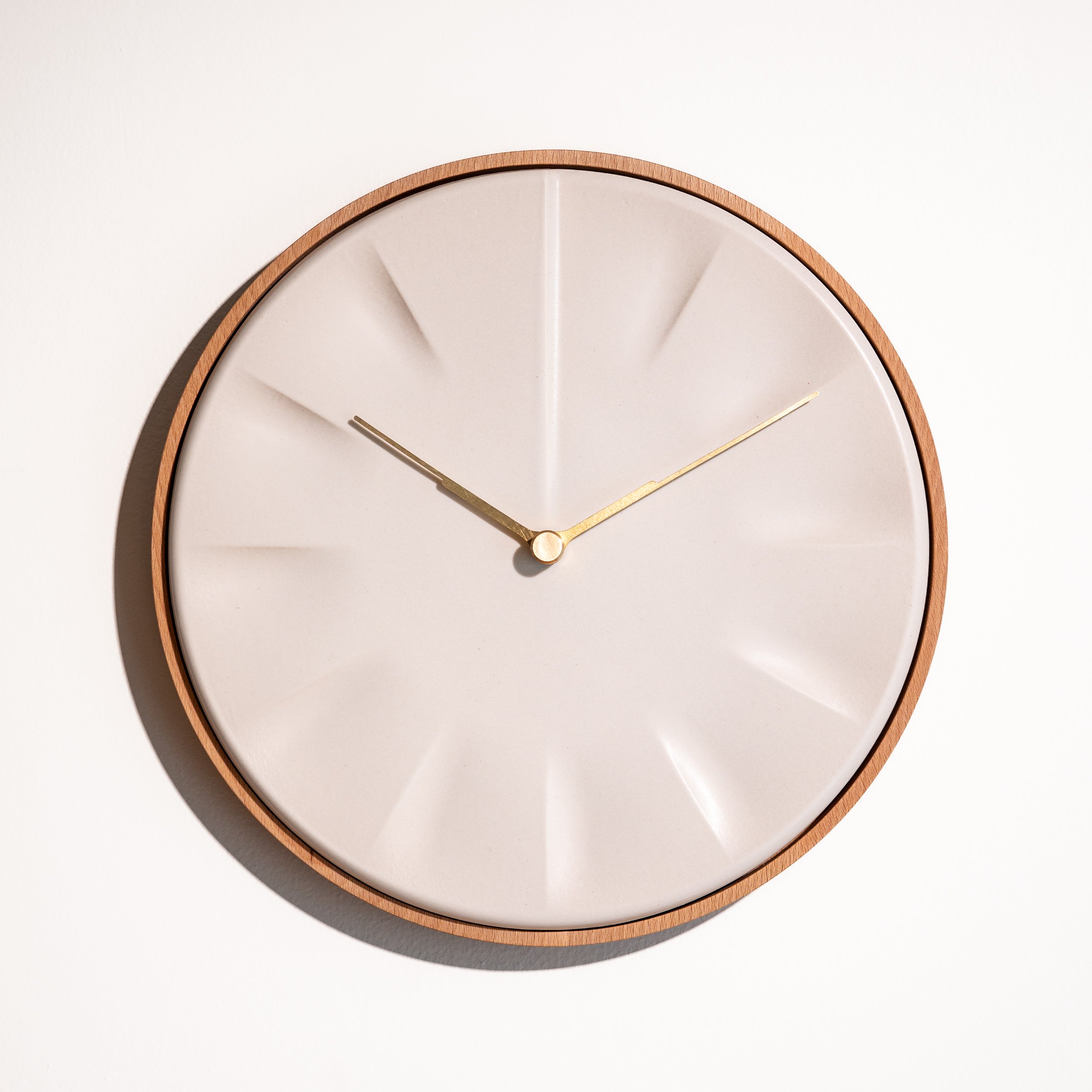
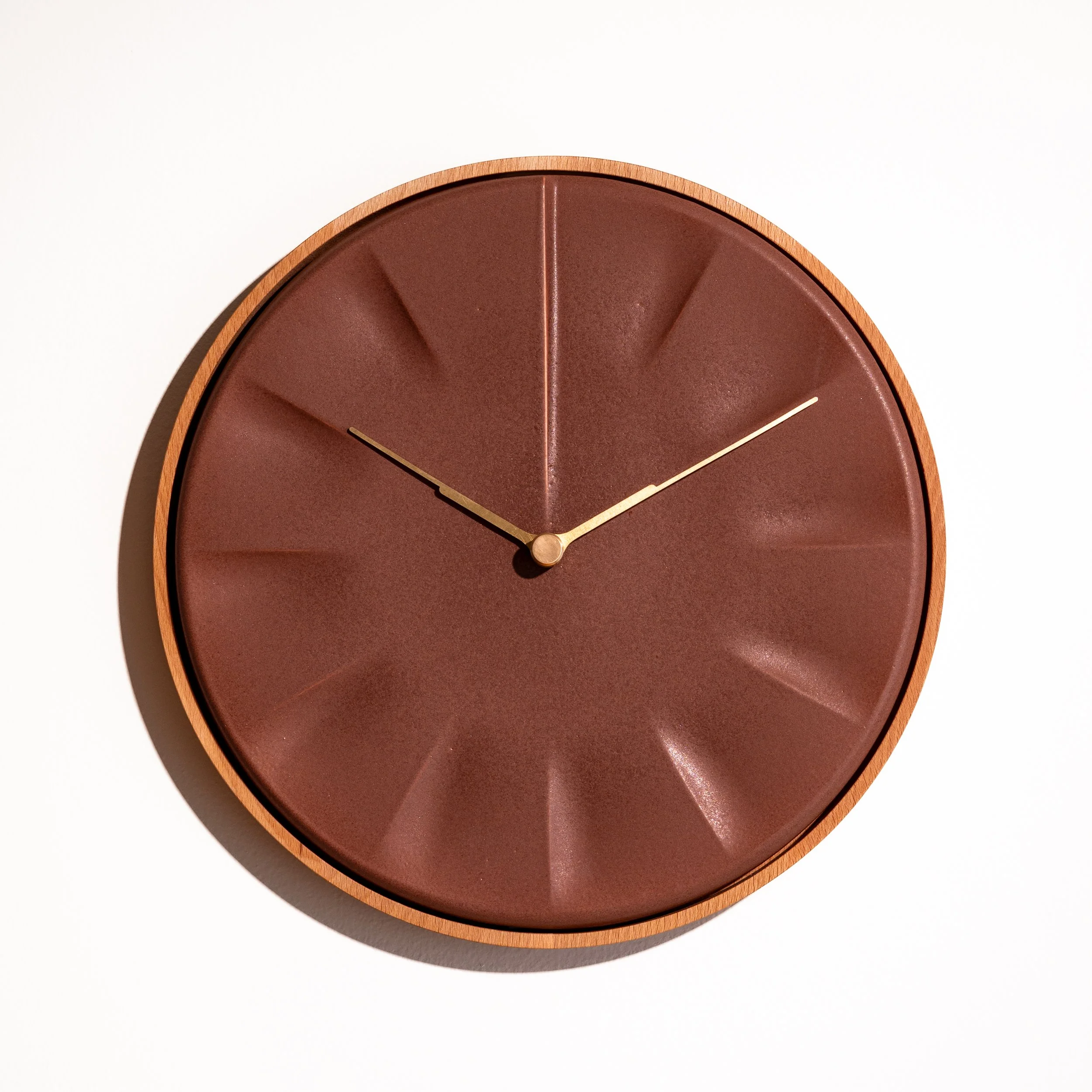
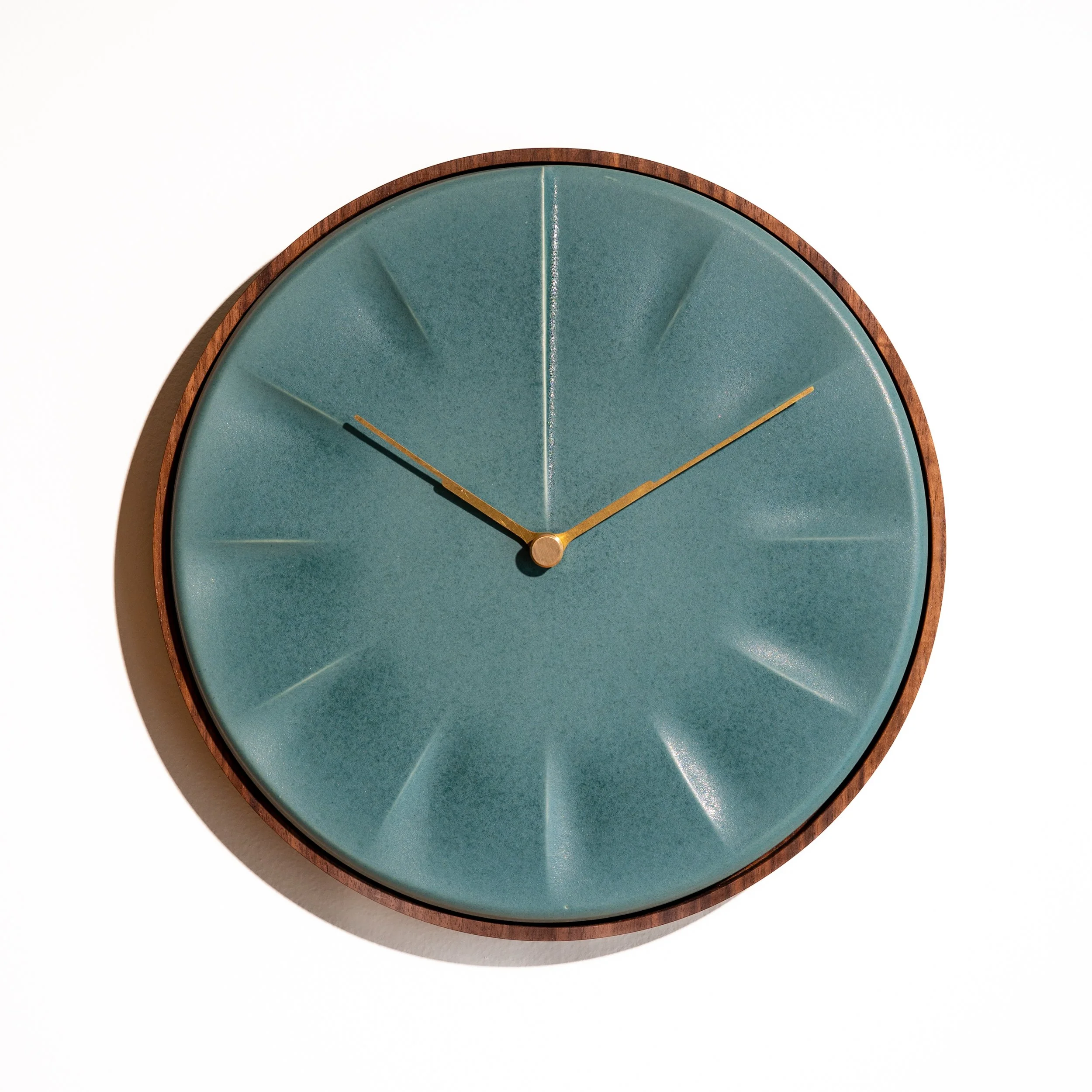
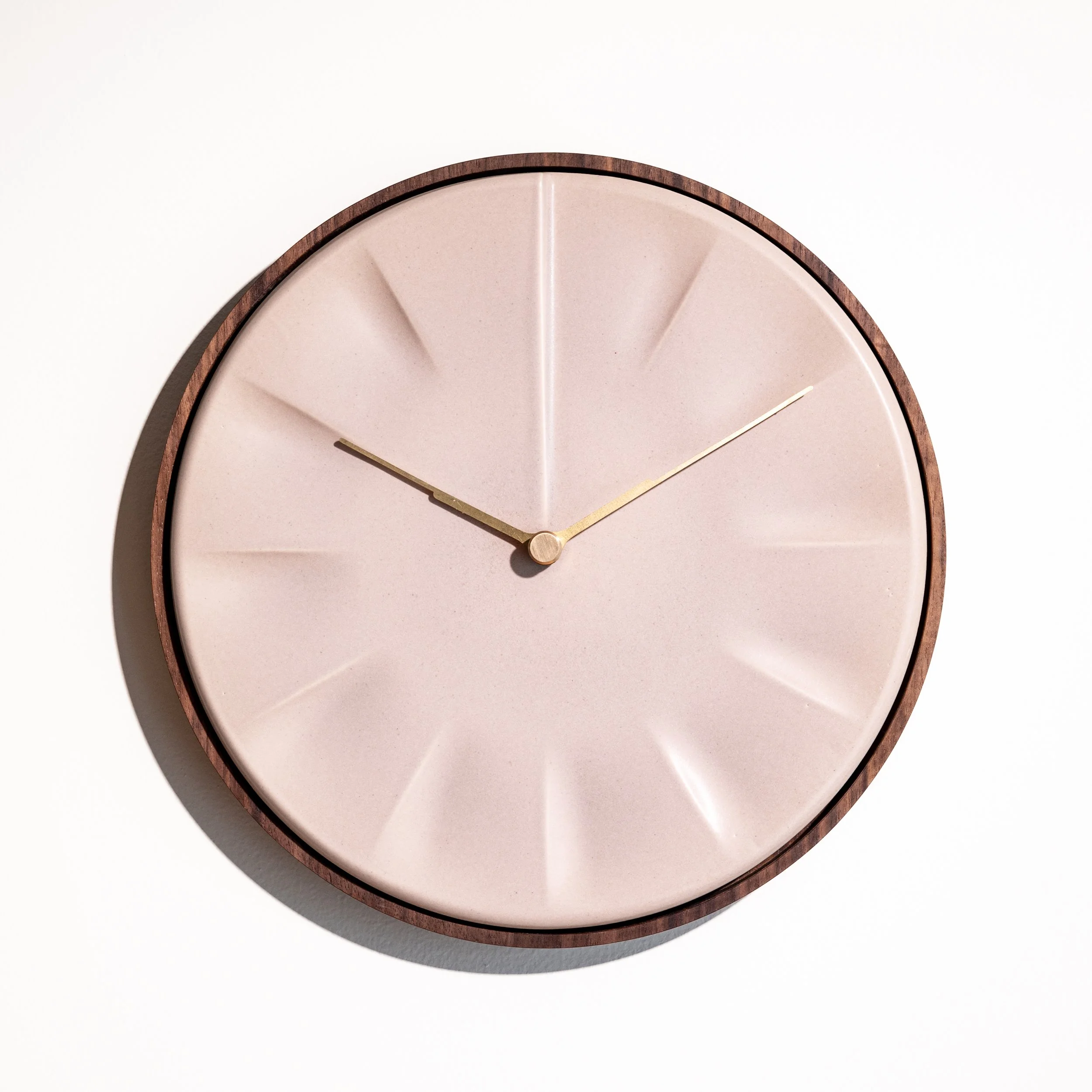
So the face carries no numbers. Each hour is an indentation shaped into the porcelain, and each indentation has a crisp edge that cuts the shadow cleanly, so the contrast marks the hour where a number would be. Brass hands cross the face so the time reads at a glance, while the face itself plays with light the way a sundial does.
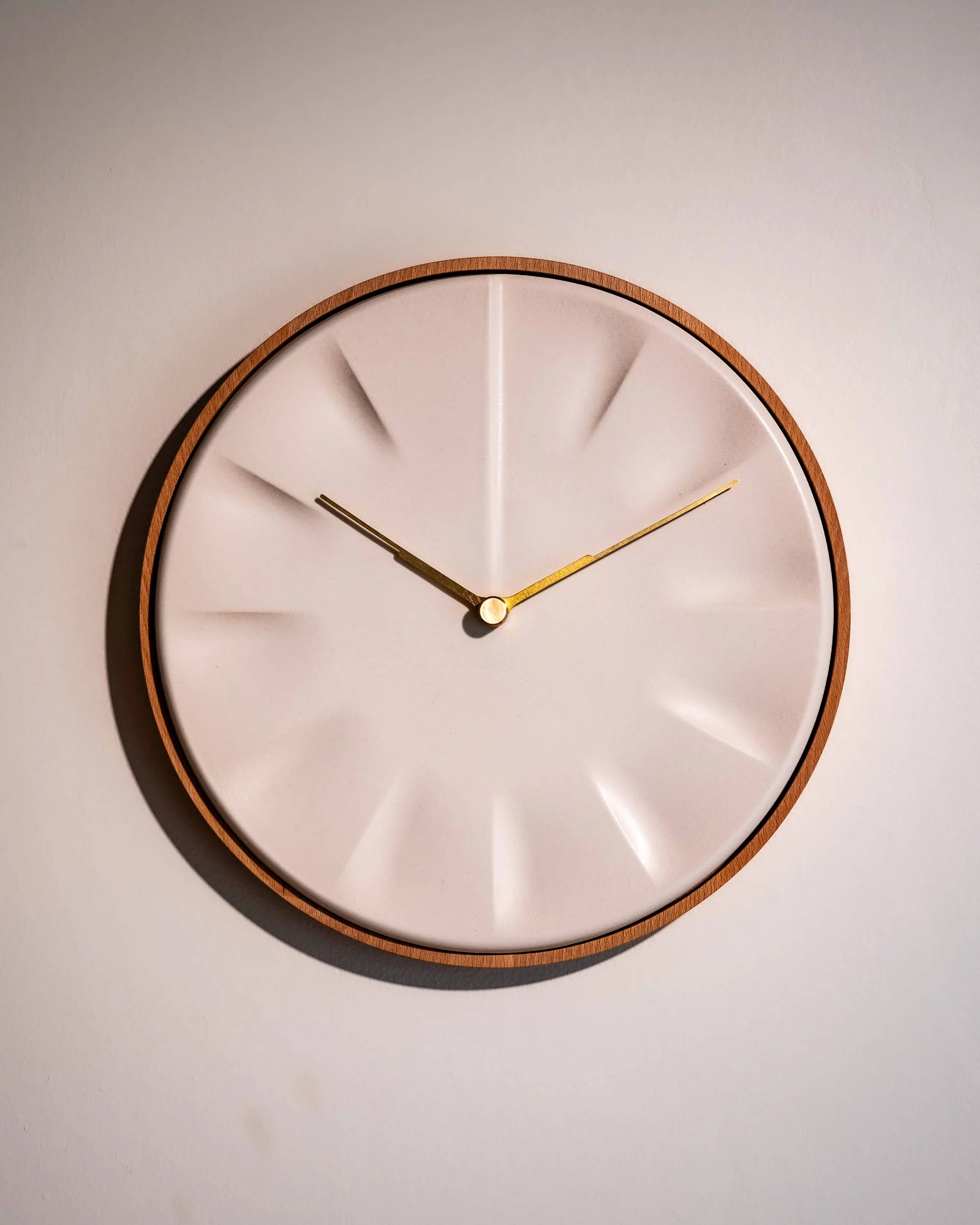
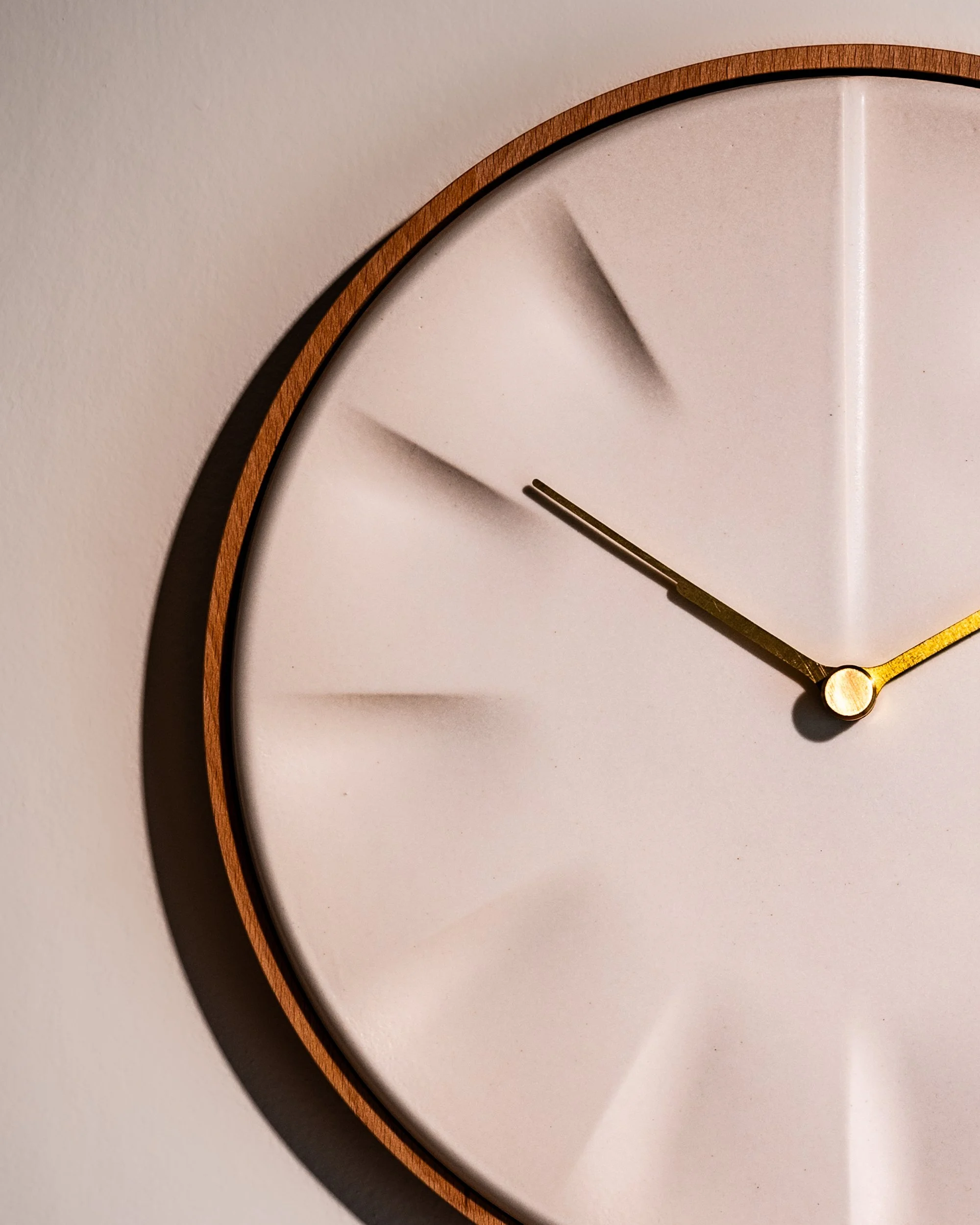
Over a day, the face keeps changing. In the morning, with the light coming in low, the brass hands catch it first, and the hands and hour marks cast deep shadows across the face. As the sun moves, the shadows shift and soften. By evening, under a lamp, the shadows ease and the marks show in the subtle break of the glaze where it thins over each edge. It's the same twelve hours, read a little differently every time you glance up.
Developing the Clock
We knew what we wanted from the start, and the design barely changed along the way. Making it was harder. The face depends on a crisp edge at every hour mark, and a design like that leaves no room for approximation. We started in 2023 by prototyping it in our studio with our 3D printer, and we couldn't get the fidelity the design needed.
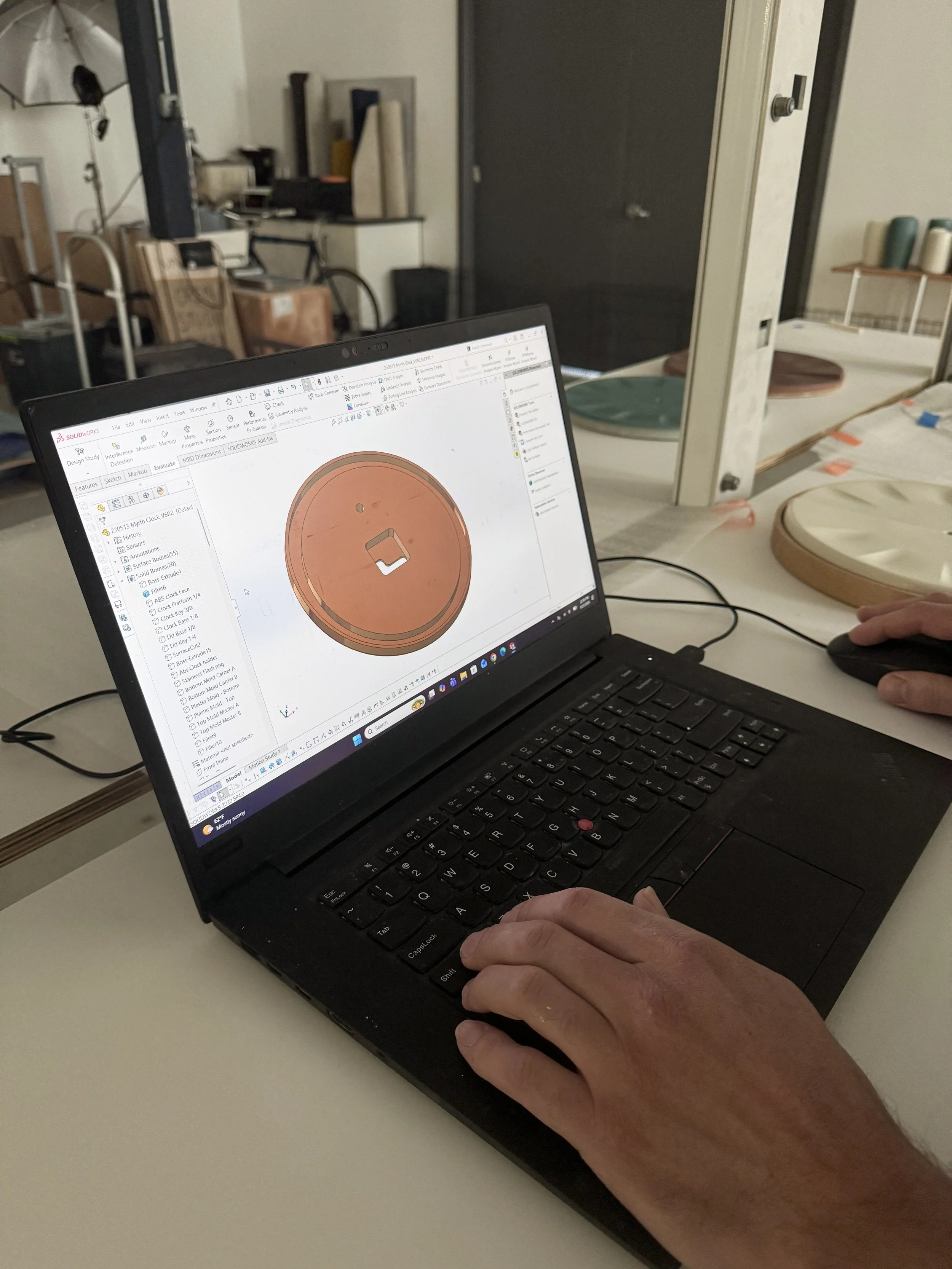
Eric working in CAD
That sent us looking for a prototyping partner. The first firm we tried didn't produce a prototype that held true to our design. Then a designer friend told us about the firm he works with, and the first prototypes that came back matched our CAD file exactly, edge for edge. Every form we've developed since has started there.
Finding the right partner took most of the clock's two years of development, and it changed more than the clock. The prototypes we now work from gave us better molds across the whole studio, and every new piece we make benefits from them. The clock held us up, and it also moved the studio forward.
The face is cast in our studio in porcelain slip, the same way we make our Oval Platter. It's also our first piece made from more than porcelain. We chose brass for the hands because it read most clearly against our glazes.
For the back, we knew from the start we wanted one dark wood and one light. Cody at Untitled Co sent us samples, and we held each one up against the porcelain. Ash was too pale, oak too yellow, and maple too plain. Beech had warmth and a beautiful grain, walnut gave us the dark, and Cody was confident both would machine cleanly. Our walnut is grown in the US. Our beech comes from Europe, because beech leaf disease has made American beech hard to find.
The glazes came last, and they came down to what looked best on each wood. There are four combinations: Moonlight and Rosewood on beech, Dove and Verdigris on walnut. That gives two neutrals that settle into a room and two bolder glazes for a wall that can carry a statement
A Sibling for the Moon Vase
We wanted the clock to be a signature piece, the way our Moon Vase is. We designed the Moon Vase the year we opened the studio, in 2015, and it's still the piece people know us by. A few years ago we took it through a similar development process. We redesigned it for casting and redrew its fluting to catch light and shadow more sharply. The two pieces share a design language, and both are meant to be a little sculptural at home. We think of them as siblings.
Where It Belongs
Everything we've made until now has lived on the table. This is our first piece for the wall, and it belongs above the table, in the room where the meal happens.
Where you hang it matters as much as what it's made of. The clock comes alive where daylight reaches it, whether that's direct sun or light reflected from a nearby window. As the sun moves through the day, the angle of the light changes, and the shadows change with it. In a dark corner the marks can't read, and the face goes flat. Hang it where the light moves.
The Wall Clock comes in four combinations, made in small batches.